 Yeah, he’s a NYT best-selling author, and he’s the rock-star of comic book writers, but what does having a piece in Time magazine mean in the zeitgeist of popular culture? Neil Gaiman’s got his first Hollywood film adaptation of his writing, the fantasy novel Stardust. Time discusses the potential for Neil’s level of fame to be on the verge of exploding… moving from that level of cult appeal to a more mass appeal. It’s so strange, because on some levels, Neil’s popularity seems enormous already, yet in a way, by its very nature (and despite a few best-selling novels) stemming from comics and living in the fantasy genre, some might label it cult appeal. Well, I’ve been a fan of Gaiman’s since his “Black Orchid” miniseries for DC, and predictably, I’ve had a bit of a crush on him as well. In addition to his talent, he’s awfully cute. But whether you’ve read his work or not, if you’re a blog reader and you haven’t checked out his journal, you probably should. It’s one of the better ones. I wonder how he does it?
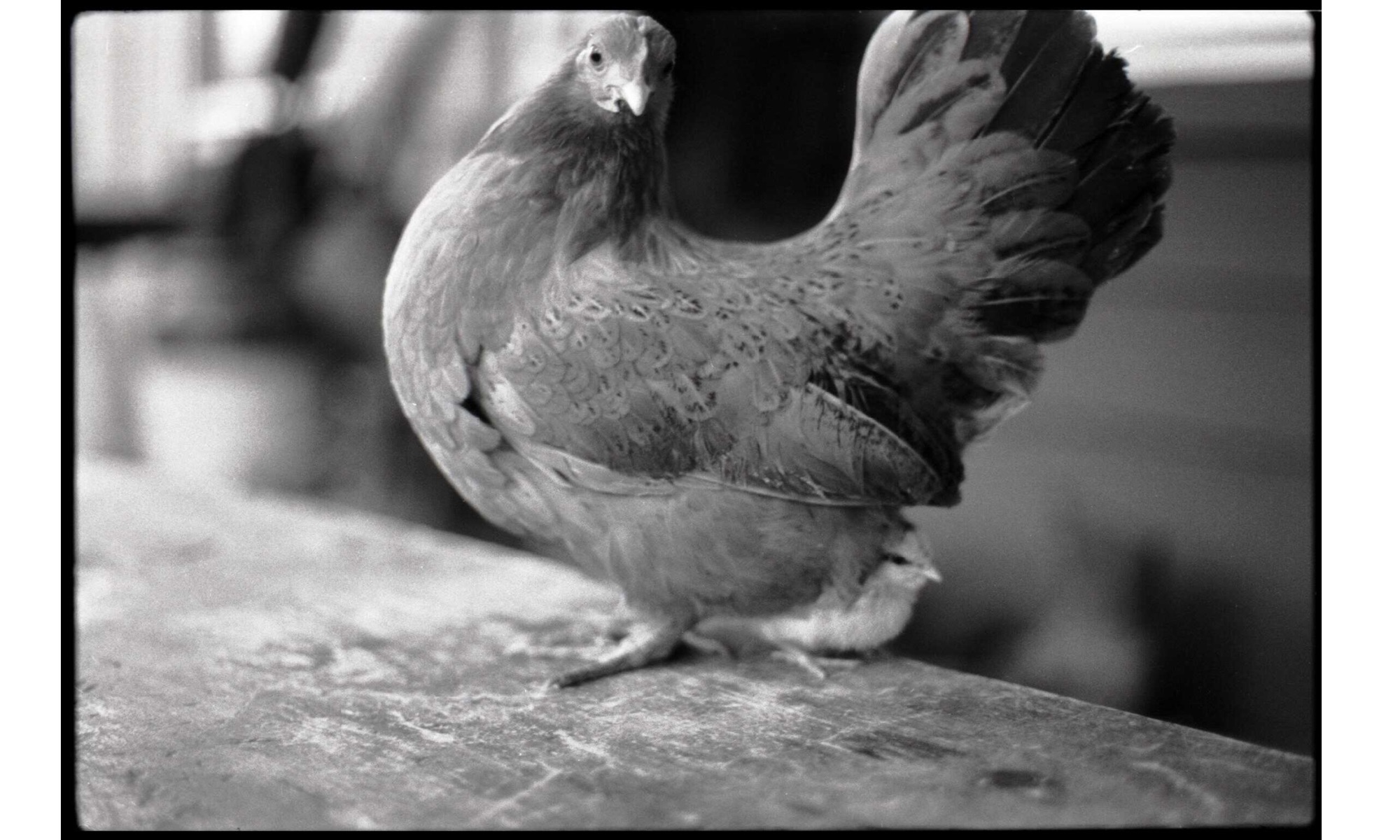
Harry Potter just said “bust a cap up in his…?”
Okay. Time for some levity and raucous merrymaking. Courtesy of Bitter Cup of Joe:
Ambitious New Novel by Sheri S. Tepper
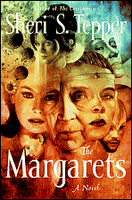 Sherri Tepper is a prolific writer of both science fiction and fantasy. Her latest novel is an ambitious work the is for-the-most-part a success. The Margarets takes place far in the future. Margaret is a twelve-year old girl living on Mars’ moon Phobos with her parents. Terrans have for the most part destroyed the Earth through overpopulation and much of the population has abandoned the planet for colonies on other worlds. However interstellar races who advanced earlier than Earthians have been keeping an eye on them. There is some indecision as to whether or not the human race should be allowed to continue to exist.
Some of the races who sit in judgment of humanity are benevolent, while others are vile, living only for torture, pain and cruelty. The former have set in motion a plan to prove that Earthians are worthy, and in the process, give them a gift to help them mature as a race. Central to this plan in young Margaret. As a child, Margaret invented six different aspects of herself, imaginary playmates, to keep loneliness at bay as the only child on the colony. There was Wilvia, the Queen; Naumi, the warrior; a spy, a healer and more. When Margaret and her parents are sent back to earth, and then several years later, when Margaret is forced to leave the planet forever, her other selves are lost to her. Yet in reality, and unveknownst to Margaret, each of her six other selves follow a different path and flourish on different colonies, some finding great hardship and pain, while others have families and find love.
In the end, Margaret must bring all her selves together to help save the human race, with the help of some pretty remarkable beings created out of Tepper’s incredibly fertile imagination. The dozens of races and beings Tepper creates in The Margarets is impressive, and there is very little that seems tired or familiar. My main complaint comes with such a large cast and massive landscape that some areas seem glossed over or too quickly resolved. Already clocking in at just over 500 pages, The Margarets could have used a couple hundred more to truly explore Tepper’s ideas.
Cathy’s Book: If Found Call 650-266-8233
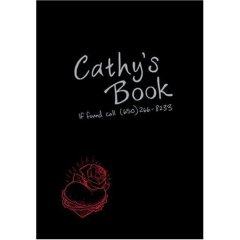 Go ahead, do it. Call the number on Cathy’s Book. You know you want to. Don’t worry. I guarantee she won’t answer. You’ll get her voicemail. You don’t have to leave a message. … But if you’re clever, you can figure out her voicemail access code and learn a little more about her. And you know … this book is Cathy Vicker’s personal journal. If she’s in trouble, it might be your duty to poke around in a bit to find out what’s going on. But wait — what’s all this crap glued to the inside front cover in a baggie? Newspaper clippings, vital documents, a take out menu, business cards, sketches, a ripped up photo? Aw man. This could become pretty time consuming.
At least it did for me. I’ve spent the better part of two days following up on every lead I can find in this little parcel. I’ve been calling phone numbers, cracking access codes, comparing signatures, and piecing together dates. Seems that this precocious 17-year-old girl has hooked up with a fella named Victor of about 23 — probably too old for her to be dating in any case — and he may be involved in drugs? Questionable genetic research? The Chinese Mafia? At any rate, Victor’s co-worker has been murdered, Cathy’s got a mysterious needle mark on her arm, and her best friend Emma needs Cathy to pitch in on their joint Biology project.
To solve the mystery I’ve mostly been investigating web sites: both factual, pre-existing ones and fictional ones constructed for the conceit of this ARG. (That’s “alternate reality game,” Mom.) Cathy and Emma have their own My Space and AIM pages, of course. But there’s even a site for a fictional wireless phone company with a forum in which all of Cathy’s new helpers can share secrets. Here, let me get you started in your investigation.
I really can’t say enough about this book. It’s quite ingenious. Of course, this sort of strategy has been used before to market products, as in the ingenious ilovebees.com ARG for Halo 2, but this is the first full-scale attempt (that I’ve been aware of) to actually incorporate real world knowledge discovery, interactive media, realia, and Web 2.0 applications to complete a literary work. And some of the reasearch is kinda hard, so to get the most from the book, you’ll likely have to spend some time engaging in the online community. It really raises this use of social networking tools from “viral marketing” to “community building” — from a trick to a tool, from a gimmick to an experience.
Of course, you can just read the book if you want. It’s not Proust or anything, but it’s written well enough. I’m sure the young women it’s marketed to will appreciate that Cathy is both amazingly confident and a bit of a screw up. She has no problem driving into San Francisco and wandering Chinatown by herself, but she has a problems fulfilling the basic responsiblities of friendship. And her problems range from the amusingly minor to frighteningly serious. It’s a wild ride worthy of Buffy Summers.
Really, though, if you don’t follow through on the questions you still have by getting your nose out of the book, you know you’ll regret it. Go ahead. Open up the baggie. Pick up the phone…
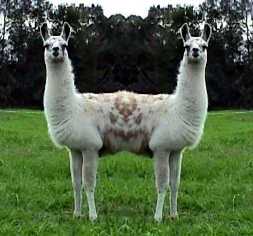
Push Me Pull You
So, I keep coming back to children’s literature when I think of what makes “me” the person I am. And sometimes it scares me.
Why do all the classics I can think of have imperialist themes?
- Doctor Doolittle is a “vegetarian” who really craves the flesh of his patients.
- Babar would be nothing if he didn’t learn western ways. He certainly wouldn’t be king!
- Is the conclusion that Ozma is a “fair and gentle” ruler enough justification to alter the way of life of the people in hidden countries of Oz?
- How do those Narnia kids have *any* real claim to the throne of the country?!
And as a postscript… do you ever have nightmares about being held up against Mary Poppins’ tape measure? I do.