I try to read several plays a year. I’ve been directing shows in community theater for the last 8 years or so, and I find reading plays is a skill you have to learn. The more I read, the better at it I get. Along with the play in this batch from my Top 20 comes a gorgeously written debut novel from a Vietnamese-American author, and a new book from a Finnish author whose work I enjoy.
#17 – On Earth We’re Briefly Gorgeous by Ocean Vuong (2019)
Little Dog was brought to the States from Vietnam by his mother and grandmother when he was a child. Now, as a young adult, he writes a letter about his growing up to his mother, who never really learned English. Vuong uses language beautifully to tell his story and to paint a picture of life as a young gay immigrant who’s different from those around him in suburban Connecticut, but as the novel progresses into his teen years it gets more and more impressionistic which lessened its impact for me.
As the only member of his family to speak English, Little Dog often chooses what to translate to his mother. The multi-generational relationship is complicated and sometimes fraught, but makes for powerful storytelling. I wish that had continued on into Little Dog’s teen years.
#16 – Perfect Arrangement by Topher Payne (2015)
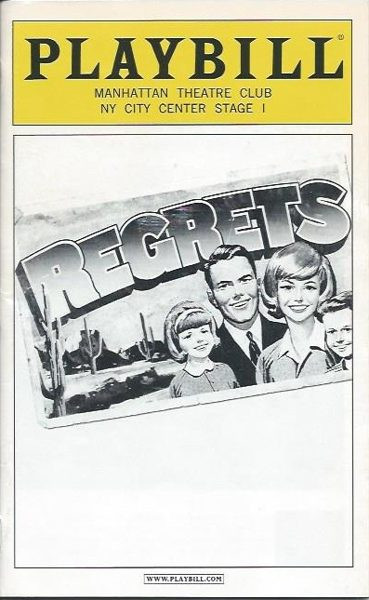
I found it interesting that in 2025 I decided the next play I would direct, After the Revolution by Amy Herzog, without any advance knowledge, two of the plays i read this year took place in the time period in which Herzog’s play explores. Topher Payne’s Perfect Arrangement, like Matt Charman’s Regrets, takes place during the 1950’s and explores the era of communist witch hunts that center Herzog’s play. However, Payne’s play takes a slightly different angle.
Perfect Arrangement is a nicely written play that takes place during the McCarthy era of the 1950’s . Two gay couples (two men; two women) pretend to be heteronormative living in adjoining apartments. Trouble is two of them work for the State Department which is expanding its witch hunt from communists to all sorts of perverts. Funny, until it isn’t, powerful — and all too recognizable in today’s world.
#15 – The Moonday Letters by Emmi Itäranta (2022)
Finnish novelist, Emmi Itäranta, released her third novel, The Moonday Letters in 2022. This complex, intriguing tale is told mostly in correspondence to weave a tale of the ecological downfall of Earth that leads to the colonization of the Moon and Mars, as well as cylinder cities, wrapped up in a deep love story. Like her two previous novels (Memory of Water; The Weaver Itäranta explores dystopian societies blending science fiction and the metaphysical. In this case, Lumi is a healer, whose spirit guide traverses unseen spaces to help her reunite afflicted patients with lost parts of their soul. When her lover, Sol, seemingly disappears under mysterious circumstances, Lumi must find them, and unravel a deeply concerning secret from the clues that are left for her.
Itäranta is an author of deep imagination and lush language. The framing of this novel in correspondence and journal entries worked surprisingly well, extending the longing for the two characters to reunite to the breaking point. All of the author’s works are intriguing and satisfying.