This year I read a lot of plays, a lot of advanced reader’s copies of books I had collected from publishers over the years that built up in my office, and several books I picked up from our staff recommends lists at the library. The first three title discussed here are taken from each of these categories.
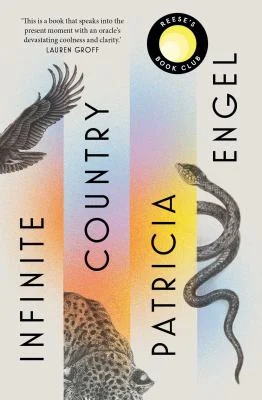
#20 – Infinite Country by Patricia Engel (2021)
Anchoring my Top 20 is a book I picked up off the BPL’s display of staff recommendations. Patricia Engel’s novel about a Colombian family town between two countires, struggling with political unrest and violence, deportations, cruelty, and the harsh immigration climate in the United States, is so personal and yet so mythic in scope. Mauro and Elena grew up in Colombia during a time of political uprisings and mass executions. Somehow they meet and fall in love, have their first child, then flee to United States. There they struggle to make a home for themselves, despite the lack of money, the scarcity of work, and the mistrust of their neighbors and the law. Two more children follow before Mauro is torn from the family and sent back to Colombia.
Engle weaves the mythological beliefs of the Colombian culture with a love story about a family. There is danger, there is injustice; but through it all family is the central theme that keeps the characters bonded together despite years of physical separation and isolation. Both devastatin and uplifting, Engle creates a memorable tale.
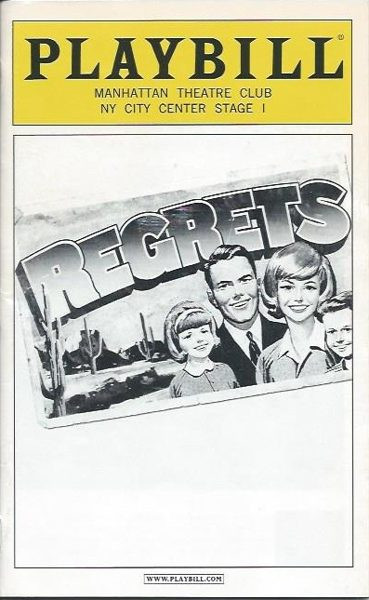
#19 – Regrets by Matt Charman (2012)
I’m not sure what drew me to read this play by Matt Charman, other than it was set in the 1950’s, as is the play I’m about to direct. What I didn’t know until I was well into the reading was that they shared similar themes. Regrets is a nicely constructed play about a post-divorce camp for men in the 1950’s. When a young man arrives and joins the other men, all in their 40’s, curiosity turns to suspicion as secrets are revealed as to the true reason for his arrival. Powerful and unexpected finale.
I generally read plays in search of intersting ones to produce. Regrets certainly falls into this category, but with my next play, After the Revolution by Amy Herzog, exploring similar themes, I will probably hold off on Regrets.
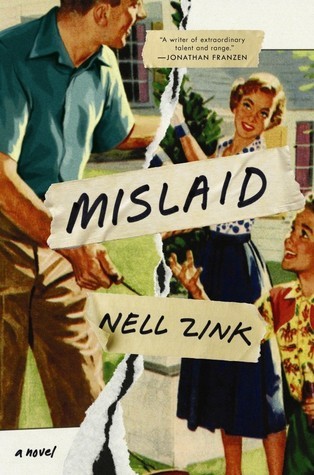
#18 – Mislaid by Nell Zink (2015)
This sharp satire that explores race, gender, sexuality, and class in the latter half of the 20th century tears apart the American family in new and startling ways. Mismatched pair, college student Freshman, Peggy and poetry professor, Lee find themselves in passionate but awkward affair that yields an unhappy marriage and two children. Doomed from the start (she’s a lesbian, he’s gay), Peggy eventually flees with one child leaving her older son behind with her husband. From their, all four spiral into unconventional lives that won’t cross paths again for years.
Author Nell Zink has a pointed style poking fun at the establishment and counter-culture society alike, with some special barbs for the South. After a sizzling opening, things bog down a bit in the middle, before amping up again for a rousing conclusion.
A year ago as I pulled together my list of my favorite books read in 2024, I decided I had to up my game. After dipping to a low of reading fewer than 20 books in a year, I’d been slowly bringing that number back up, but slipped in 2024 to reading just 17 books. I decided to give myself ambitious goal to read 50 books in 2025. It was definitely a stretch, but I wanted to commit to reading more. While I didn’t make my goal, I did complete 45 books in 2025, and felt very good about that. This year, I will maintain that same goal and see how i do. With my impending retirement approaching, I hope I spend some of that tie reading more.
Before I start to write about my favorite books of the year, I would like to mention some disappointments, also rans, and other titles that fell outside of this list. I am going to start with the best book I read this year — that also happened to be a re-read.
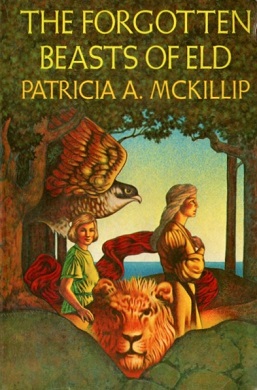
Favorite Book Read in 2025 – The Forgotten Beasts of Eldby Patricia A. McKillip
First edition cover
Patricia A. McKillip, absolutely my favorite fantasy author, and certainly one of my favorite authors period, got her start writing young adult novels in the 70’s. The first book of hers that I read was The Forgotten Beasts of Eld, published in 1974, and winner of the World Fantasy Award for Best Novel in 1975. It was her third published novel.
When I finished my re-read (probably my fifth or sixth over the years), this is how I reviewed it: “Re-read this classic fantasy novel by Patricia A. McKillip for the fourth or fifth time, and honestly it gets better and better every time. Quite possibly my all-time favorite fantasy novel. The way McKillip intertwines such disparate themes as love, power, revenge, self-reflection, manipulation, and family with her consummate skill at crafting poetic language is astounding. And it packs such a powerful emotional punch.”
The fact that this complex novel, with its adult relationships and hard-to-like female protagonist was marketed to young adults astounds me to this day, but it clearly worked, launching a major career for McKillip. The main character, Sybel, is one of the all-time great flawed heroes, and her journey to adulthood is a masterpiece. I remember I was enchanted by the “beasts” of the tale, mysterious, magical creatures that were enough to enthrall any young, fantasy-lovers mind, but i remember as a young boy how taken i was by Sybel’s tragic story. I look forward to reading this book over and over again.
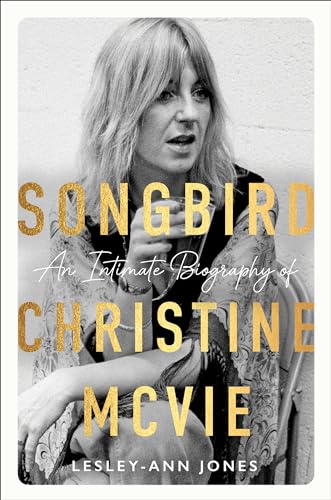
Biggest Disappointment of 2025 – Songbird: An Intimate Biography of Christine McVie by Lesley Ann Jones
Not every book can be great… many aren’t even that good. If you’ve looked at my lists of favorites books of the past couple of years, you know that I have been on a journey reading memoirs of female rock & rollers for sometime. After the tragic loss one my all-time favorites, the incredibly talented Christine McVie of Fleetwood Mac, i was thrilled that, if not a memoir, at least a biography was being published about her. Sadly, it turns out to be my biggest disappointment of the year. I will let my review speak for itself.
“This was a tough one: a mediocre biography about a fascinating, beloved icon. Lesley-Ann Jones “intimate biography” of Christine McVie is about a lot of things, but as an intimate look of the legendary performer’s life is not really one of those things.
“Fleetwood Mac front-woman and keyboard player was a very private person, and when her family refused to participate in the writing of her biography, there aren’t a lot of avenues to explore someone who has died. Instead Jones spends the first third of the book telling us about the history of the British village of Wickhambreaux and the region where Christine was born and raised. Slightly interesting, but adds way more than it needs to to provide some color to our subject.
“Granted, Jones was a casual friend/acquaintance of McVie’s, in the way many of the very extended Fleetwood Mac family were. In addition, most of the information she provides in the book seems to come from interview with other who either provide expert opinions (therapists) or were three, four, or five levels away from the woman in question, part of that massive entourage. Sure there were some quotes from her fellow band-members, but most of them came from previously published interviews.
“In the end, Songbird: an Intimate Biography of Christine McVie provides a whole lot of conjecture — some of which conflicts with other conclusions the author made. Surely any person, especially an internationally famous celebrity, can be painted with different brushstrokes in a 300-page book, sadly, Jones’ over-written book doesn’t give us much more than an article in the Rolling Stone magazine.”
Finally, before launching into my actual Top 20 books of the year, I include my list of also-rans” books that I enjoyed and are notable enough to mention here. Three books earned a spot on this list, a look at the roles of women in rock during the 90’s, a excerpt about chickens from a Sy Montgomery book, and a play that hit really hard
Disgraced by Ayad Akhtar – Powerful, visceral examination of a successful lawyer confronted with this deeply ingrained Muslim upbringing and his own an his contemporaries beliefs and assumptions.
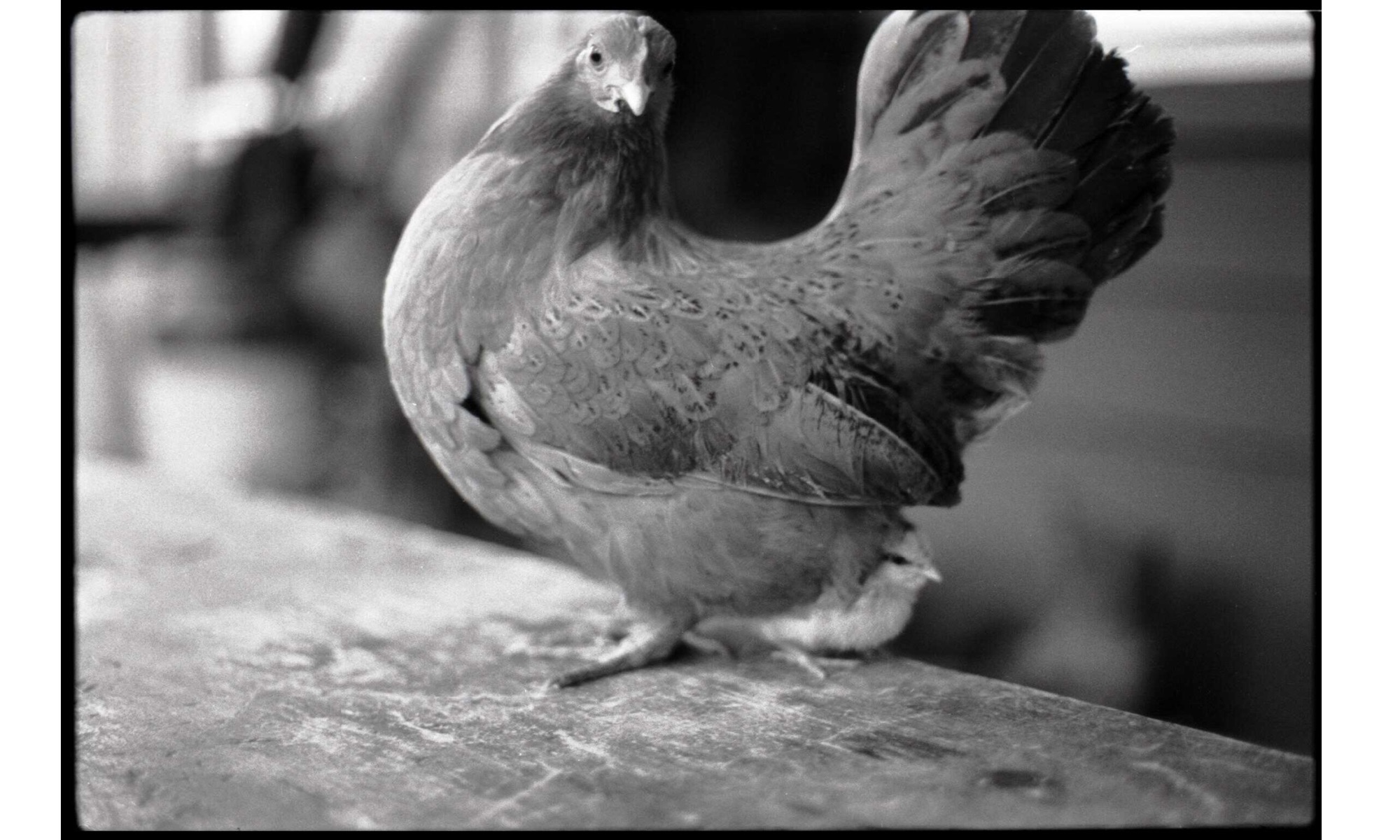
What the Chicken Knows: a New Appreciation of the World’s Most Familiar Bird by Sy Montgomery – Originally written as a chapter in the book Birdology Sy Montgomery, author of The Sould of an Octopus remarkably does for the most prevalent barnyard fowl what she did for the massively intelligent cephalopod. Perhaps that’s a bit of hyperbole, after all, if you can pack everything there is to know about a chicken into a single chapter, perhaps they are not quite on the same level as an octopus? Still, Sy loves her flocks of chickens, and she conveys their intelligence, playfulness, and emotional lives convincingly. Of course, as you could no soubt surmise from the title of this blog, I already loved chickens, so it wasn’t too hard a sell.
Pretend We’re Dead: the Rise, Fall, and Resurrection of Women in Rock in the ’90s by Tanya Pearson – Tanya Pearson spotlights women who fronted or filled out alternative rock bands throughout the 90’s and goes on to explore how politics and society removed these counterculture women from pop culture after 9/11. Some unnecessary repetition keeps the book from taking this important topic to a more energizing read, but still well researched with some great interview by such 90’s icons as Shirley Manson, Tanya Donnelly, Liz Phair, and Kristin Hersh.
In the second installment of a semi-regular piece inspired by my friend’s blog, Haunted Jukebox, I will continue to share my favorite films of each year starting with the year of my birth (which I posted about in August.) Okay, it took me three months to get around to 1963, that seems about right. Perhaps after retirement these posts will come more frequently, but I wouldn’t count on it.
After the stellar cinematic year that 1962 was, 1963 was pretty lackluster. It was as if all the great film work had been used up in the previous year and there needed to be a recovery period. Or else 1962 was just an exceptional year? We will soon see. To start, I had only seen nine films from 1963 as far as I can tell, and as four of them ended up in my top 5, there weren’t a lot of undiscovered gems in my follow-up film viewing to prepare for this post. I total, I only watched about 15 films from 1963, before my inspiration ran out. I still managed to get a Top 10 out of them, but the quality is just a few steps below 1962, except for the first few.
The Haunting (dir. Robert Wise)
Hud (dir. Martin Ritt)
Charade (dir. Stanley Donen)
High and Low (dir. Akira Kurosawa)
Bye Bye Birdie (dir. George Sidney)
The Day of the Triffids (dir. Steve Sekely/Freddie Francis [uncredited])
Five Miles to Midnight (dir. Anatole Litvak)
Ladybug Ladybug (dir. Frank Perry)
8 1/2 (dir. Federico Fellini)
The Incredible Journey (dir. Fletcher Markle)
Honorable mentions: Contempt, Winter Light, The Birds
Watchlist: The Servant, An Affair of the Skin, Lilies of the Field, Bay of Angels, The Big City, The Running Man, When the Cat Comes
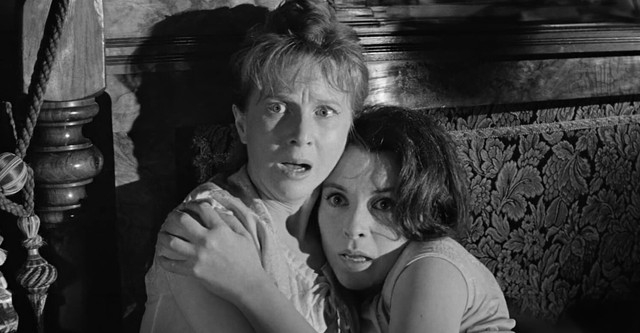
My top film of 1963, Robert Wise’s The Haunting, benefitted from a re-watch which really helped solidify it’s position over Hud, which I had seen a year or so ago. The Haunting is truly an elegant film ahead of its time. Based on Shirley Jackson’s novel, it tells the tale of four individuals who spend a weekend in a haunted house to prove or disprove its supernatural nature. Wise had already directed nearly 30 films by the time he tackled The Haunting, and strangely enough that film was bookended by West Side Story and The Sound of Music. He continued to direct until 1989, including memorable films such as Audrey Rose and Star Trek: the Motion Picture. It’s amazing how creepy he can make this film using basically just sound effects, swooping cameras and great acting. And the four principles were all terrific. Julie Harris, Claire Bloom, Richard Johnson and Russ Tamblyn really inhabited their characters. It was quite bold to have the Claire Bloom character coded as a lesbian. I’m so curious if the original novel did the same?
Hud
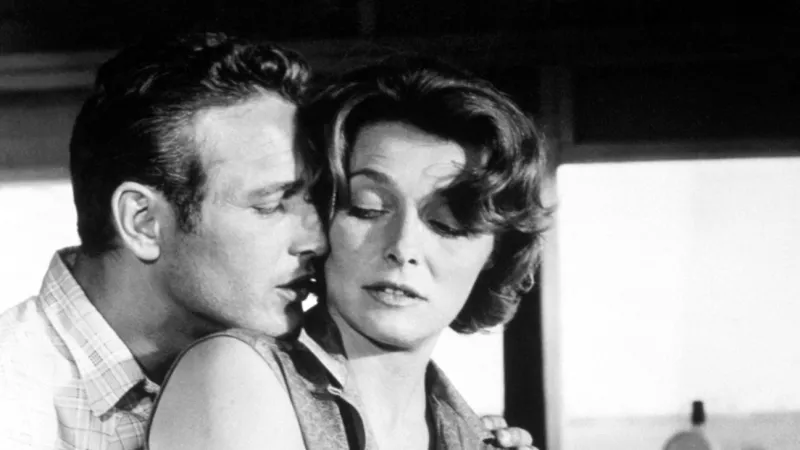
I watched Hud when I was on a Patricia Neal kick (she was so good in The Fountainhead, a dark western starring Paul Newman as quite the dick. Director Martin Ritt went on to direct such 70’s and 80’s films as Norma Rae and Nuts, so he’s clearly interested in serious and heavy work. Beautifully shot, and emotionally fairly riveting, I really enjoy Hud. Then we have Charade, giving vibes nearly 180 degrees away from Hud. Sure it’s a murder mystery… nearly a caper, actually, but Audrey Hepbrun and Cary Grant are so charming and fun, even when you don’t know whether or not Grant’s character is a good guy or a bad guy! Akira Kurosawa comes in at #4, with his crime film High and Low. The first half of this film is riveting and emotional while taking place almost entirely in a single room, while victims of a kidnapping wait with the police for the kidnapper’s calls. The second half gets a little strange, but the stark, abrupt finale brings it all back home in a powerful way.
There are some nostalgic entries on this list as well. #5 is possibly my favorite movie musical, Bye Bye Birdie, which while superficially a pretty silly film, as a kid, I just loved it. My love for Ann-Margret was born here, as the teen-aged Kim. The dancing in the musical number, Got a Lot of Livin’ to Do still makes me so happy. Other nostalgic entries include the science fiction, Creature Feature thriller, The Day of the Triffids about murderous plants from outer space that spit acid. Fortunately their weakness is salt water. I haven’t see this film since I was a kid, so it’s probably horrible, but I remember it very fondly. Ditto, the children’s, live-action classic, The Incredible Journey, about two dogs and a cat who make their way across the country to reunite with their families. I shudder to think how the actual animal performers were treated back then, but I do remember loving this terrific adaptation of the novel by Sheila Burnford.
Inspired by my friend’s blog, Haunted Jukebox, I have decided to start a new semi-regular piece on my very infrequently updated blog, where I will share my favorite films for each year starting with the year of my birth, which happens to be 1962. I thought this would be a great project for me to have started before my retirement, which will hit in 2026, and it’s also a great way to pick up a lot of films from over 50 years ago that I have missed. As you might imagine, this piece will probably show up every few months, as I want to hit a critical mass of films viewed for each year, and for the first 20 or so years, I suspect that will require a lot of viewing to get to that mass.
1962 was a great year, for film, actually, and while I had only seen about a dozen films from that year before I started this journey, my #1 film was one of them. I watched an additional twenty or so before feeling confident enough to have a list of top films. Like my fellow blogger, I will also include a short list of films I still want to see from that year that I didn’t get to. Ultimately, my total list for films viewed in 1962 amounts to 25, and here are my Top 10.
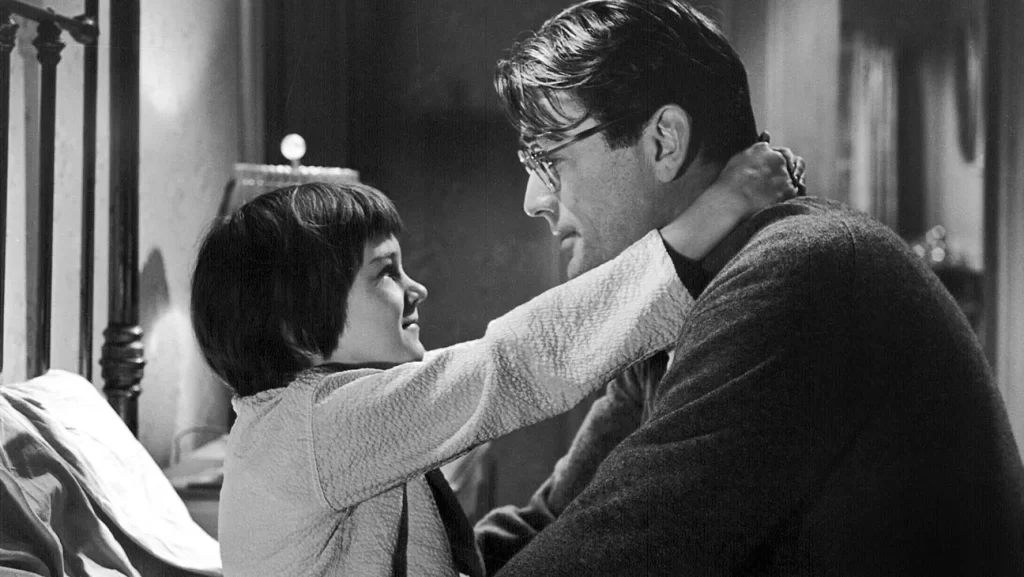
To Kill a Mockingbird (dir. Robert Mulligan)
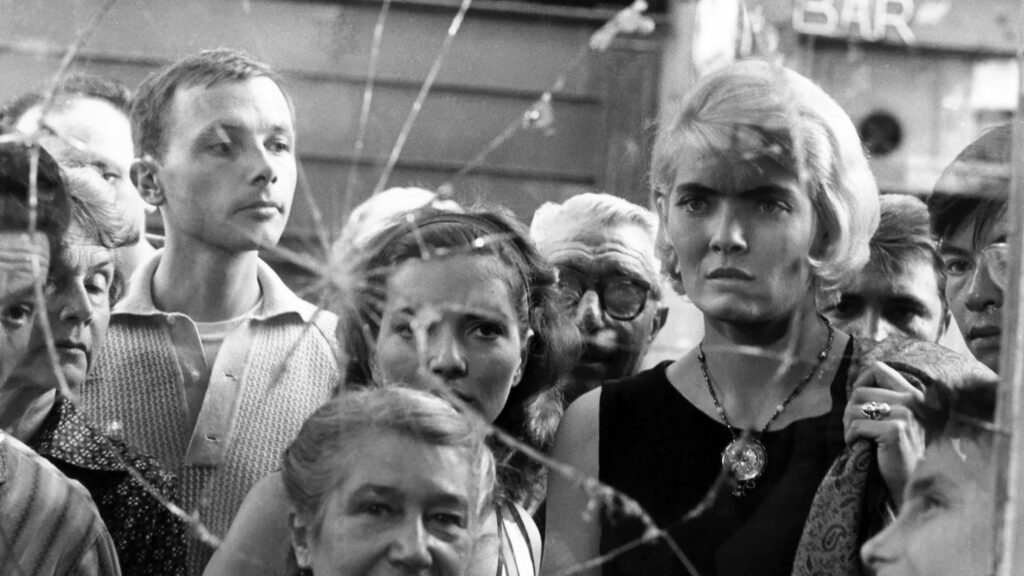
Cleo from 5 to 7 (dir. Agnes Varda)
Jules et Jim (dir. François Truffaut)
The Manchurian Candidate (dir. John Frankenheimer)
Billy Budd (dir. Peter Ustinov)
Harakiri (dir. Masaki Kobayashi)
A Kind of Loving (dir. John Schlesinger)
Knife in the Water (dir. Roman Polanski)
An Autumn Afternoon (dir. Yasujirô Ozu)
The Intruder (dir. Roger Corman)
Honorable mentions: The Third Love, The Tale of Zatoichi, David & Lisa, Pitfall, Sweet Bird of Youth
Watchlist: Chushingura, Dr. No, L’Eclisse, The Exterminating Angel, The View from a Bridge, Vivre sa Vie, Whatever Happened to Baby Jane?
Cleo from 5 to 7
It’s hard to deny the top spot to what is arguably one of the best film adaptations of a novel, To Kill a Mockingbird. Agnes Varda’s look at a young woman spending an anxious day awaiting a possibly difficult medical diagnosis in Cleo from 5 to 7 gives a decidedly female slant to the French New Wave. Jules et Jim tracks a friendship between a French man and a German man in the context of World War II. Peter Ustinov adds a humanist look at a difficult ethical decision at sea in Billy Budd, featuring the sparkling debut of the recently passed Terence Stamp. The first of two Japanese films, Masaki Kobayahi’s Harakiri tells a complex tale of revenge during the time of the samurai, while Ozu’s An Autumn Afternoon looks a at the time, contemporary family life. With A Knife in the Water, a slow burn thriller gives us a peak at films to come for Roman Polanski’s first feature film. Finally, The Intruder sees schlock horror director Roger Corman exercising a different kind of horror in this tale of racism starring William Shatner.
I’m looking forward to rounding out my 1962 films with the titles listed on my Watchlist, but I’ve already started looking at the films of 1963 for the eventual second part in this series.
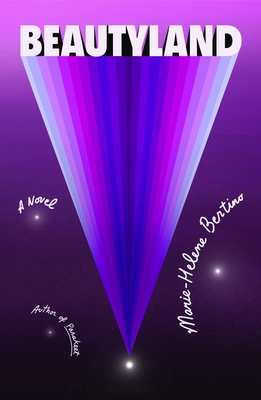
My number one book of 2024 was a bit of a surprise, as it is a new author, and book I reserved on a whim after reading a review. Obviously, I wasn’t let down by this quirky, pseudo-science fiction novel that tells the story of a life that is unique.I love finding books like this that come out of nowhere and have a powerful impact. Both funny and a little sad, it’s one of those books that sticks with you after you finish it.
The beauty of Marie-Helene Bertino’s latest novel Beautyland is that while our protagonist, Adina, purports to be from another planet, born through a human mother, you never really know for sure if that’s fact, or delusion… and it doesn’t even matter. The novel is a beautifully written allegory for being the ‘other.’ Adina was always a little strange growing up; from her aversion to mouth sounds, to her largely solitary existence, with only her mother as a companion for her early childhood. As she grows into adolesence, she forms a strong bond with Toni and her family. As an adult, she tries out a romantic relationship, but doesn’t really understand how it all works. All the while, she dutifully faxes her ‘superiors’ from her origin world, receiving brief sometimes heartening, sometimes frustrating responses. In the end, Adina lives a life, and whether she finds what she needs will be up to the reader.