
Before I get into my top films of 2021, I’m going to list all the films that didn’t quite make that list. Some of these films are pretty good, others I didn’t like at all. I will go deeper into a handful, then list everything. My cut-off point between the two lists is based on a 5 star scale. Any film that received 4 cats or higher is on my Top Films of the year. That list numbered 61. The lower half of my Top Films of 2021 were those films that scored 3 1/2 stars are fewer. There were 79 of those films. I counted both Independent and mainstream films, but I did not count Festival films, as they will be counted in the year they are released.
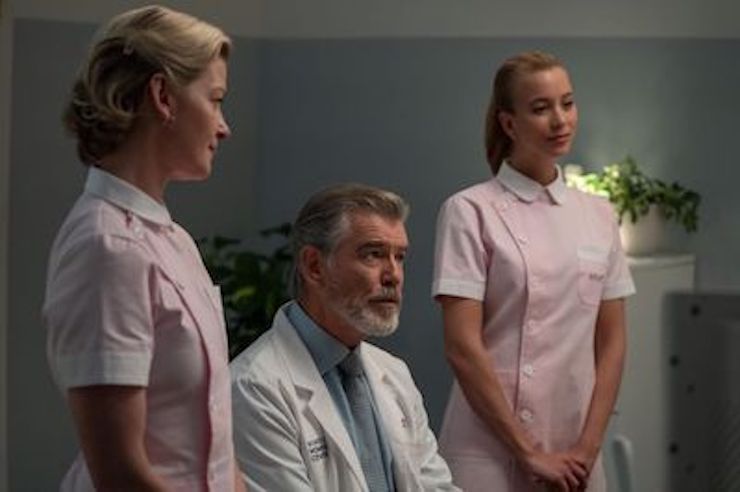
Sitting at the top of the bottom half of my list are a bunch of films I can still recommend, led by False Positive, an over-the-top horror film that I first saw as part of the 2020 Tribeca Film Festival. This film written John Lee, Alissa Nutter, and Ilana Glazer, directed by John Lee, and starring Ilana Glazer, Justin Theroux, and Pierce Brosan tells the story of a young couple who seek out the help of a fertility doctor to have a child. Glazer plays the paranoid mom, Theroux, her patient husband, and Brosnan, the charismatic doctor. Extra points go to Gretchen Mol as Brosnan’s head nurse, whose performance, along with Brosnan’s really livens things up. Also of note at the top of this list is Home, the directorial debut of Run, Lola, Run star, Franka Potente. Marvin (Jake McLaughlin) returns to his hometown from a decade and half of prison for murdering someone and must face his ailing mother (Kathy Bates), the victim’s granddaughter (Aisling Franciosi) and mistrustful and angry town. Potente does a commendable job in this tough tale of redemption.
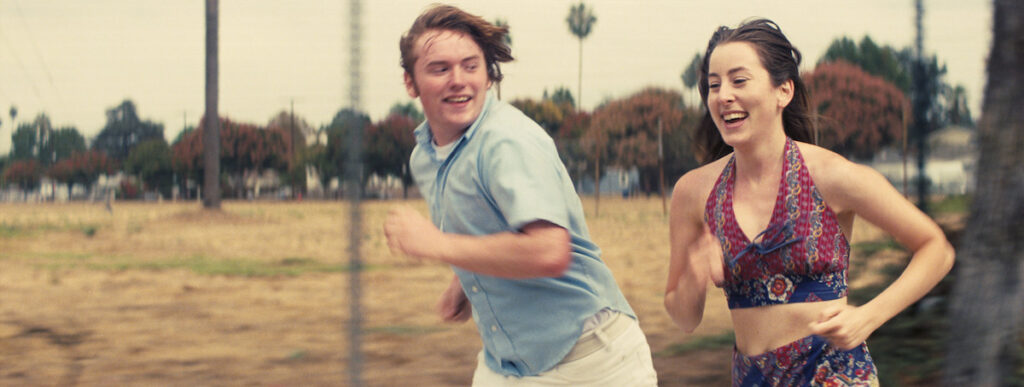
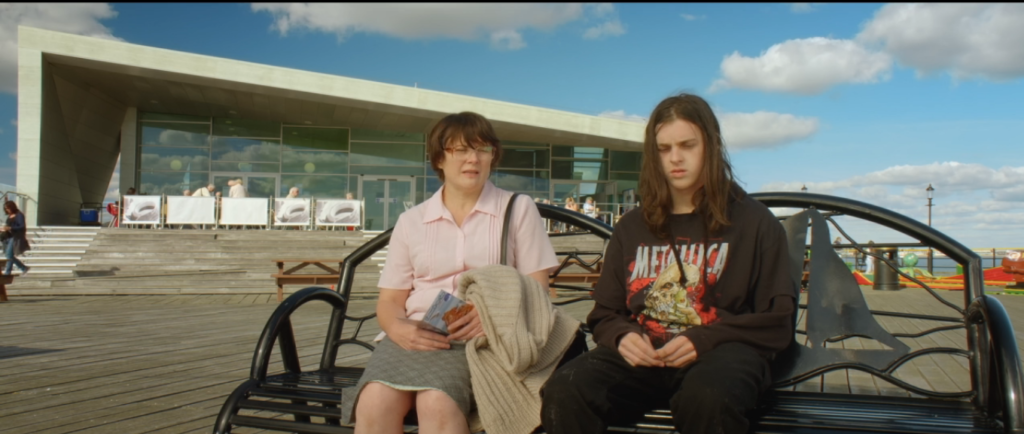
Other films of note near the top of the list include Paul Thomas Anderson’s uneven Licorice Pizza, which is buffered by the outstanding performance of its stars, Alana Haim and Cooper Hoffman; Funny Boy, an Indian epic about a young homosexual during the escalating tensions between the Sinhalese and Tamils in the years leading up to the 1983 uprisings, directed by Canadian Deepa Mehta; Days of the Bagnold Summer, a sweet coming-of-age film starring Earl Cave (son of Nick) and Monica Dolan, about a teen-aged boy who just wants to listen to heavy metal who must spend the disappointing summer with his librarian mom; and Dune, Denis Villenueve’s much-lauded, visually spectacular, and largely successful adaptation of Frank Herbert’s sci-fi classic.
At the bottom of my list are two films that received one star. My apologies to anyone who enjoyed this films. My opinions are purely subjective. In the 90’s, I enjoyed the musician Moby, whose ambient, electronica reached its pinnacle with the album Play, so I was interested in a new documentary about him, Moby Doc. After professing at the outset of the film, he had no interest in making just ‘another biopic about a weird musician,’ he proceeds to do exactly that… and not a very good one at that. In fact, the movie is so self-indulgent, self-important, and self-conscious, that it actually made me like his music less! I was even somewhat embarrassed that David Lynch appeared in the film, looking like he wasn’t quite sure what he was doing there. The other film earning the dubious distinction of receiving only one star last year is a little more sensitive, as I know some people who really enjoyed it. Cryptozoo is an animated film written and directed by Dash Shaw utilizing a flat, 2D hand-drawn style that felt like it was written by a middle-schooler who had just discovered the Advanced Dungeons & Dragons Monster Manual for the first time and decided to write a story about the creature discovered therein. The story uses an environmental theme to kick things off, but the overly-preachy message is more about free will and humanity’s need to control beings it perceives as lesser. The animation-work is really rather atrocious, and being forced to listen to Michael Cera voice a simulated orgasm in the first 10 minutes of the film was just adding insult to injury. The one saving grace was the inclusion of Grace Zabriskie among the vocal performances, earning it its single star rating.
False Positive, directed by John Lee ***1/2
Home, directed by Franka Potente ***1/2
Sugar Daddy, directed by Wendy Morgan ***1/2
Licorice Pizza, directed by Paul Thomas Anderson ***1/2
Funny Boy, directed by Deepa Mehta ***1/2
Wife of a Spy, directed by Kiyoshi Kurosawa ***1/2
Days of the Bagnold Summer, directed by Simon Bird ***1/2
Dune, directed by Denis Villenueve ***1/2
El Planeta, directed by Amalia Ulman ***1/2
Sun Children, directed by Majid Majidi ***1/2
The Nowhere Inn, directed by Bill Benz ***1/2
Shang-chi and the Legend of the Ten Rings, directed by Destin Daniel Cretton ***1/2
Lamb, directed by Valdimar Jóhannsson ***1/2
Fully Realized Humans, directed by Joshua Leonard ***1/2
Mama Weed, directed by Jean-Paul Salomé ***1/2
Blue Bayou, directed by Justin Chon ***1/2
You Will Die At 20, directed by Amjad Abu Alala ***1/2
The Disciple, directed by Chaitanya Tamhane ***1/2
Violet, directed by Justine Bateman ***1/2
Saint Narcisse, directed by Bruce La Bruce ***1/2
Ellie & Abbie (& Ellie’s Dead Aunt), directed by Monica Zanetti ***1/2
Black Widow, directed by Cate Shortland ***1/2
Fever Dream, directed by Claudia Llosa ***1/2
Stowaway, directed by Joe Penna ***1/2
Luzzu, directed by Alex Camilleri ***1/2
Some Kind of Heaven, directed by Lance Oppenheim ***1/2
Spring Blossom, directed by Suzanne Lindon ***1/2
The Sleepless, directed by Michael DiBiasio-Ornelas ***1/2
Concrete Cowboy, directed by Ricky Staub ***1/2
Percy vs. Goliath, directed by Clark Johnson ***1/2
Lorelei, directed by Sabrina Doyle ***1/2
Baby Done, directed by Curtis Vowell ***1/2
Reign of the Superwomen, directed by Xavier Fournier & Frédéric Ralière ***1/2
Through the Glass Darkly, directed by Lauren Fash ***
The Witches of the Orient, directed by Julien Faraut ***
Ailey, directed by Jamila Wignot ***
Summer of Soul (… or, When the Revolution Couldn’t be Televised), directed by Ahmir “Questlove” Thompson ***
Beyto, directed by Gitta Gsell ***
Moffie, directed by Oliver Hermanus ***
Pig, directed by Michael Sarnoski ***
Range Roads, directed by Kyle Thomas ***
Breaking Fast, directed by Mike Mosallam ***
Supernova, directed by Harry Macqueen ***
Stray, directed by Elizabeth Lo ***
Son of Monarchs, directed by Alexis Gambis ***
The Inheritance, directed by Ephraim Asili ***
The County, directed by Grímur Hákonarson ***
The Mimic, directed by Thomas F. Mazziotti ***
About Endlessnessm directed by Roy Andersson ***
Dream Horse, directed by Euros Lyn ***
The American Sector, directed by Courtney Stephens ***
CODA, directed by Sian Heder ***
Chasing Wonders, directed by Paul Meins ***
The Get Together, directed by Wil Bakke ***
Falling, directed by Alessandro Nivola***
Malcolm & Marie, directed by Sam Levinson **1/2
Mandibles, directed by Auentin Dupieux **1/2
Cicada, directed by Matt Fifer **1/2
Freeland, directed by Mario Furloni & Kate McLean **1/2
Memory House, directed by João Paulo Miranda Maria **1/2
Slow Machine, directed by Joe Denardo **1/2
The Most Beautiful Boy in the World, directed by Kristina Lindström & Kristian Petri **1/2
Don’t Look Up, directed by Adam McKay **
Sublet, directed by Eytan Fox **
Take Me Somewhere Nice, directed by Ena Sendijarevic **
HipBeat, directed by Samuel Kay Forrest **
Godzilla vs. Kong, directed by Adam Wingard **
Annette, directed by Leos Carax *1/2
Mogul Mowgli, directed by Bassam Tariq *1/2
In the Heights, directed by Jon M. Chu *1/2
Boy Meets Boy, directed by Daniel Sanchez Lopez *1/2
Paper Spiders, directed by Inon Shampanier *1/2
Little Fish, directed by Chad Hartigaqn *1/2
Tick, tick… Boom!, directed by Lin Manuel Miranda *1/2
Dramarama, directed by Jonathan Wysocki *1/2
Last Night in Rozzie, directed by Sean Gannet *1/2
Mark, Mary, & some other people, directed by Hannah Marks *1/2
Cryptozoo, directed by Dash Shaw *
Moby Doc, directed by Rob Gordon Bralver *
 My #1 book of the year comes from an author whose work I have followed pretty much since his debut short story collection, The Secret Lives of People in Love in 2007. That was actually the second of his works that I read, first discovering him thanks to my friends at HarperCollins with his follow-up collection, Love Begins in Winter published in 2009. I didn’t do a list of favorite books read in that year, but I suspect Love Begins in Winter would have at minimum been in my Top 10, with a good chance it would have ranked considerably higher. After publishing a trio of books of essays, Simon published his first novel in 2011, Everything Beautiful Began After which ranked #8 in my list of
 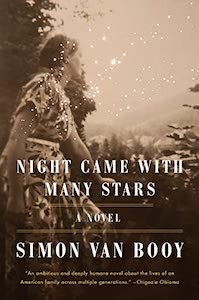 #1 – Night Came With Many Stars by Simon Van Booy (2021) – It’s always exciting when you’re a few chapters in and you start to realize that the book you’re reading is going to be a great one. Night Came With Many Stars the latest novel by Simon Van Booy, is one such book. A gifted writer, Simon’s books are all good, but there are a couple of his that rank among my favorites. His latest, a exquisite telling of four generations of a family living in Kentucky from the early 30’s to 2010, is an unexpected and delightful return to that echelon of beauty. Along with Patricia A. McKillip, Van Booy is one of the few authors whose use of language alone is enough to get me to read their work, regardless of subject. In this novel, the care and warmth in which Simon treats the members of this family is simply breath-taking, even as it is simple.
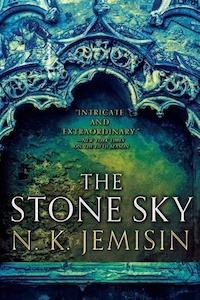 #3 – The Stone Sky by N. K. Jemisin (2017) – Minor SPOILERS below.
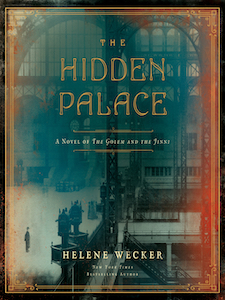 #2 The Hidden Palace by Helene Wacker (2021) – Delighted to discover that Helene Wecker had written a sequel to her NYT best-selling novel, The Golem and the Jinni (my #2 book of 2013). The Hidden Palace picks up where she had left off in her debut, detailing the unusual journey of two singular souls, a golem named Chava Levy, and a Jinni named Ahmad, who inhabit an ever-changing world of early 20th century New York City. Although the pair find solace in each other’s company, their relationship is a tumultuous one, eventually fracturing in a way that ripples outward and affects many around them as they struggle to find their places in a human world.
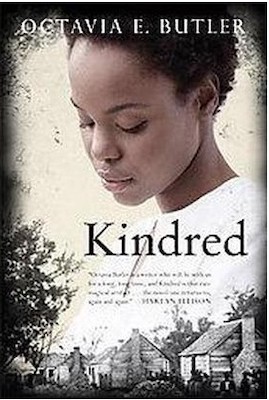 #5 Kindred by Octavia Butler (1979) – I finally went back and read Octavia Butler’s first novel< Kindred and found a writer who was already fully formed, to create such an original and seminal work the first time out of the gate. Published in 1979 by a black woman; the first science fiction novel published by a black woman, and one that tackles the challenging and disturbing topic of slavery, and more, the complex, fraught relationship between master and slave, this novel is a revelation.
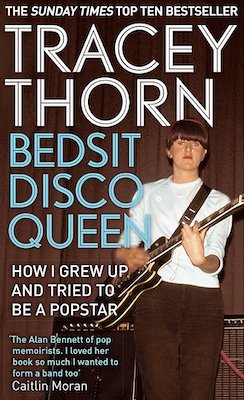 #4 Bedsit Disco Queen: How I Grew Up and Tried to Be a Pop Star by Tracey Thorn (2013) – I’ve always enjoyed the 80’s pop group Everything but the Girl. My interest in them ebbed and flowed depending on their output, but in many ways I think it followed their trajectory with the public — which makes sense the way lead singer, Tracey Thorn explains it in her first memoir, Bedsit Disco Queen. They started fairly strong, and quickly found a steadily climbing trajectory, before dipping sharply into mediocrity after a handful of albums. Their career could have gone a few ways, most easily dissolution, or inexplicably, a sudden sharp spike in quality and popularity, then, rather surprisingly, semi-retirement. It was during this semi-retirement in the 2000’s that Tracey Thorn turned her songwriting voice into a prose writing voice, to great success.