Favorite Films of 1963

The Haunting

In the second installment of a semi-regular piece inspired by my friend’s blog, Haunted Jukebox, I will continue to share my favorite films of each year starting with the year of my birth (which I posted about in August.) Okay, it took me three months to get around to 1963, that seems about right. Perhaps after retirement these posts will come more frequently, but I wouldn’t count on it.

After the stellar cinematic year that 1962 was, 1963 was pretty lackluster. It was as if all the great film work had been used up in the previous year and there needed to be a recovery period. Or else 1962 was just an exceptional year? We will soon see. To start, I had only seen nine films from 1963 as far as I can tell, and as four of them ended up in my top 5, there weren’t a lot of undiscovered gems in my follow-up film viewing to prepare for this post. I total, I only watched about 15 films from 1963, before my inspiration ran out. I still managed to get a Top 10 out of them, but the quality is just a few steps below 1962, except for the first few.

  1. The Haunting (dir. Robert Wise)
  2. Hud (dir. Martin Ritt)
  3. Charade (dir. Stanley Donen)
  4. High and Low (dir. Akira Kurosawa)
  5. Bye Bye Birdie (dir. George Sidney)
  6. The Day of the Triffids (dir. Steve Sekely/Freddie Francis [uncredited])
  7. Five Miles to Midnight (dir. Anatole Litvak)
  8. Ladybug Ladybug (dir. Frank Perry)
  9. 8 1/2 (dir. Federico Fellini)
  10. The Incredible Journey (dir. Fletcher Markle)

Honorable mentions: Contempt, Winter Light, The Birds

Watchlist: The Servant, An Affair of the Skin, Lilies of the Field, Bay of Angels, The Big City, The Running Man, When the Cat Comes

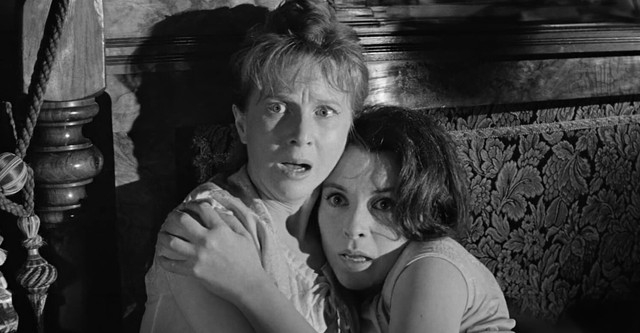
My top film of 1963, Robert Wise’s The Haunting, benefitted from a re-watch which really helped solidify it’s position over Hud, which I had seen a year or so ago. The Haunting is truly an elegant film ahead of its time. Based on Shirley Jackson’s novel, it tells the tale of four individuals who spend a weekend in a haunted house to prove or disprove its supernatural nature. Wise had already directed nearly 30 films by the time he tackled The Haunting, and strangely enough that film was bookended by West Side Story and The Sound of Music. He continued to direct until 1989, including memorable films such as Audrey Rose and Star Trek: the Motion Picture. It’s amazing how creepy he can make this film using basically just sound effects, swooping cameras and great acting. And the four principles were all terrific. Julie Harris, Claire Bloom, Richard Johnson and Russ Tamblyn really inhabited their characters. It was quite bold to have the Claire Bloom character coded as a lesbian. I’m so curious if the original novel did the same?
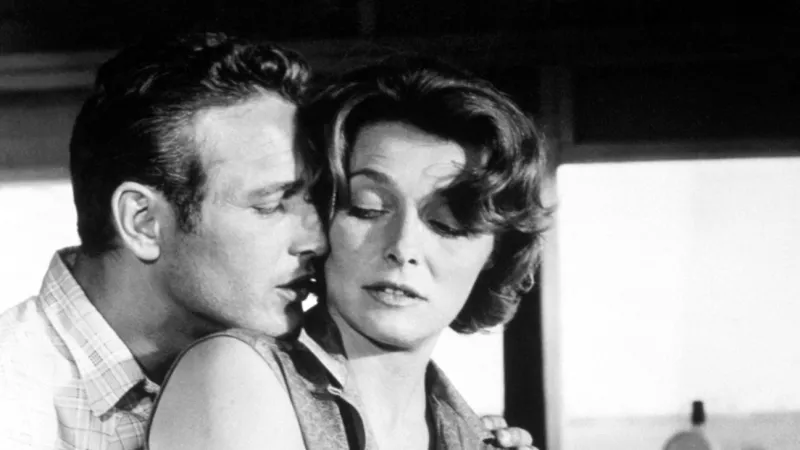
Hud

I watched Hud when I was on a Patricia Neal kick (she was so good in The Fountainhead, a dark western starring Paul Newman as quite the dick. Director Martin Ritt went on to direct such 70’s and 80’s films as Norma Rae and Nuts, so he’s clearly interested in serious and heavy work. Beautifully shot, and emotionally fairly riveting, I really enjoy Hud. Then we have Charade, giving vibes nearly 180 degrees away from Hud. Sure it’s a murder mystery… nearly a caper, actually, but Audrey Hepbrun and Cary Grant are so charming and fun, even when you don’t know whether or not Grant’s character is a good guy or a bad guy! Akira Kurosawa comes in at #4, with his crime film High and Low. The first half of this film is riveting and emotional while taking place almost entirely in a single room, while victims of a kidnapping wait with the police for the kidnapper’s calls. The second half gets a little strange, but the stark, abrupt finale brings it all back home in a powerful way.

There are some nostalgic entries on this list as well. #5 is possibly my favorite movie musical, Bye Bye Birdie, which while superficially a pretty silly film, as a kid, I just loved it. My love for Ann-Margret was born here, as the teen-aged Kim. The dancing in the musical number, Got a Lot of Livin’ to Do still makes me so happy. Other nostalgic entries include the science fiction, Creature Feature thriller, The Day of the Triffids about murderous plants from outer space that spit acid. Fortunately their weakness is salt water. I haven’t see this film since I was a kid, so it’s probably horrible, but I remember it very fondly. Ditto, the children’s, live-action classic, The Incredible Journey, about two dogs and a cat who make their way across the country to reunite with their families. I shudder to think how the actual animal performers were treated back then, but I do remember loving this terrific adaptation of the novel by Sheila Burnford.
My Top 20 of 2022, #’s 1 & 2

And here we are at the top of my list of favorite films of 2022. What ties these films together are the broad themes of love and family… themes that go against my often-cited love of bleak films. These two films moved me, but also thrilled me with the acting, the scripts, the directions, the production design, the use of music, the cinematography and more. These were films that stuck with me long after I saw them. I first saw my #1 film of the year way back in January, and it never got knocked off the top spot. I do hope you will give these films a try!

After Yang

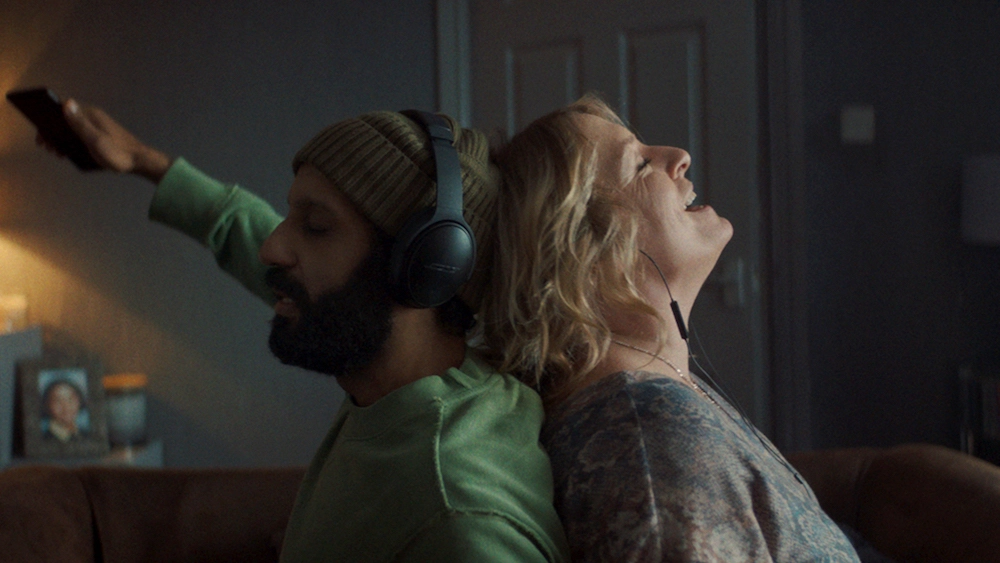
#2) Ali & Ava, directed by Clio Barnard – Clio Barnard, innovative director of the Buried Treasure nominated pseudo-doc THE ARBOR, has created a nearly perfect adult romance with ALI & AVA. the third of her four films to be shot in the city of Bradford in England. Led by a pair of terrific acting performances from Adeel Akhtar (THE BIG SICK, FOUR LIONS) and Claire Rushbrook (SECRETS & LIES; AMMONITE) the film charts the tentative love story of two Bradford natives in their forties both emerging from challenging relationships. Ali is a landlord who lives with his Pakistani family and is a bit of an anomaly, as he is beloved by his tenants. He and his younger wife are recently estranged, but still live in the same flat with the rest of the family, whom they have not told about their separation. Ava works as a teaching assistant, comes from an Irish-Catholic background, has a complicated relationship with her adult children, and an even more complicated relationship with her deceased husband. Once the two meet their slow, quiet attraction develops into something more, all while Barnard subtly weaves in issues around race, religion, abuse, and other grown-up issues in ways that are natural and powerful. 

One of the things that makes ALI & AVA so unique is how the story is told so strongly through music. Ali is a fan of techno and hip hop, while Ava adores country and folk. They fall in love and get to know each other through small acts of generosity and kindness, but also through their mutual love of music and the curiosity for each to learn more about the other. The film is hopeful, although not predictable or formulaic in any way. The cinematography by Ole Bratt Birkeland is stunning, both in the way it captures surprising beauty in some of the neighborhoods that exhibit the worst levels of social deprivation, and the extraordinary ways it captures the love story being told with powerful close-ups of the two leads. This one’s a real winner in so many categories, and Clio Barnard is a director to keep an eye on.

After Yang

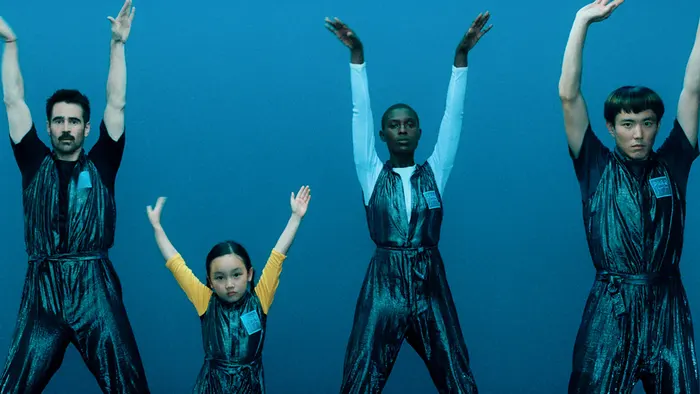
#1) – After Yang, directed by Kogonada – After the gorgeous simplicity of Kogonada’s Chlotrudis Awards-nominated previous film, COLUMBUS, I’m not sure what I was expecting with this follow-up, starring a big name star like Colin Farrell. Of course, Farrell was so powerful in THE LOBSTER, so I know he’s capable of being a great actor as well, which he shows again, in this haunting adaptation of a short story that explore what it means to be alive and sentient. It’s a story we’ve seen explored before; several times in the last couple of years. Yang is an artificial person — an older brother for Jake and Kyra’s adopted Japanese daughter Mika. Someone marketed to give Mika cultural reference given her parents are white and African respectively. When Yang malfunctions, possibly permanently, Jake begins an exploration that will reveal parts of Yang’s life that illuminate heretofore unknown depths.

The futuristic world Kogonada creates is uniquely serene and beautiful. The lovely production design that suggests a future society, yet is familiar and comfortable, with its sleek and graceful beauty augments the immersive experience of the film. As mentioned above, Farrell, who broke on the scene as a brash, bad-boy once again shows how skilled he is at nuanced, mature roles. Kogonada’s direction, so minimalist in COLUMBUS, is more expansive here, but just as simple and effective. Finally, AFTER YANG features one of the best ever opening scenes of any film that touches on one of my favorite film tropes: unexpected dancing. A true triumph.

And here’s the complete list for my Top 30 films of 2022:

  1. After Yang
  2. Ali & Ava
  3. Broker
  4. Utama
  5. Memoria
  6. The Falls
  7. Aftersun
  8. Anne at 13,000 Ft.
  9. A Love Song
  10. Women Talking
  11. Playground
  12. Petite Maman
  13. Neptune Frost
  14. Decision to Leave
  15. The Dog Who Wouldn’t Be Quiet
  16. You Won’t Be Alone
  17. The Man in the Woods
  18. Nitram
  19. The Justice of Bunny King
  20. The Eternal Daughter
  21. The Cathedral
  22. The Wheel
  23. Great Freedom
  24. Zero Fucks Given
  25. Intregalde
  26. Cici
  27. God’s Creatures
  28. Hit the Road
  29. Ahed’s Knee
  30. The Worst Person In the World

My Top 20 of 2022, #’s 3 & 4

Other than the exceptional filmmaking, these two films near the top of my 2022 favorites have little in common. One is from a seasons filmmaker whose films have topped by year-end lists in the past, the other is a director with his first-time narrative feature, One features a large cast of inter-connected characters in a cosmopolitan environment, while the other focuses mainly on three characters in a remote wilderness. Yet both exemplify what makes a film great for me: strong relationships, and unexpected deep emotion told through beautiful writing.

Utama

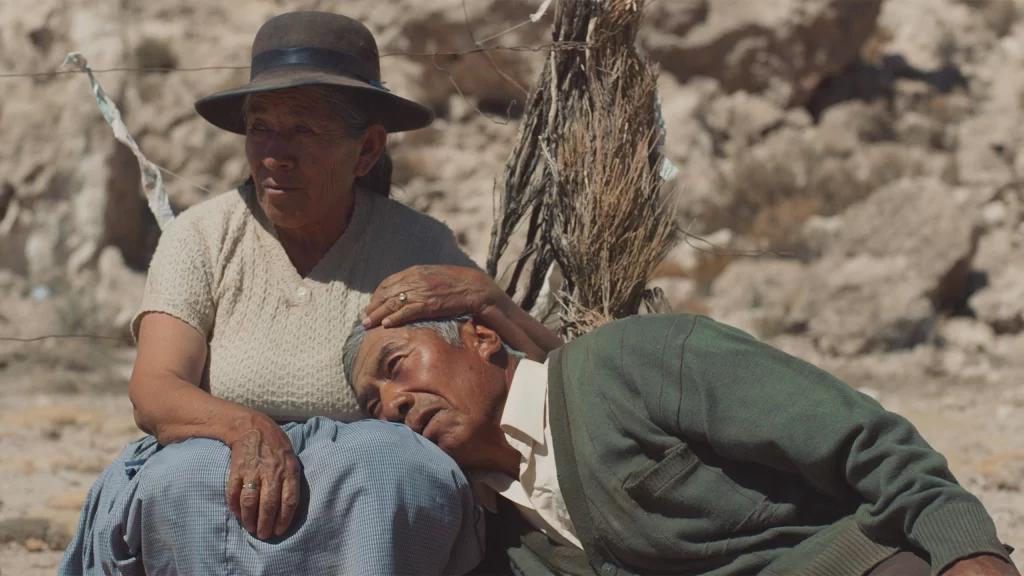
#4) Utama, directed by Alejandro Loayza Grisi – When I learned that Utama is translated in English to Our Home, it resonated so much more with me. This is a powerful, effective film that, while fairly straightforward, successfully blended several themes, most notably climate change, aging, generational dynamics, and the modernization of indigenous culture, quite well into moving portrait of love and loss. Set in Bolivia, Virginio and Sisi are an aging indigenous Quechua couple who live alone, a long walk from the nearest village, and a much farther distance from the nearest city. They have been without rain for nearly a year, which makes tending their herd of llama, and their sad garden increasingly difficult. When the water Sisi retrieves from the village pump dries up, and Virginio’s health begins to become an issue, they are faced with some difficult choices. A visit from their grandson, Clever, complicates matters as his grandfather thinks he’s a bit of a brat and visiting to do the bidding of his father (Virginio’s son). 

The gentle story does it’s work, but it’s the directorial skill, coupled with some remarkable cinematography by Barbara Alvarez, and Art Direction by Valeria Wilde that really elevate this film. The stark landscape marries stunning beauty with desolation. Powerful moments are conveyed with a look, or a gesture that moved me to tears. Every time the absurdly whimsical, hassled herd of llama entered the screen I had to smile. The low-key, but beautiful way that José Calcina and especially, Luisa Quespe portray the two leads, is worthy of consideration for nomination (and reminiscent of another South American favorite of mine, the Uruguayan Buried Treasure nominee, WHISKY) — although as none of the characters are portrayed by professional actors, I feel the director deserves a lot of credit there.

Broker

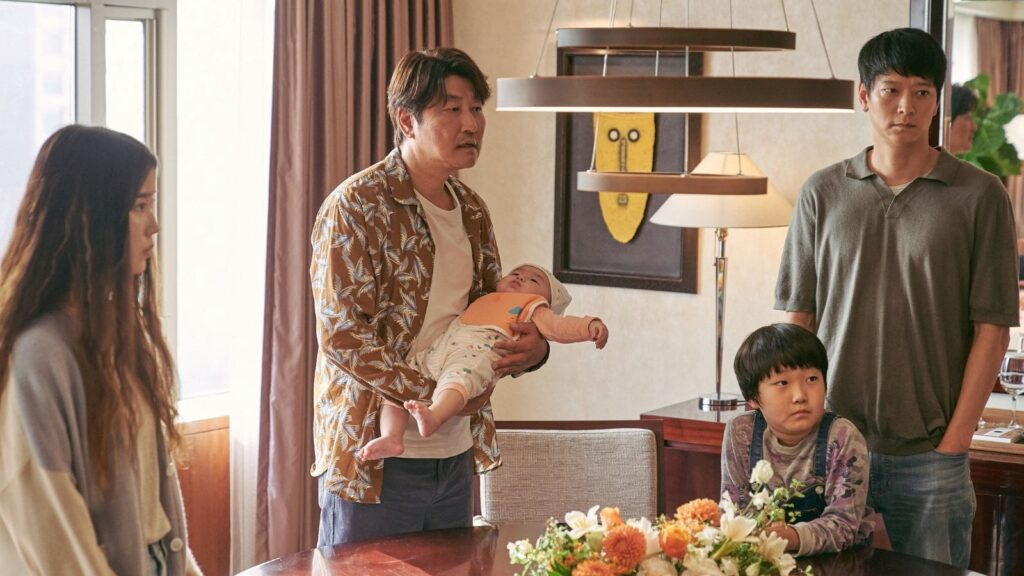
#3) Broker, directed by Hirokazu Koreeda – Sure, he’s one of my favorite directors, but perhaps because of the good but not great reviews I had seen for BROKER, I was taken by surprise at how much I enjoyed this one! It’s a bit of a flip side of his last Japanese-set feature, the award-winning SHOPLIFTERS, as both combine crime and created families, but both come at those themes from very different directions. BROKER is shot in South Korea, and boosts a couple of actors more well-known to the U.S. audiences: Song Kang-ho, from PARASITE, and Doona Bae, a Koreeda and Bong Hoon-ho alum (she co-starred with Song in THE HOST, and the TV series, “Sense8”. The complex story involves an infant being abandoned by his mother, the illegal selling of children, prostitution, murder, and found-families. It also features some of the most overt humor in a Kore-era film, with lots of laughs throughout. It also got me strongly with a few emotional scenes where I couldn’t stop the tears from flowing while I held back some sobs (that ferris wheel scene). It’s not a very subtle film, but the story unfolds beautifully, taking it’s time (hence the longer running time) so nothing really feels forced. Another scene featuring Doona Bae talking on the phone while Aimee Mann’s Wise Up plays in the background even references MAGNOLIA in a way that really took me by surprise.

Koreeda never disappoints, and BROKER, with its light-hearted caper feel, talented ensemble, and deep emotion has a lot of appeal for a wide audience. His exploration of the concept of family, both natural and found is always well-handled, from his earliest films such as AFTERLIFE, and throughout his career with such work as NOBODY KNOWS; STILL WALKING; LIKE FATHER, LIKE SON; OUR LITTLE SISTER; AFTER THE STORM; and SHOPLITERS. BROKER is a beautiful addition to that list.

My Top 20 of 2022, #’s 5 & 6

Midway through my Top 10 films of 202 we have a couple of stand-out films from Asian filmmakers, one familiar, one new to me. Both explore the mental state of the protagonist in ways that are surprising and thoughtful. It’s also great to see films with strong female leads still taking such prominent spots in my favorite films.

The Falls

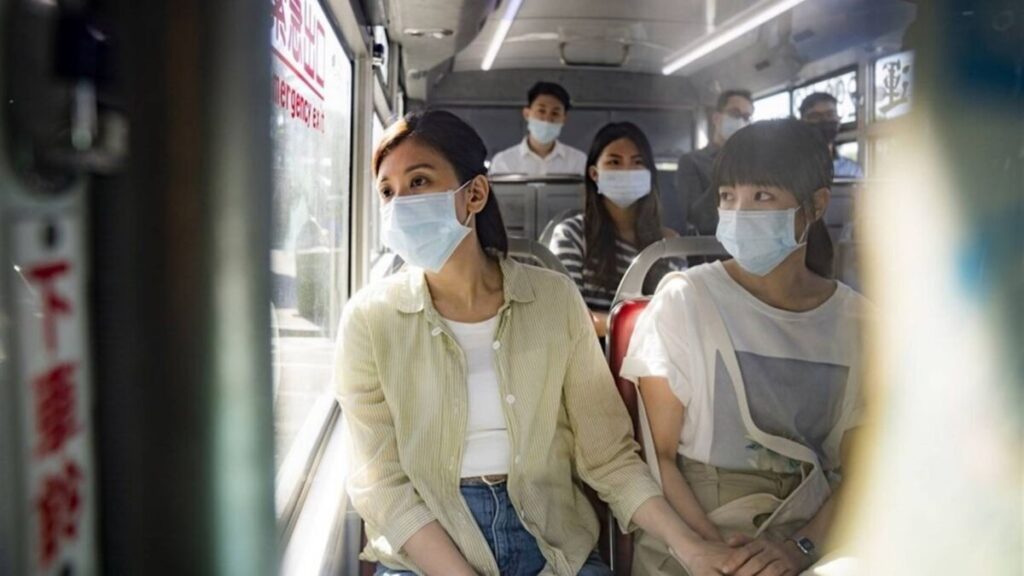
#6) The Falls, directed by Mong-Hong Chung – The Taiwanese film, THE FALLS came to may attention very early in the year with some strong reviews after being released in January. The descriptions were vague, something about a mother and daughter dealing with some difficulty while quarantined during the pandemic. That description is not only misleading, it completely misses the power and drama of this film. For brief moments during the first half hour or so, i wondered if I was watching a science fiction film… then a horror film… then the real story began to emerge. I will do you the same courtesy that was given by not revealing any more, other than to say that director Mong-Hong Chung directs a tough film with amazing skill and more importantly, compassion. In addition to the skillful directorial hand, Chung’s screenplay, which he co-wrote with Yoa-sheng Chang is strong as well, telling a story not often seen on screen with tenderness, yet without pulling the punches that may be painful for some to sit through.

The film takes it’s time too, with a two hour-plus running time, that at least one reviewer complained about. I didn’t find it too long at all, despite it’s somewhat leisurely pace. I like how things unfolded slowly… more like life than a film trying to meet a 90-minute running time. The film is really served best by the amazing performance of its two leads, especially Alysssa Chia, a film and TV star in Taiwan. Chia captures the nuance and tragedy of Lo-pin Wen subtly yet with grace and power. Gingle Wang as Lo-pin’s daughter brings it home as well. Two really strong lead actresses. This film might not resonate with everyone, but it’s just the kind of film I love.

Memoria

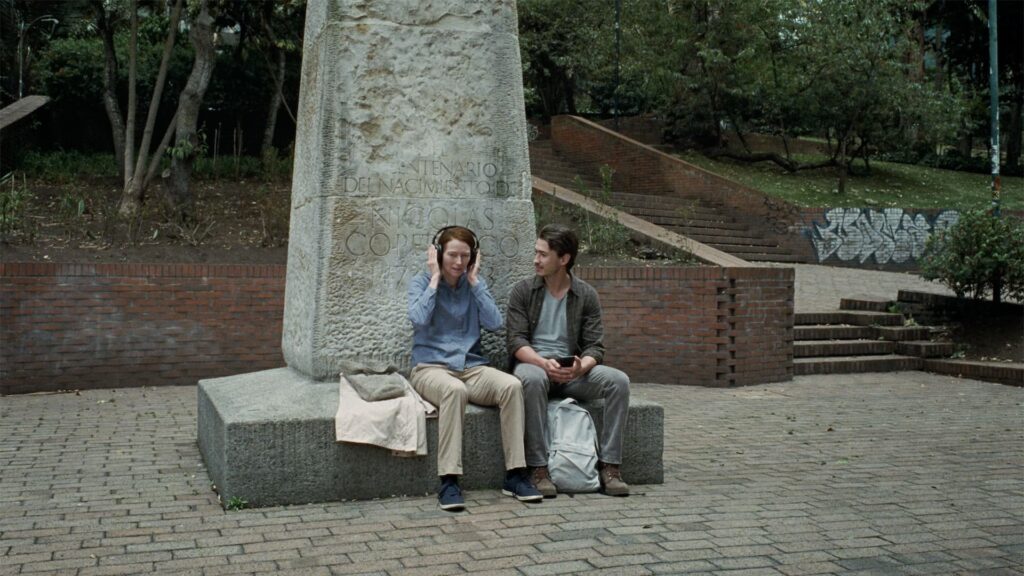
#5) Memoria, directed by Apichatpong Weerasethakul – A new film by Apichatpong (or “Joe,” as he is colloquially called) is always call for notice, but this, the Thai director’s first multi-national film, set in Colombia, in English and Spanish and with a big international star, was something to really take note of. It helped in a really big way that the international star is Tilda Swinton who manages to bring us along this bizarre and fascinating journey with thoughtfulness and curiosity.

A woman seeks the cause of a strange recurring phenomenon that causes her to hear a loud, specific sound at random times that no one else seems to hear. Her search for a cause leads in many directions, but not, where anyone could possibly expect. The film is filled with shots of great beauty, and moments of sublime drama. Not so surprisingly, there are also moments of sudden, absurd humor that take you by surprise. It’s hard to imagine anyone other than Tilda Swinton in this role (except perhaps Cate Blanchett – the two becoming more and more internchangeable with the roles they’ve been taking). Don’t let the expected leisurely pace and lengthy running time put you off. The journey is exquisite, and the payoff, mind-blowing.

My Top 20 of 2022, #’s 8 & 7

As we climb higher into the Top 10, it gets harder and harder to differentiate between the films as to their level of accomplishment: these are all such great films! What this pair of films share is a boldness of writer/director vision, and a pair of show-stopping lead performances.

Anne at 13,000 Ft.

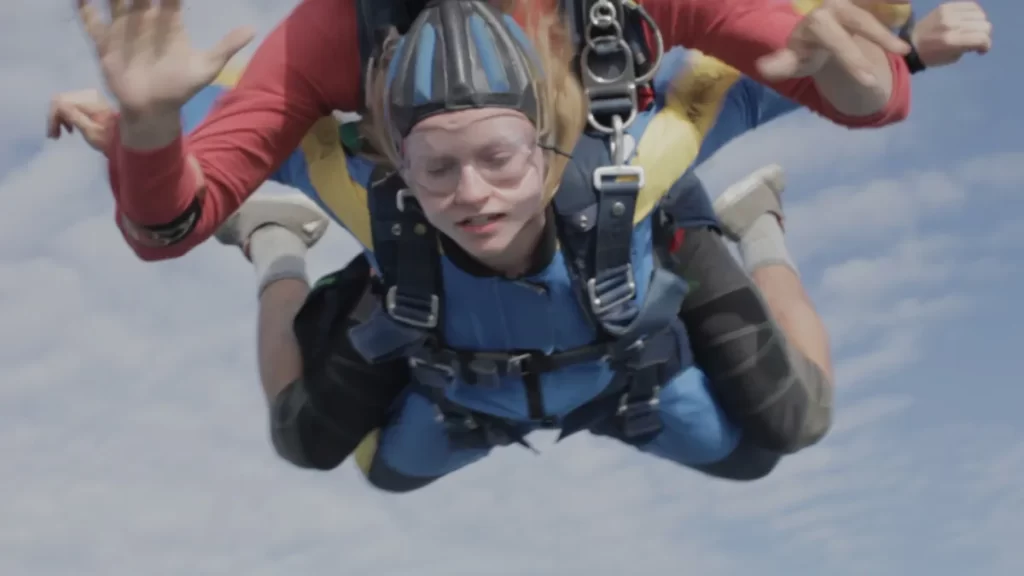
#8) Anne at 13,000 Ft., directed by Kazik Radwanski – Kazik Radwanski’s films are up close and personal… so much so that there is a certain level of discomfort in watching them. He uses intense emotions and extreme close-ups to drive his points home. ANNE AT 13,000 FT. introduces us to a young woman who works at a daycare center. As a bridesmaid for one of her co-workers, she, along with the bridal party, jump out of a plane to do some tandem skydiving. The exhilaration and yes, calm, Anne feels is something she yearns for again when she is back in her regular life. And there’s definitely something different about Anne. At first it’s just some inappropriate laughter, discomfort in social settings, discomfiting work decisions… that soon reveal themselves to be a struggle with mental illness. This portrait of a woman dealing with an illness is poignant, yet unflinching, as those around her struggle to provide assistance and support.

Deragh Campbell is riveting as Anne, and it’s with trepidation we watch her try to navigate every day life with this incredible burden. Her performance is so raw and open it’s hard to remember you are watching a film. Radwanski’s directing style keeps that honesty up front and in your face, daring you to judge while his camera holds unflinchingly as Anne makes bad decisions or behaves in ways we can’t understand. I look forward to following Kazik’s career as he continues to confound and fascinate.

Aftersun

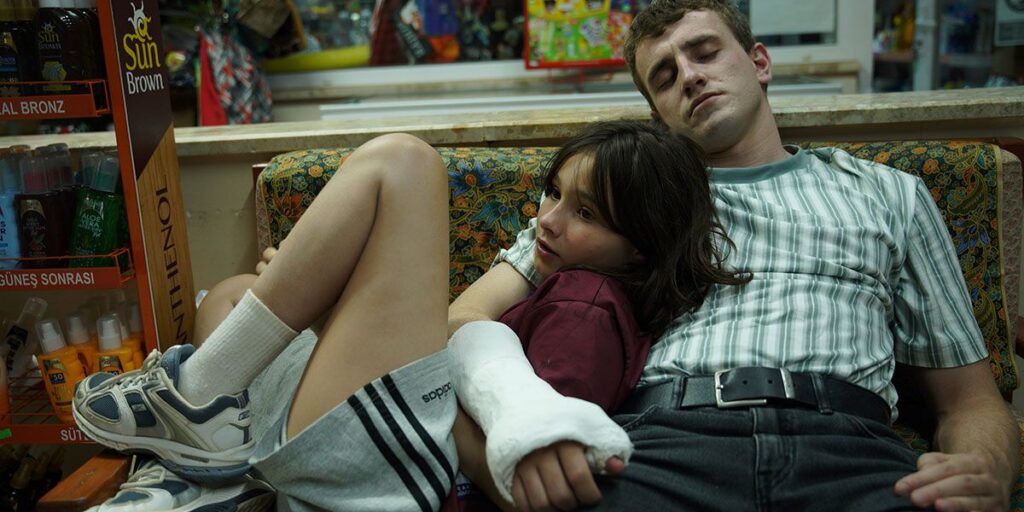
#7) Aftersun, directed by Charlotte Wells – This British father-daughter memory tale is a remarkable work as a first-time narrative film. Writer/director Charlotte Wells tells a very personal story through the eyes of a pre-teen girl about a time spent at a Turkish resort with her Dad, who is divorced from her Mom. Wells doesn’t tell a straight-forward story.In fact, for the first half of the film I found myself frustrated, not quite understanding the point of some of the extended scenes we were experiencing The latter half grew both more compelling and more obtuse, as shifting timelines, and unexplained scenes created a sense of unease, but little detail of what was actually going on. Fortunately the film is anchored by a remarkable performance by Paul Mescal playing the young dad. Loving and attentive, there is also a sense of desperation and anxiety beneath his actions. In the end when those elements grow stronger, his behavior suggests a darkness that is surprising although not entirely unexpected. Ultimately, I was very moved and impressed with the film, despite not having a solid grasp on some of the events and their sequence or meaning. It was one of those films that I wasn’t sure how I felt about as it concluded, and the next morning found I truly appreciated.