It pains to see films that I thought would be in my Top 20 or even 10 when I saw them, barely make the Top 40. That speaks to the number of quality films I saw in 2021. And while the U.S. grabs another spot on the Top 40 (as well as one shared with Canada and Hungary) we’ve got representation in this batch from Mexico, Israel, and and Irish/UK co-production. Of course, what not-surprising characteristic do all these films share? A strong female protagonist.
#35 – Pieces of a Woman, directed by Kornél Mundruczó (Canada/Hungary/USA) – The English-language debut of Hungarian, Chlotrudis-nominated director Kornél Mundruczó (WHITE GOD) is a powerful if uneven portrayal of devastating loss and grief, and how that can create emotional chasms between people who love each other. The film opens spectacularly, with a nearly half-hour, real-time sequence with nary an edit to be seen. It’s a tense, slow-build sequence as Martha and Sean, are faced with the home birth they’ve been planning for for months. Of course, there’s always a hitch, and their midwife is unavailable, so a sub arrives, with calm assurances, to deliver their baby. As one might suspect from the title of the film, things do not go well, and the remainder of the film deals with how this situation affects Martha, Sean, and those around them.
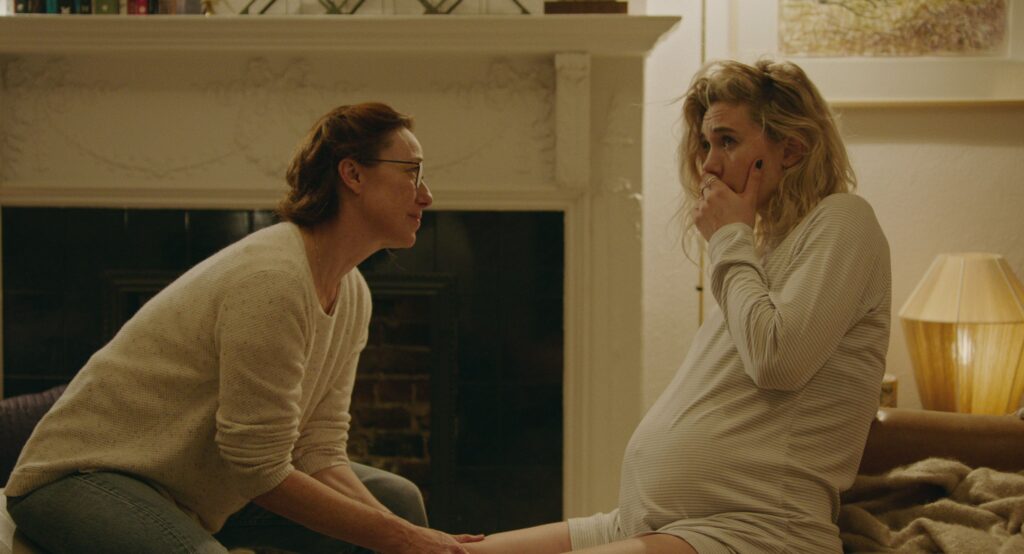
“To start with, Vanessa Kirby (who I was not familiar with) really sold it for me. Her emotional reserve seemed so much more real than hysterical wailings, or outward signs of grief. Oh, the struggle is there, and Kirby lets us see it in her eyes, or in quiet outbursts aimed at those she loves. Ellen Burstyn as Martha’s mother, is the icy, emasculating mother-in-law, who definitely rises above the script (the screenplay is the films weakness) even manages to pull off a rather clumsily written and shot monolog through her skills alone. Most memorable (no surprise if you know me) is Molly Parker’s supporting role as Eva, the midwife, who ends up on trial for her actions. Her first appearance is a beautiful example of subtlety in acting, as she capably handles the home birth situation, and when things start to go a little awry, you can see it in the tiniest ways even as she calmly keeps the situation well in hand… until she doesn’t. Ultimately, despite the clumsy, heavy-handedness of parts of the screenplay, I give PIECES OF A WOMAN high marks, based on performances, Martha’s throughout and powerful story arc, and the deft filmmaking from Mundruczó and cinematographer Benjamin Loeb.
#34 – Los Lobos, directed by Samuel Kishi (Mexico) – LOS LOBOS (THE WOLVES) is a semi-autobiographical story of Lucía, a young woman who emigrates to Albuquerque from Mexico with her two children, Max, age eight, and Leo, age five. After struggling to find a trashed studio to live in, Lucía must work long hours to make money for the family to survive. Her children are given strict rules to follow, the first being they must never leave the apartment. As Lucía’s hours grow longer and longer, the boys find ways to keep themselves occupied, watching other children play in the apartment complex courtyard, speaking occasionally to the Asian landlady who shows them kindness after an initial brusque introduction, and ultimately, venturing out and making some friends, to disastrous results. With the promise of a trip to Disney hanging in the air, Lucía’s struggles threaten to overwhelm her. Through it all, the boys show remarkable resiliency, but what they need the most is love and parenting.
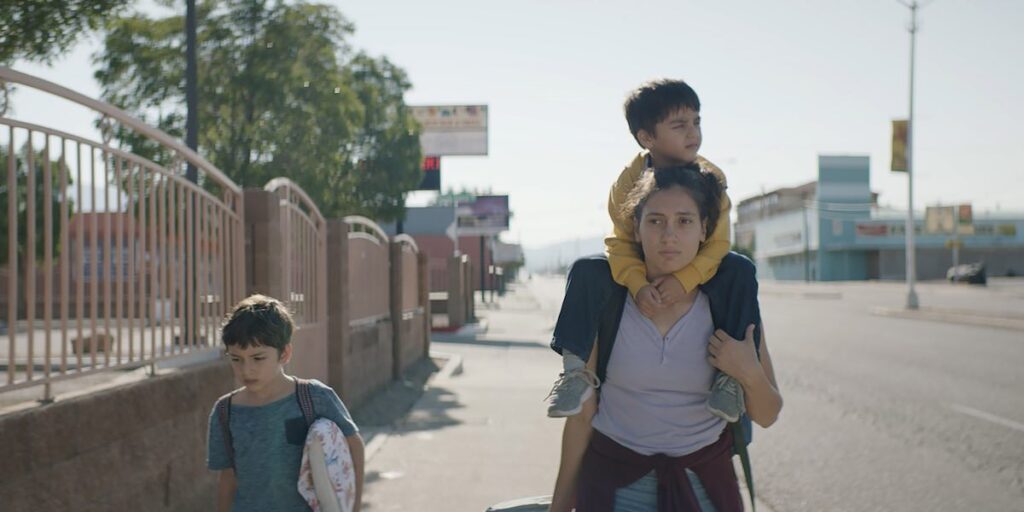
This is Kishi’s second feature film, and it’s spare look and feel, much of the film set in a single room, clearly demonstrates the claustrophobia and powerlessness of a young family thrust into this type of situation. The performances are very strong, from veterans actor Cici Lau (PING PONG PLAYA; LEGALLY BLONDE) as the gruff, yet kindly landlady, to both children, played by brothers, Maximiliano Nájar Márquez and Leonardo Nájar Márquez. But it’s Martha Reyes Arias who truly shines as Lucía, quietly exemplifying the near impossibility of a life with no support, huge responsibility, and no means to get through. It’s a very powerful little film, Kishi has constructed.
#33 – Holler, directed by Nicole Reigel (USA) – Poverty is a major problem in the United States, and recent films exploring people struggling without means to live a fulfilling life have shown how little hope exists in these cases. HOLLER follows the difficult path of a high school girl, her older brother, and their mother who is incarcerated after becoming addicted to pain-killing medication. Ruth has promise. Gifted with a natural intelligence that sees her excelling in school, Ruth could use the stability that seems like a minimal need in growing up successfully. Her brother, Blaze, watches out for her, and also tries desperately to keep up with the bills as mortgage foreclosures mount threatening to take their home. What little care and attention they get comes from Linda, their mom’s best friend and their boss at the scrap metal factory at which they both work. When Ruth finds out that Blaze had secretly submitted a college application on her behalf, and she has been accepted, she is initially upset and unwilling to leave. They don’t have the money, and despite the harsh living conditions, this film ably shows how ties of family and familiarity create an environment where leaving a bad situation seems more difficult that staying.
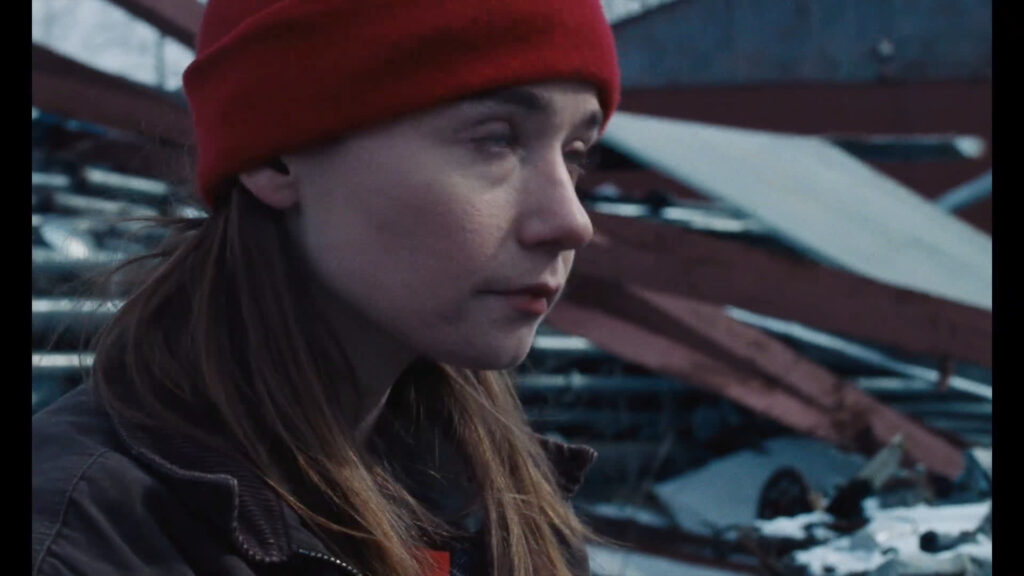
“Some critics have mentioned Debra Granik’s WINTER’S BONE as a touchstone for this film, which I definitely understand, but I see more recent films such as Nia DaCosta’s LITTLE WOODS or even last year’s BULL by Annie Silverstein. It’s interesting that all of these films are helmed by women, and perhaps that’s why family is such a strong component in the telling of these stories. Ruth and Blaze have a typical brother sister relationship, often superficially at odds with one another, but the love and care these two display by their actions is powerful and drive this movie forward. Riegel does a great job in spinning out a bleak tale, with the threat of violence all around, and little chance of a positive outcome, and leaving a glimmer of hope that is small, but surely not far from the dim reality faced by families such as this. Young actress Jessica Braden has already had a lengthy career in television and film, (including playing the Nosebleed Woman in THE LOBSTER), and handles the complex situation face by Ruth beautifully, with the just right amount of intelligence, resentment, and youthful bravado. Kudos too to Gus Halper as brother Blaze, and TV veteran Pamela Adlon as their imprisoned mother. And like Chris, I will call out well-known character actor Becky Ann Baker for bringing fire and experience as Linda. Her scenes are all strong. HOLLER is a strong film, and it will hopefully get a release this year.
#32 – Asia, directed by Ruthy Pribar (Israel) – Mother/daughter stories. We’ve seen a lot of them, and at first, ASIA seems like it might be a bit of a daughter taking care of an irresponsible mother reminiscent of a favorite film of mine, OR (MY TREASURE). ASIA sidesteps that path, and suddenly we think we might heading in more of a TERMS OF ENDEARMENT, or STEEL MAGNOLIAS direction. Writer/director Ruthy Pribar’s too smart for that as well. Instead, we meet Asia, a hard-working, hard-partying woman in her mid-thirties, who works long hours as a nurse, then takes private jobs doing home healthcare, to keep food on the table, and perhaps good medical insurance for her daughter, Vika. The two seem to have little in commons, as Vika hangs out at the skate park with her best friend, the more experienced Natalie, flirting with the boys and doing some teen-aged smoking and drinking. When Asia gets a call that Vika is in the emergency room in the hospital where she works, we learn that the teenager suffers from a degenerative disease, most likely muscular dystrophy (although never stated) and drinking alcohol doesn’t mix well with her medication. Once the set-up is revealed, the heart of the film begins, as the two women are forced to discover the heart of their familial relationship despite fits and starts, anger, frustration, sex, silliness, and a true bond of love that was always there, but emerges as Vika’s health continues to fail.
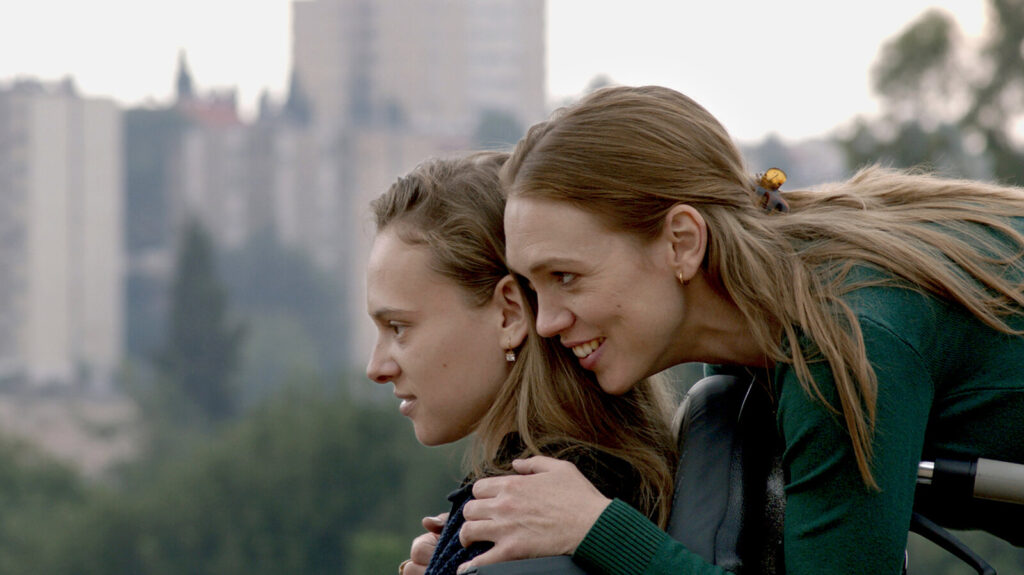
Pribar has written a great script, and her direction is assured, with nothing extraneous, producing a compact 85 minute film. It’s the acting that really lifts ASIA above the expected melodrama. Alena Yiv perfectly balances a young woman who had a child far too early, struggling to care for her ailing child, all while desperately trying to enjoy her own youthful needs. We never think ill of Asia, and Yiv brings her completely and three-dimensionally alive. Shira Haas, well-known for the TV miniseries ‘Unorthodox’ comes across as defiant in the face of a physically debilitating disease, yet accepting her shortened life with dignity and struggling to live every second that goes by whether it’s giggling with her mother, or watching a movie with the visiting nurse she’s attracted to. Yiv and Haas convey their loving bond so clearly with a glance, or a movement, and as the inevitable conclusion draws hear, it’s just beautiful.
#31 – Rose Plays Julie, directed by Joe Lawlor and Christine Molloy (Ireland/United Kingdom) – Upon reading a synopsis of ROSE PLAYS JULIE it would be tempting to try to shoehorn it into a ‘revenge-thriller’ genre. And while there is that element that inherent in the plot, it plays out more like a Greek tragedy involving parents and a child. In this case, the child is question is Rose, a young woman living in Ireland, and studying to be a vet (be warned animal lovers, there are some tough scenes in here relating to animals) who is also fully aware that she was adopted, and has a strong, loving relationship with the couple who raised her, but there has always been a curiosity of the person she would have been had the woman who gave birth to her, and put the name ‘Julia’ on her birth certificate been in the picture. Although the adoption was closed, Rose now has a name and a phone number that leads her directly to her birth mother, Ellen, a successful actor living in England. To say Rose is disappointed when Julie wants no connection with her daughter, is a bit of an understatement, so Rose actually goes to England, posing as a prospective buyer for Ellen’s home which is on the market. There she meets Ellen’s other daughter, a few year’s younger than her, and Ellen herself, where she learns that Rose was born out of a violent act that Ellen only wants to put behind her.
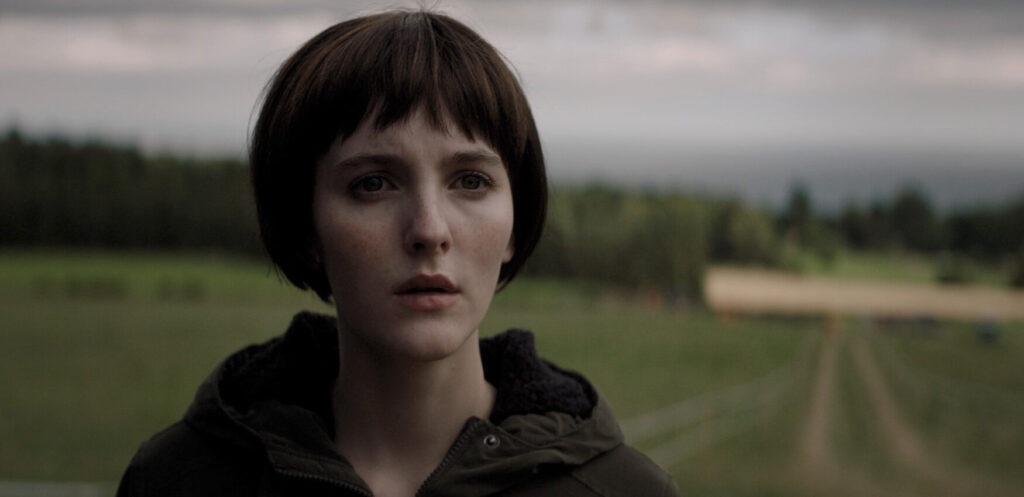
This revelation puts Rose on a different path, one where she tracks down her birth father, an archaeologist, and poses as an actor named Julie, who has been cast as an archaeologist in a play, to get a spot on one of his digs. As the pieces all start to come together — everything from Rose’s academic work studying euthanasia in veterinary medicine, Rose and Ellen slowly developing an actual relationship while Ellen is shooting a show in London, and ‘Julie’ becoming friendly with archaeologist, Peter — it seems pretty clear where things are heading, but things don’t go quite as planned, bringing us to a dark conclusion.
The writing/directing team of Christine Molloy and Joe Lawlor have delivered a elegant, well-structured fourth film together, and one that by all accounts is their most accessible. That may be true, but the pace is still deliberate, and the camera work a little on the artsy side, and it revels in the taut writing, and the strong acting by the three principals, Ann Skelly as Rose, Orla Brady as Ellen, and Aiden Gillen as Peter. This is one intriguing #MeToo drama that was actually conceived before the movement, but is handled beautifully and powerfully in a way that doesn’t take away from the horror and violence of the story, but doesn’t sensationalize it either.
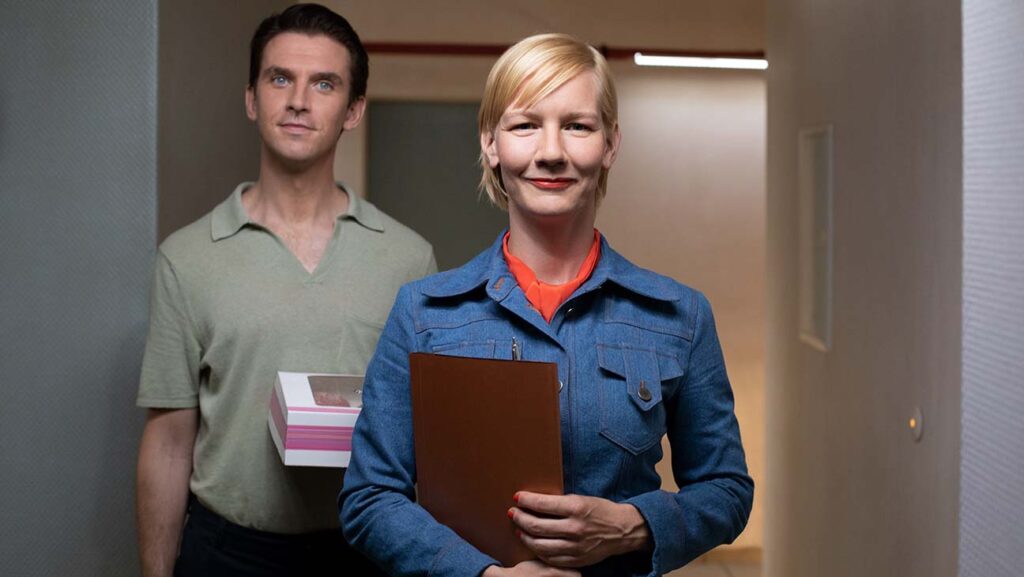

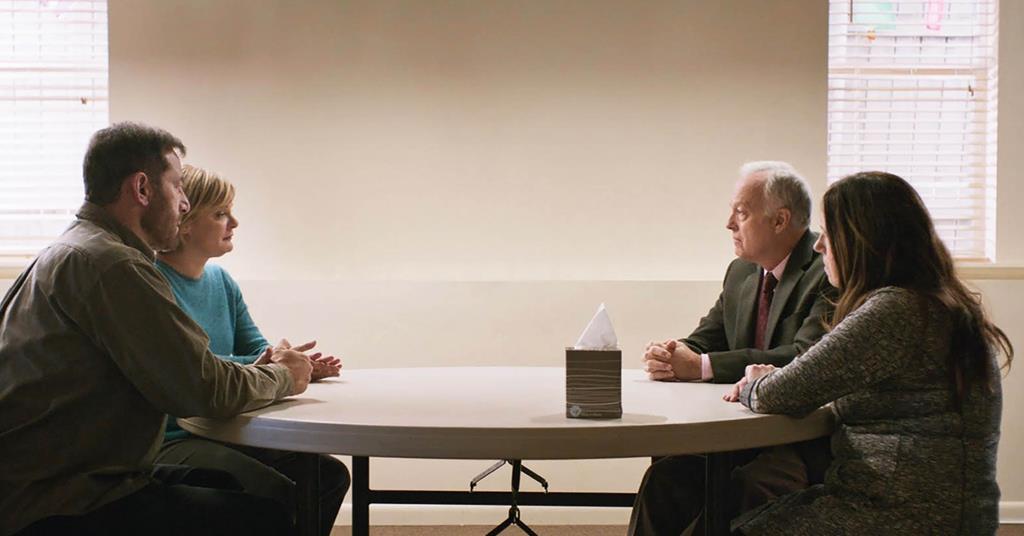
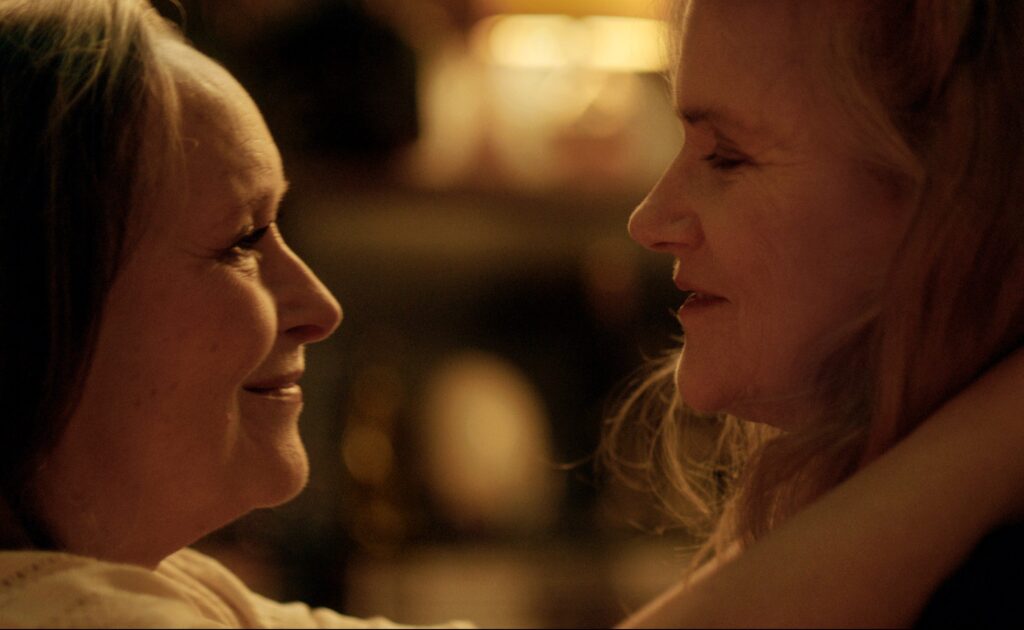

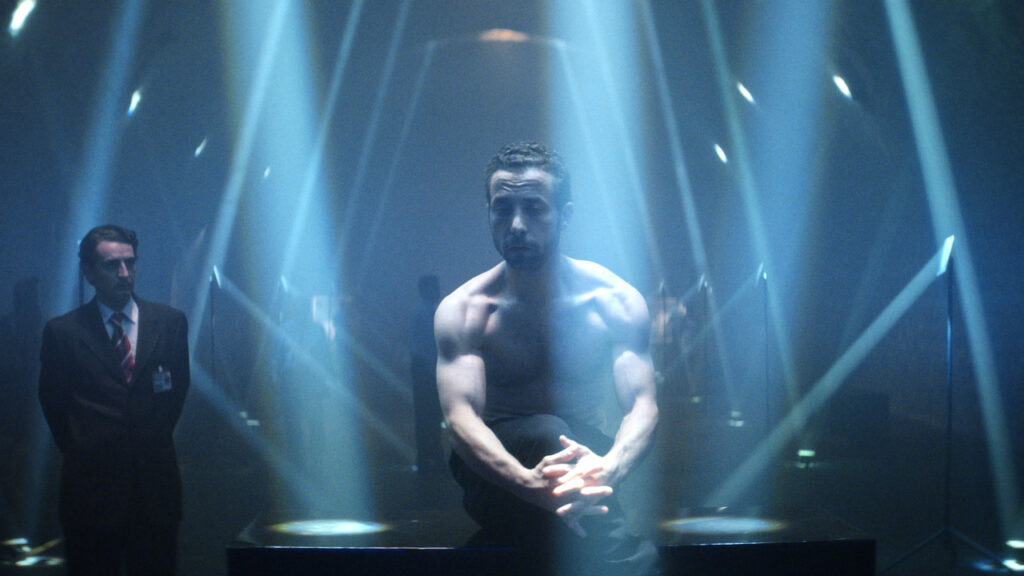

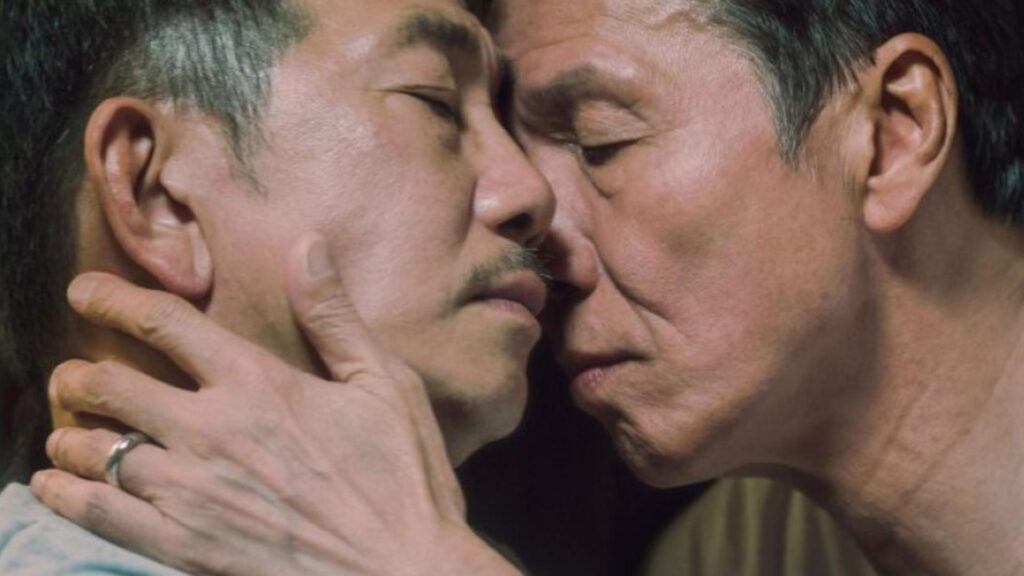



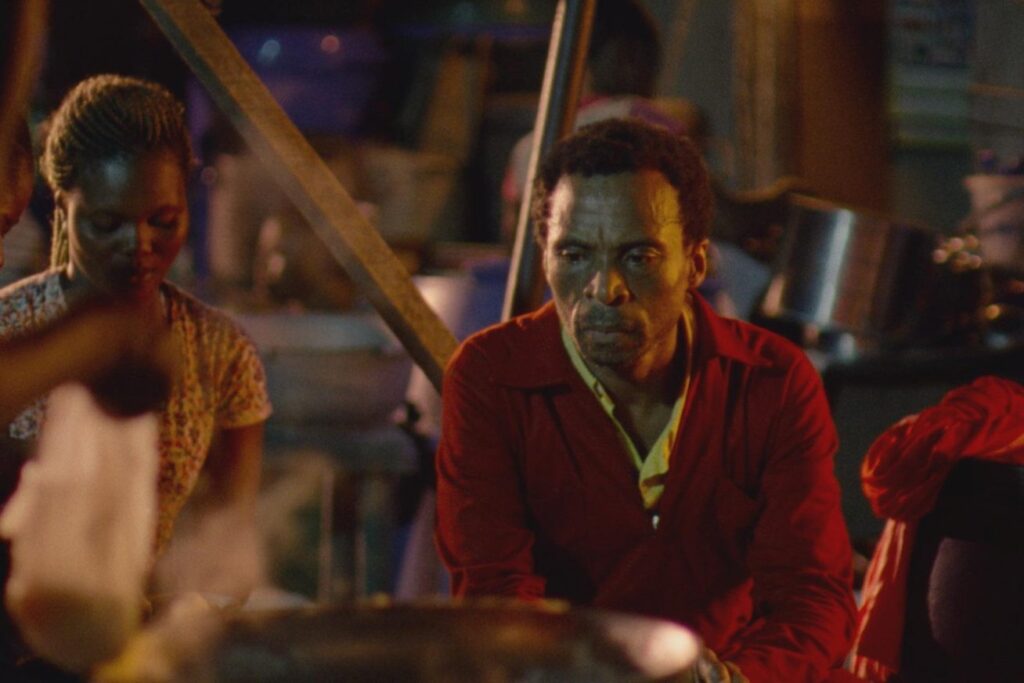
 #61 – Beans, directed by Tracey Deer – Quebecois coming-of-age film set during the Oka Crisis, the turbulent Indigenous uprising that tore Quebec and Canada apart for 78 tense days in the summer of 1990. It was certainly a dark moment in Canadian history, and the archival footage director Deer weaves into the narrative film is incredibly effective to tell this horrifically fraught tale. The coming-of-age story, centering on a 12-year-old girl whose Mohawk name is difficult to pronounce, so everyone calls her Beans, is slightly less successful, although makes for a nice humanistic touchstone while the racial prejudice threatens to smother everything around it.
 #60 – Cowboys, directed by Anna Kerrigan – There was something about this modern-day western that is also a domestic drama, and a social commentary about gender, that really worked for me. Writer/director Anna Kerrigan hits all the expected tropes then upends them a bit, making them all that more real, and effective. Recently separated from his wife, Troy (Steve Zahn), who is treated for an unspecified mental illness after spending a couple of years in prison, runs off with his trans son, Joe, heading through the Montana wilderness in hopes of crossing the border into Canada. His ex-wife (Jillian Bell) refused to acknowledge their son’s gender, which was causing Joe great amounts of confusion and discomfort. The local law, in the form of a Detective named Faith (Ann Dowd), leads the effort to track them down. When Troy’s medication is lost in the woods, everything grows more complicated.
 #59 – Red Moon Tide, directed by Lois Patiño – The Galacian coast in Spain featured in RED MOON TIDE is wild and beautiful, and provides a dark and mythic backdrop for this unique film written and directed by Lois Patiño. This haunting tale is told with an unnerving combination of staged, static shots… on landscapes, groups of people, people alone, mostly still, like mannequins staged for some sort of macabre exhibition, and voiceover, presumably the inner monologues of the frozen townsfolk in tableaux. They are ruminating about a fisherman, Rubio, who is convinced a massive creature is lurking in the depths of the ocean, hunting the shores of the town, as he discovers more and more corpses at sea. He retrieves the corpses to bring the villagers back home, but now his ship has run aground and he himself is among the missing. Along with Rubio, it seems the spirits of the villagers have fled as well, leaving only their bodies… immobile, waiting… for what, we are not sure.
 #58 – Perfumes, directed by Grégory Magne – There’s nothing all that unique about this French comedy, but it’s quite noteworthy, and enjoyable, because it really does everything right. Guillaume (Grégory Montel) is a chauffeur, whose recent traffic violations are making his boss reluctant to use him on jobs. Going through a divorce, Guillaume needs a steady income in order to get a larger home so he can share custody of his daughter, who he adores, so his boss lets him take a client who is known to be difficult. Anne Wallberg (Emmanuelle Devos) is a former celebrity in the perfume world. but she has fallen out of favor and now takes jobs set up by her agent that take advantage of her ‘nose,’ a discerning sense of scents, to mask the smell of a odor-belching factory, or replicate the smell of a fine leather handbag for atmosphere. Anne is soft-spoken, but arrogant and with high expectations, treating Guillaume more as a personal valet than a driver. Their evolving relationship forms the core of the film.
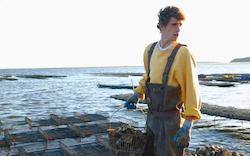 #57 – Fish & Men, directed by Adam Jones and Darby Duffin – Filmmakers do a great job weaving multiple narratives into a cohesive story about the fishing industry from ocean to plate. From Gloucester, MA to Norway, Japan, Montauk NY, Washington DC, Wellfleet, and Los Angeles, this documentary manages to cover a lot of ground and a lot of fascinating, related subjects.
 #56 – I Was A Simple Man, directed by Christopher Makoto Yogi – One of the many great films exploring grief that I enjoyed last year, this film follows Masao on his gradual journey from life to death. Much of that journey takes place in the form of memory, but like UNCLE BOONMEE WHO CAN RECALL HIS PAST LIVES, Masao is also visited by his beloved wife who died years before and sits with him as he loses touch with his life. Masao led a life of isolation, so it’s also difficult for the family he is leaving behind who now find themselves called upon to help out as his body starts to shut down. While Masao and much of his family live on the Hawaiian island of Oahu, they live on opposite sides, and one son lives on the mainland. It falls upon one of his grandsons, Gavin, to take care of him during his final days. Gavin is perplexed by this situation as he never really knew Masao very well when he was alive, and his rural way of life differs greatly from big city life in Honolulu. Masao barely registers Gavin’s presence, lost as he is in his memories, and preparing for his journey.
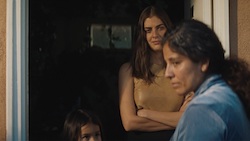 #55 – Ayar, directed by Floyd Russ – This experimental film blends the real life stories of the actors involved, with a fictional narrative about three generations of immigrant women exploring complex mother/daughter relationships and the difficult choices that they face. Ayar wants to attend her daughter’s fifth birthday party. She gets a cake, a balloon, and heads over to her mother’s home where the party is underway. When she arrives, Ayar’s mother, Renata tells her family to take the girl inside, while she confronts her daughter, telling her to leave. It turns out that Ayar left her daughter in Renata’s care five years ago when she headed to Vegas with a man who wanted to make her a singing star. It’s a tense, emotional confrontation, made all the more charged because of the COVID-19 pandemic the characters are dealing with. Most interestingly, the film features brief sequences when the two lead actresses are interviewed about their own life experiences and how some version of their lives ended up becoming the basis for the film’s narrative. This melange of family drama, pandemic horror story, and behind-the-scenes making of a film documentary come together to create something unique and compelling.
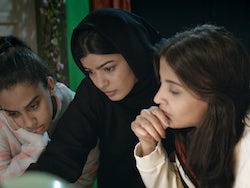 #54 – The Perfect Candidate, directed by Haifaa Al-Mansour – Maryam recently bought a sporty, blue car (almost all of the other cars seen on the roads are white or silver) and she is seen driving it in mammy scenes. Yet she still faces many of the limitations of her gender in modern day Saudi Arabia. Although she is a doctor, she must endure the disgust of many older, male patients who refuse to have her touch them, or even look them in the eye, and would rather a man, even an unqualified man, treat them when injured. In the catalyst situation for the film, Maryam seeks to travel to a medical conference in Dubai to interview for a position at a more progressive hospital, only to be denied when her travel papers are not in order, and her father is unavailable to help renew them. In an attempt to get help from a relative in an administrative government position, Maryam signs up to run for Municipal Council in her town, an action that changes her life and opens her up to possibilities she never thought possible.
 #53 – Keep An Eye Out, directed by Quentin Dupieux – Dupieux has such an offbeat way of telling a story, and this film doesn’t really reveal itself fully until the end, so I won’t give anything away. What starts as a police interrogation, with maybe one or two hints that it’s a little quirky, end up as a bizarre examination of story-telling, or exposition. I really don’t know what else to say about it, but it’s fun and well worth a look at just over an hour.
 #52 – Summer of 85, directed by Francois Ozon – I wasn’t really expecting a lot from this coming-of-age, cum summer romance between two beautiful young men (barely) in a seaside resort town in France. It seemed fairly straight-forward, except we are immediately dropped into a flashback where we know something terrible has happened. It quickly became apparent that this film had a bit of a melodramatic, nearly camp undertone that underlay the over-the-top romanticism of one young man’s first love, and another’s capriciously tormenting actions that lead to devastating consequences. The passion swirling around the boats on the sea, or in the fishing shop where the two boys work with one of their mothers is sweeping, and something that hopefully we have all been caught up in at least once in our lives. It certainly seemed authentic from a teen point of view, and somehow it all worked for me. Not in a serious way, but in a fun, over-the-top way.
  #51 – Sweet Thing, directed by Alexandre Rockwell – A 14-year-old girl goes on the run with her younger brother and a new friend in this nicely balanced fantasy and hard-hitting slice of reality from Alexandre Rockwell, SWEET THING. Billie, named after the famous singer, takes care of her younger brother Nico, and her alcoholic father, who is caring a fairly functional sometimes, and horribly out of control at other times. Mom has taken off to spend time with a boorish boyfriend. Despite this, Billie is filled with caring, and she is the glue that keeps this family going, but it’s a burden to hard for anyone, much less a 14-year-old girl to bear, and when her dad is arrested and sent to rehab, and Billie and Nico must spend time with Mom and boyfriend at his beach house, that’s when things really take a turn for the even worse. Shot in gorgeous, grainy black & white the streets of New Bedford, MA never looked grimmer. Rockwell uses his family for the leads, with his two kids playing Billie and Nico, and their mother playing their movie Mom. As Billie, Lana Rockwell is a star in the making if she wants to pursue acting as a career. She is captivating on screen, with presence, warmth, and a gorgeous look.