Now we’re getting into films that I really enjoyed in 2025. So many of these films could have been in my Top 10, but I saw so many films they got pushed into the Top 20. The first half of these films scored 4 cats out of 4, with the top half moving into the 4 1/2 cat range. All of these films also fall firmly into the independent film category, and it’s a nice mix of new directors, and seasoned favorites, including a comeback for a beloved director who hadn’t made a new film for quite a while.
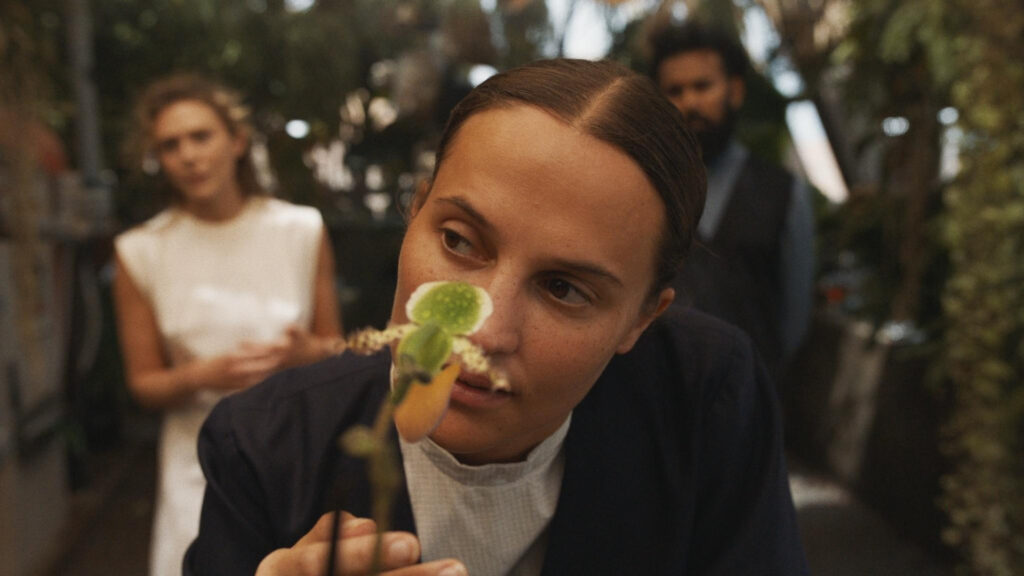
#11) The Assessment – I love a great science fiction film, and they’re hard to make. I tend to enjoy independent sci fi flicks, much more than big budget films, because the stories are usually more imaginative, and human centered. THE ASSESSMENT truly first the bill, with phenomenal direction Fleur Fortune, a great script, exquisite cinematography and really wonderful acting.
At some unspecified time in the future, “civilized” society live a monitored and controlled life under domes to protect itself from a degrading, hostile environment. A young couple decides it’s time to have a child, but to do so, they must pass a rigorous assessment to prove that they would be good parents, a method of contolling the population. This assessment consists of a week-long, in-house visit by a specially trained assessor, that puts the couple through an increasingly difficult and invasively inapproporiate series of tests that strain both credulity, and the couple’s relationship.
While Alicia Vikander, who plays Virginia, the Assessor, has the showier role, handles it beautifully, I was spellbound by Elizabeth Olson’s Mia, who is being assessed along with her husband Aaryan (Himesh Patel). The arc of her character, right through to a major revelation toward the film’s conclusion really runs the gamut of emotions, and Olson is up to the task. Wonderful, both terrifying and amusing small supporting role from Minnie Driver. Production design and cinematography are exquisite, and director Fortune has a strong grasp of her constructed world, and the people who inhabit it.
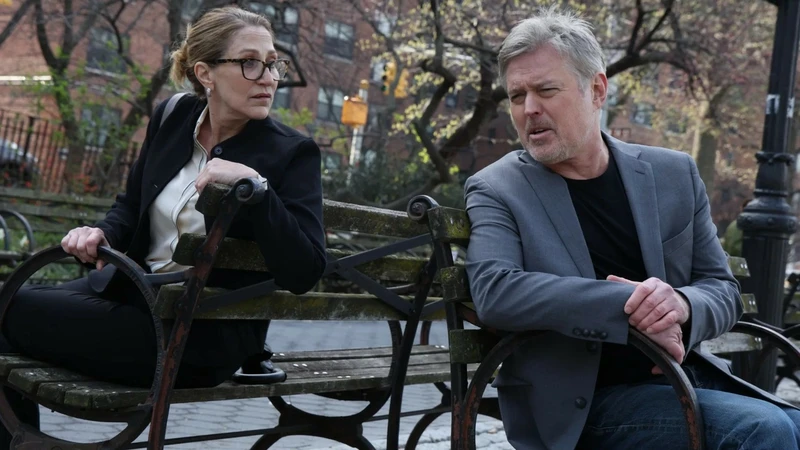
#12) Where to Land – As a major fan of director Hal Hartley’s films, especially his early ones in the late 80’s through the mid-90’s, I was brimming with eager anticipation for his first feature film since 2014’s NED RIFLE. Gathering together a nice ensemble of actors with whome he worked throughout his career, WHERE TO LAND seems drawn from Hartley’s own life, telling the story of a successful director of romantic comedies who is getting older and setting his affairs in order. When he inquires about a job as a groundskeeper at the local cemetery, his friends immediately suspect that something seriously wrong is up with his health.
Hartley’s films are funny, touching, and spend a great deal of time philosophizing about life, and WHERE TO LAND is no exception. While his early films focused on relationships and youth, it only makes sense that now in his mid-sixties, the director is focusing his philosophizing in another direction. The result is still funny and moving, and a beautiful return to form that had me choked up in the opening scenes, as his precise circular dialog washed over me like a long lost friend.
Bill Sage is terrific as the director’s stand-in, and his scenes with Robert John Burke – his co-star in Hartley’s SIMPLE MEN (1992) invoked a beautiful nostalgic feeling. Another great appearance was from Edie Falco, who was featured in several of Hartley’s earliest films. But WHERE TO LAND is way more than a nostalgia piece, as its witty and thoughtful ruminations on life, aging, and relevance are sagely discussed wrapped in the absurdity of many of Hartley’s best dialog. I hope we don’t have to wait another 11 years for another film.

#13 ) Caught by the Tides -Jia Zhangke’s remarkable film was created using footage shot over a 22-year period. In the lat nineties, Zhangke got his first digital video recorder, and was shooting things left and right. Footage and outtakes from his next three films, UNKNOWN PLEASURES, STILL LIFE, and ASH IS THE PUREST WHITE, were all incorporated into CAUGHT BY THE TIDES to tell the story of two lovers, Qiao Qiao (played by the director’s real-life wife, and former Chlotrudis nominee, Zhao Tao) and Guao Bin (Li Zhubin) over the years as they become separated and eventually find one another in present day — with the actors returning to film new footage.
As expected, the editing used in TIDES is phenomenal (and one this year’s Chlotrudis Award in that category). Zhangke creates a compelling story out of his outtakes that doesn’t feel at all forced, and ends up in such a life-affirming conclusion, just after the pandemic has kept the world so isolated. The film fill have much more resonance if you’ve seen the earlier works, but it’s not necessary. CAUGHT BY THE TIDES is a wonderful and innovative new entry in the director’s filmography.
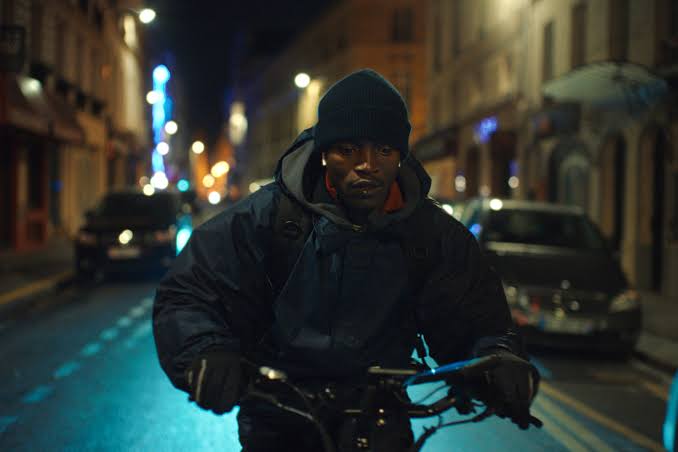
#14) Souleymane’s Story – Souleymane races through the streets of Paris on his bicycle at night, delivering meals to make money. Souleymane works tirelessly during the day to learn a story that he can convincingly tell that will move an immigration officer to grant him asylum from his home country of Ghana, and allow him to remain in Paris. We meet his sponsor, helping him prep, and his fellow refugees, all at different stages of their process, many racing from one job to another trying to get by.
Director Boris Lojkine, working from a script he wrote with Delphine Agut, keeps the intensity high, while exploring the path of a hard-working, good man must take to succeed in his quest for asylum. The script is loosely based on lead actor Souleymane Sangaré’s own story, which lends an air to authenticity. Cinematographer Tristan Galand, and the film’s incredible sound design team, immerse the viewer in the high-speed, world of busy Paris nights as Souleymane’s races from destination to destination, rushing on his bike to make appointment times, or catch buses. The first three quarters of the film uses that relentless pace to capture the desperation of Souleyman’s plight, until the final quarter focuses in on the much-anticipated interview, which turns up the intensity even higher. Sangaré’s performance ably assists in capturing our attentions and sympathies, and has us rooting for Souleymane every step of the way
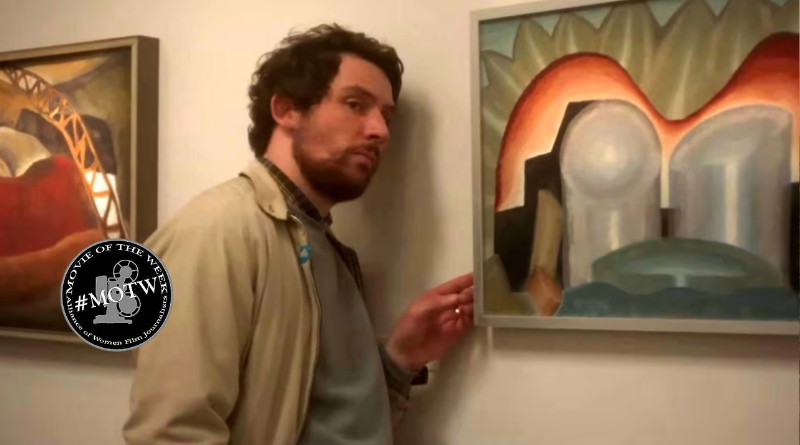
#15) The Mastermind – You know it’s a strong year if a new Kelly Reichardt film can’t crack the Top 10. It’s not that The Mastermind isn ‘t a great film, capturing a time in America in the early 1970’s with subtle beauty and an understated performance by the ubiquitous Josh O’Connor. Obstensibly, The Matermind is an art-heist film, but in typical Reichardt fashion the expected thriller aspect of the genre is subverted to examine the sheer bravura and incompetence possessed by the mastermind who planned it. What the film truly explores is a character study of a handsome, white man rolling through life with the privilege of a supportive wife, wealthy parents, bored enough to see if he can pull a crime unscathed. His male privilege highlighted by the way he ignores the transformation of the country around him.
Reichardt sets the film in a fictional museum in Framingham, MA, although sadly chose to shoot the film in Ohio. In addition to a strong performance by O’Connor, there are some terrific small supporting roles from the likes of Hope Davis, Gabby Hoffman, John Angaro, Eli Gelb, Alana Heim, and Amanda Plummer. It’s a great addition to a filmography of a filmmaker whose films I anticipate with each release.
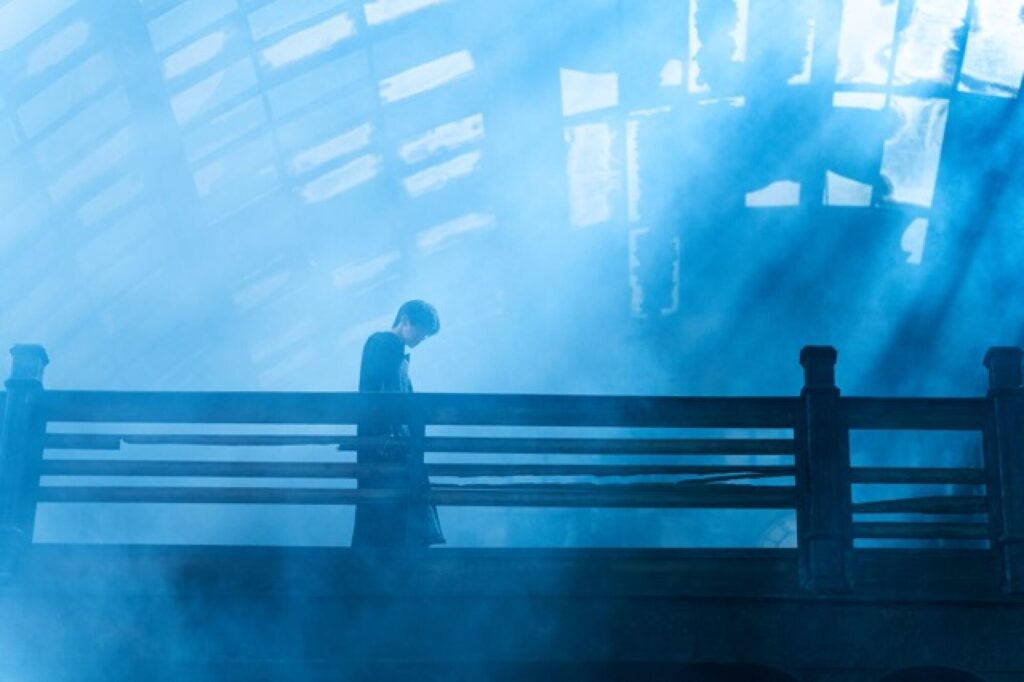
#16) Resurrection – I wish I had written a more fleshed-out review of Bi Gan’s Resurrection closer to my having seen it, as it’s the type of films, dense and somewhat opaque, that require reflection after viewing, but lends itself to losing some details months later, even after seeing it twice. I will say that after both viewings, I was blown away by the scope, visuals, and beauty of the film, as Bi Gan captures such expansive themes as cinema and the 20th century with such wonder. Needless to say, he’s one talented filmmaker.
The film is structured in a series of vignettes about a Deliriant, a being who continues to dream despite the collective decision by society to abandon that activity. The framing device, whereby the Deliriant is captured and examined before its escape is bizarre and wonderful. We follow this Deliriant as it is pursued through its dreams using a film projector, exploring the century in a series of cinematic stories highlighting the wonders of cinematography, production design, an the artistry of imagination. It’s no coincidence that Resurrection emerged during a time when the world faces a stark lack of dreaming, wonder and empathy.
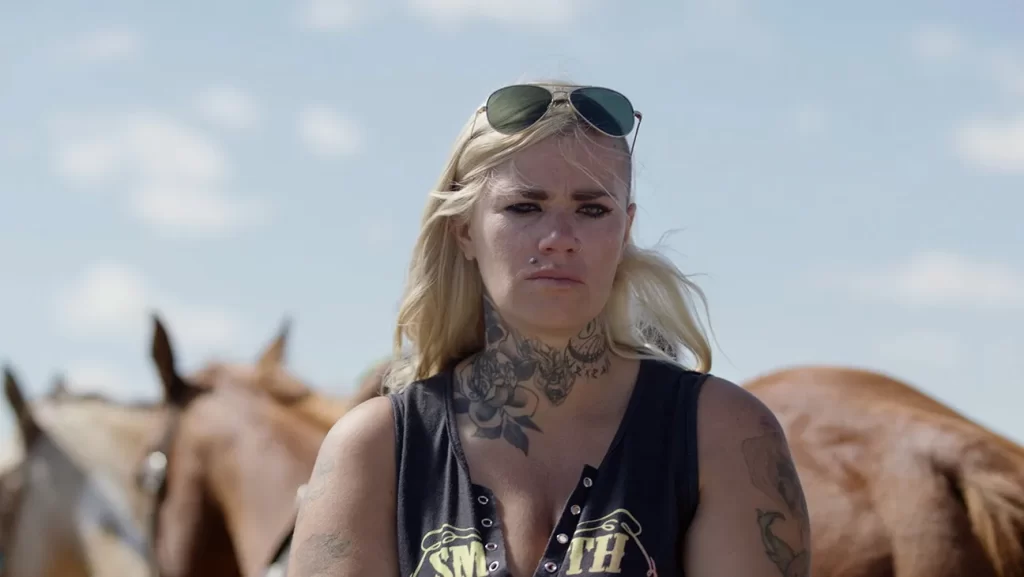
#17) East of Wall – Kate Beecroft’s debut feature, EAST OF WALL is one of those films where you can’t really tell if it’s a fictional narrative based on reality, or a documentary re-enactment with a couple of professional actors and a screenplay thrown in to give it some shape. It tackles a bunch of themes, grief, trauma life on the socioeconomic margins, being a woman in a man’s world (still) and family dynamics, tosses in some beautifully shot and integrated metaphors between the characters (mostly women) and the wild horses they work with, to create something truly beautiful.
The South Dakota ranch run by Tabatha Zimiga (playing a version of herself) provides a haven for kids whose families have failed them as has the government. Tabatha is still reeling from the sudden death of her husband a year ago, and three kids, one, the teenaged Porsha (played by Tabatha’s real daughter with the same name), just as traumatized as she is. One of the film’s professional actors, Scoot McNairy, plays a wealth Texas rancher who comes in with an offer to buy the 30,000 acre ranch from Tabatha, but let them continue to live and work it just the same. The other is Tabatha’s mom, played by Jennifer Ehle, in one of the standout performances in the film. The other, and makes the whole thing work, is Tabatha herself. Like the badlands where the story is set, there is beauty, harshness, and the threat of it all crumbling away, and Tabatha brings that to her debut on the big screen.
Cinematographer Austin Shelton, shooting his first feature capturtes some visual poetry, both from the landscape, the photography of the horses, or the long gorgeous shots of Tabatha lost in thought. Reminiscent of NATIONAL ANTHEM, but without the undercurrent of sex and sexual relationships, which this film avoided.
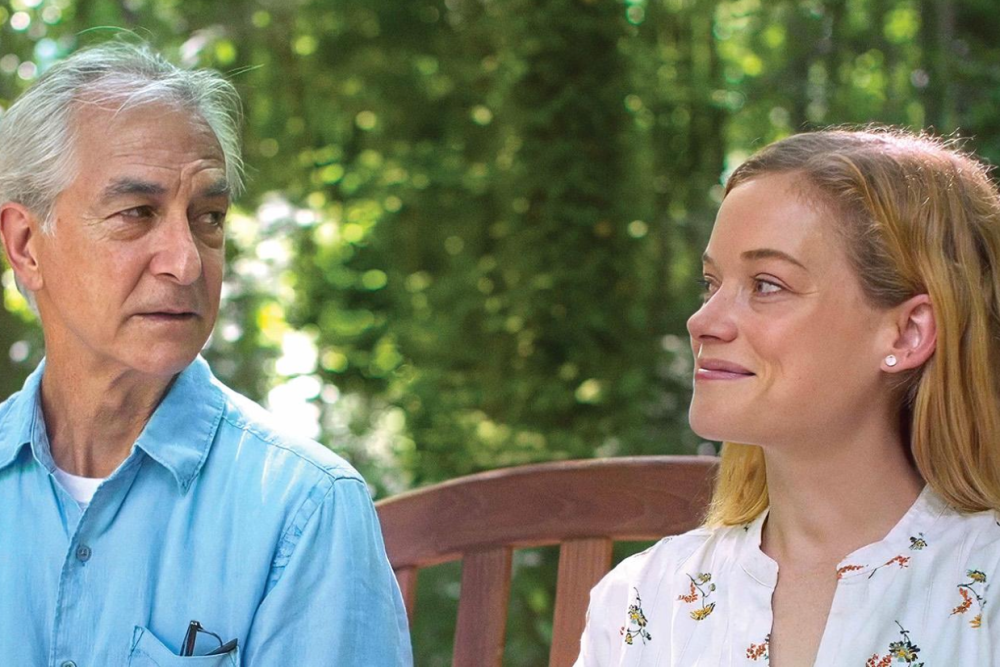
#18) A Little Prayer – I love finding these powerful, intimate films that just don’t get the same attention as the splashy blockbusters. And, of course, family dramas as my go to genre. This lovely, gentle film packs quite an emotional wallop. Quiet and understated, with some exquisite acting, and beautiful direction. David Straithairn is superb, as a father dealing with the fact that his children are in trouble. The relationship between him and his daughter-in-law, played beautifully by Jane Levy is something unique and tender. Celia Weston is also terrific as his wife and partner-in-crime.
From Angus, McLachlan, the writer/director of JUNEBUG. Makes we want to go back and look at that film again. Both share the North Carolina suburbs as a backdrop, where religion and quirky characters are important, but not overused, and not made fun of. This was a special, overlooked gem that deserves another look.
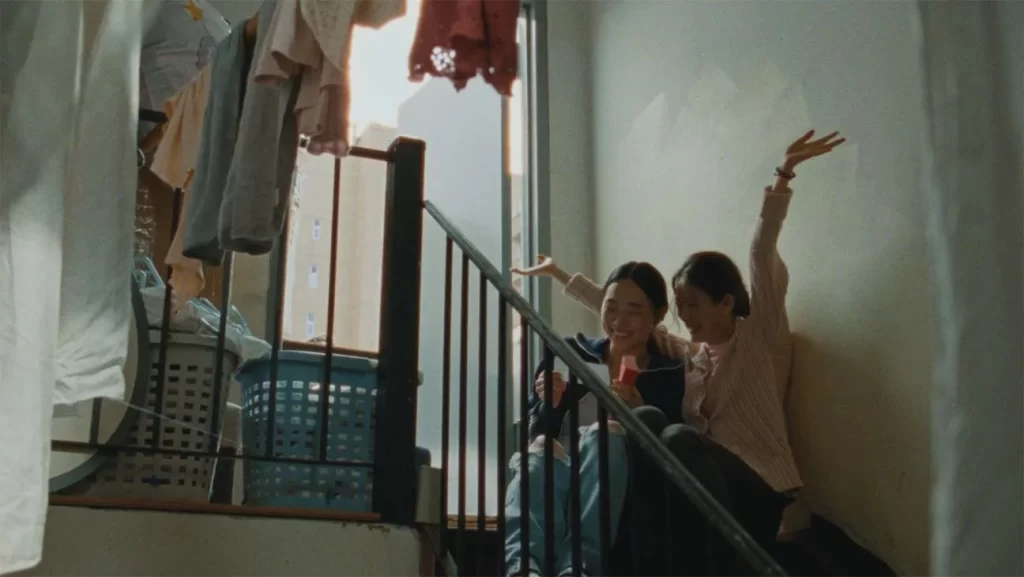
#19) Blue Sun Palace – Low-key and understated, but writer/director Constance Tsang’s debut feature, packs a strong emotional punch. The film features a lengthy prologue that leads you to believe that one character is the lead, then switches after a surprising turn of events, taking the viewer down a long unexpected path.
Tsang explores the alienation of being an immigrant in NYC, as well as the sudden grief that can totally alter the trajectory of a life. Tsang uses a less gentrified area of Manhattan as the backdrop for much of this film, and it’s instantly recognizable even if you’ve never been there. Great to see Tsai Ming-liang regular, Kang-sheng Lee in a starring role, playing his usual taciturn self. Gorgeous cinematography as the action of the film changes starkly after the first third, then morphs again toward the end.
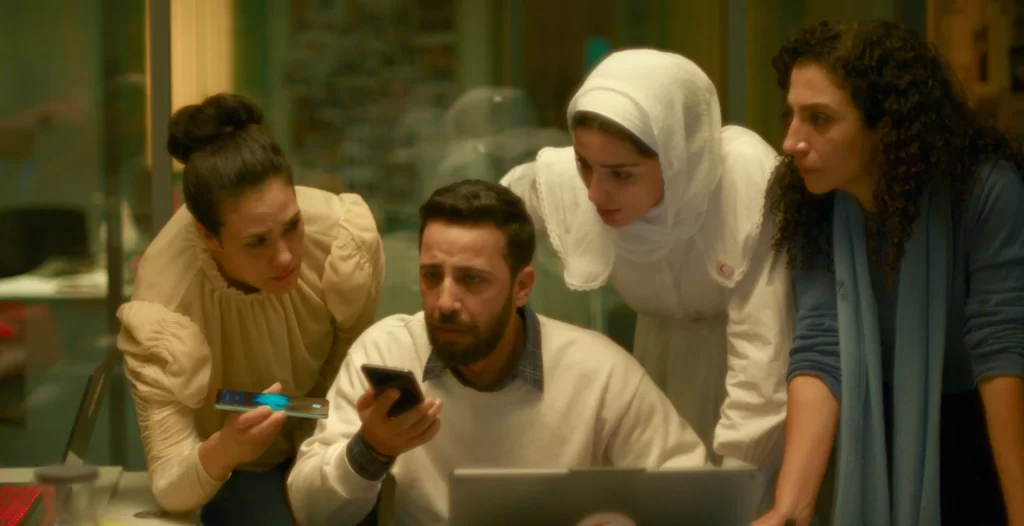
#20) The Voice of Hind Rajab – The workers of a call center struggle to help people stranded in war-torn Gaza, by negotiating with the military and the emergency responders who must all coordinate to allow movement in the area. Based on the somewhat controversial choice to use the actual voice of a 6-year-old girl who is trapped in a car with her dead family while she talks to the call center where they are desperately trying to send someone out to rescue her.
This was a tough film. About halfway through the film I started to see what this film was really about, and it’s a difficult film for sure. Great job maintaining the tension when all you’ve got is a call center and a little girl’s voice. Some really strong performances among the call center workers too.