Entering the Top 40, it’s getting harder and harder to rank these films. #’s 38, 39 and 40 all should have been ranked higher, except for a few noticeable flaws that pushed them further down that offset the amazing work featured in each of them. For a few of these films there is also an inherent tension of my immediate reaction after seeing the film, and how well they have sit with me as time has passed. I try to capture that immediate feeling, but the longer-term affect a film has on me is important as well. At any rate, here we go with #’s 40 down to 36.
#40 – I’m Your Man, directed by Maria Schrader (Germany) – Reading the premise of this film, which I will try to not to reveal here, you immediately thinks of some hokey, 80’s romantic comedies, that can’t compare to the emotional exploration that I’m Your Man tackles with its main character, and the interesting pathways she must follow. One particularly interesting examination comes when a research project that Alma and her team are working on is upended when another researcher half a world away publishes an article on a similar theme before her work is completed. A character, unfamiliar with human emotions wonders why this occurrence upsets Alma, as the theory she was researching was proven to be true. He wonder why this isn’t a cause for celebration as it validates her work. That competitive drive to be the first is lost on him. It’s an interesting philosophical rumination that is not often tackled in a romantic comedy.
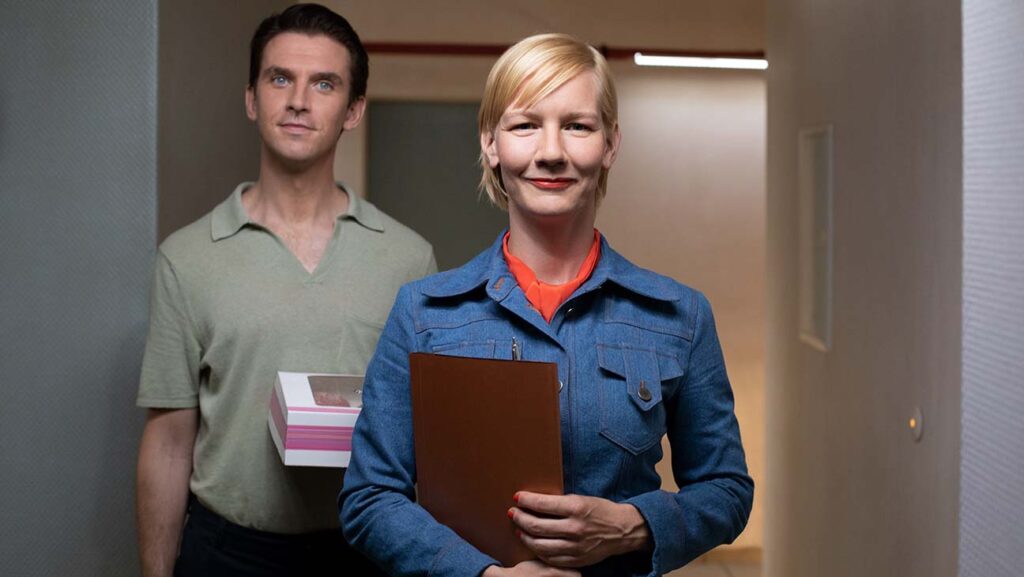
The acting on display also elevates I’m Your Man, with British actor, Dan Stevens (so good, and so different in the television series, Legion) tackling the male lead, Tom, a character that would have been easy to take in a direction to completely derail the film, and making it somehow work. Popular German actress Sandra Hüller, plays a similar supporting character for laughs, and is utterly delightful. Where the film runs slightly off the rails, is the inevitable denouement. Director and adapter Schrader treads lightly where Alma must come to a realization that runs counter to much of what makes her character what it is. Schrader sets this up nicely and leaves it hanging, and for the viewer to decide, which is as best a conclusion that we can ask for. Just who is Alma’s man, is something for us to decide.
#39 – Adrienne, directed by Adrienne Ostroy (USA) – I am a huge admirer of the work of actor/director Adrienne Shelley, so was naturally drawn to this documentary directed by her husband. As a celebration of her life, and career, this film excels. Shelley got her start as an actress in the early films of Hal Hartley, starring in The Unbelievable Truth, and Trust. From there she went on to act in a string of mediocre or bad films throughout the late 80’s and 90’s. She had the waifish look for those films, but she was too smart to do that for long, and she eventually followed her true passion, directing. Her first feature, released in 1996, was Sudden Manhattan, a quirky, low-budget Woody Allen pastiche that showed some promise but didn’t really make much of a splash. Her subsequent short film, Lois Live a Little, received considerable acclaim and led to her next feature, I’ll Take You There, a more accomplished romantic comedy that showed what she was capable of. She was on the cusp of major success, with her third feature, Waitress, when she was tragically murdered in her Manhattan office, but a construction worker who tried to make it look like a suicide.

It’s here where Adrienne stumbles a bit. I understand director Ostroy’s need to explore the event that upended his life and that of his daughter, but at times it borders a little too closely to one of those tabloid news shows. Ultimately finds his closure when he is allowed to visit Shelley’s murderer in prison. The assortment of friends, family, and co-workers who are interviewed for the film paint a beautiful picture of this remarkable woman. From those took on her legacy to create the hit Broadway musical based on Waitress like Sara Bareilles, to Hal Hartley, who helped her get her start.
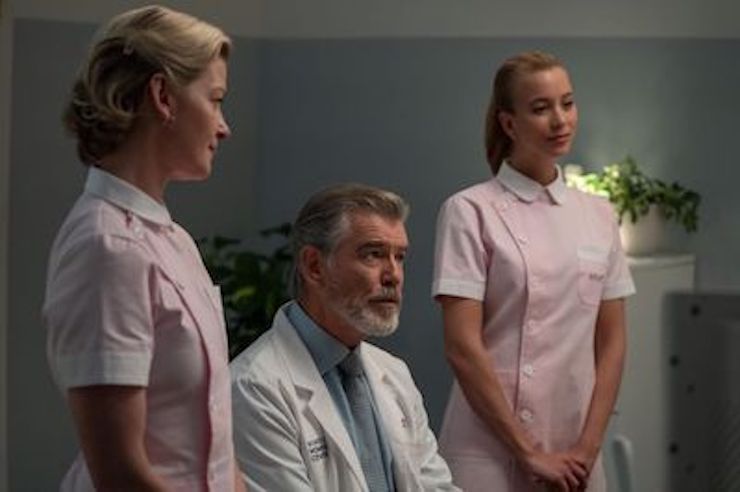
#38 – Mass, directed by Fran Kranz (USA) – Right from the very beginning there’s something vaguely stilted and manipulative about MASS. Maybe it’s the way they try to build up so much tension using extraneous characters just to make the film more than just four people in a room. It’s a meeting of two couples, one pair of whom lost their son in a school shooting, and the other pair whose son was the shooter. I’m not sure how you write a 110 minute film on that kind of meeting and not make it a little manipulative and stilted. What you do to make it all work, is hire some really strong actors who can carry the audience through the awkwardness and the emotional manipulation on the convincing power of their acting. These actors do not shy away from the intensity — they embrace it. The emotions these characters are feeling are so complex, so tangled, and the four powerhouse performers convey all of that. I was expecting a lot from the women. Martha Plimpton isn’t used enough, and she’s like a secret weapon when she’s given a good part. She brings it home beautifully here, and for her performance alone, i would have thoroughly enjoyed this film, but Ann Dowd has proven over the past 5 – 10 years that she is a force to be reckoned with, and she does so again here as the mother of the shooter — the most openly emotional and shattered in many ways. The men surprised me. Jason Isaacs has the showy role. He’s one of the guys, and he’s the one who veers toward anger, all the while strangling on the emotions he can barely restrain. Isaacs does a pretty good job reigning things in to a simmering, but powerful level, and only succumbs to showiness briefly. Reed Birney, often stealing attention as a character actor in the Beth Grant way, is the surprise for me in MASS. His tightly wound, restrained delivery can come across as cold, but look at his eyes, and the haunted, haggard look he’s sharing with the audience. This is a man who’s broken inside.
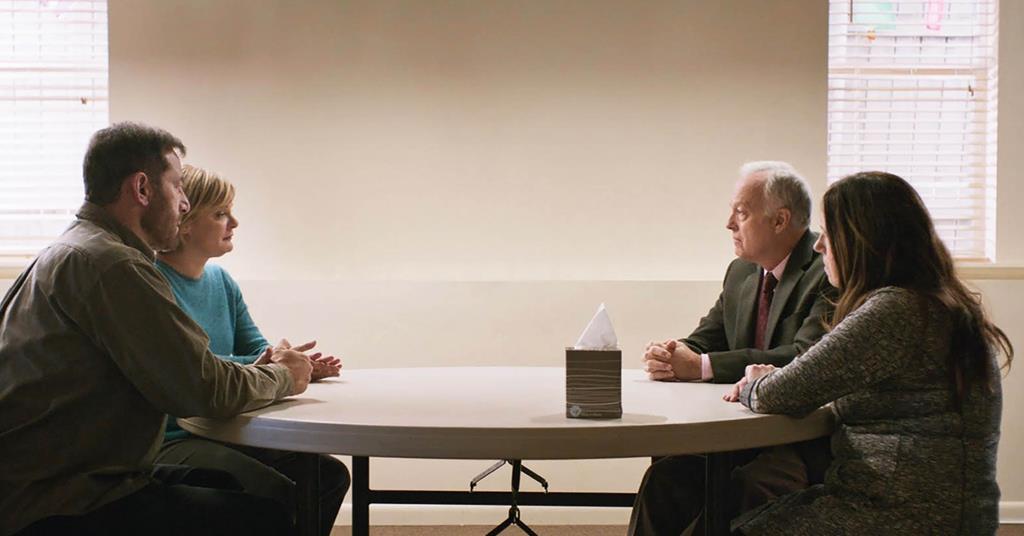
“It’s an interesting tale for a first time feature writer/director to tackle, and Kanz gets away with it largely because he is first and foremost, an actor, with dozens of TV and movie credits on his resume. He clearly knows what an actor needs to work in a film like this, and he gives it to his cast. If it is a few of the choices he makes in the writing and direction that you want to quibble with, so be it. My only real problem with the films comes right at the end, where there is some spirituality forced into play for little reason. Kanz, for the most part, stays out of the way, and allows his actors to take us on an intense journey for nearly two hours, and i must say I was with them all the way.
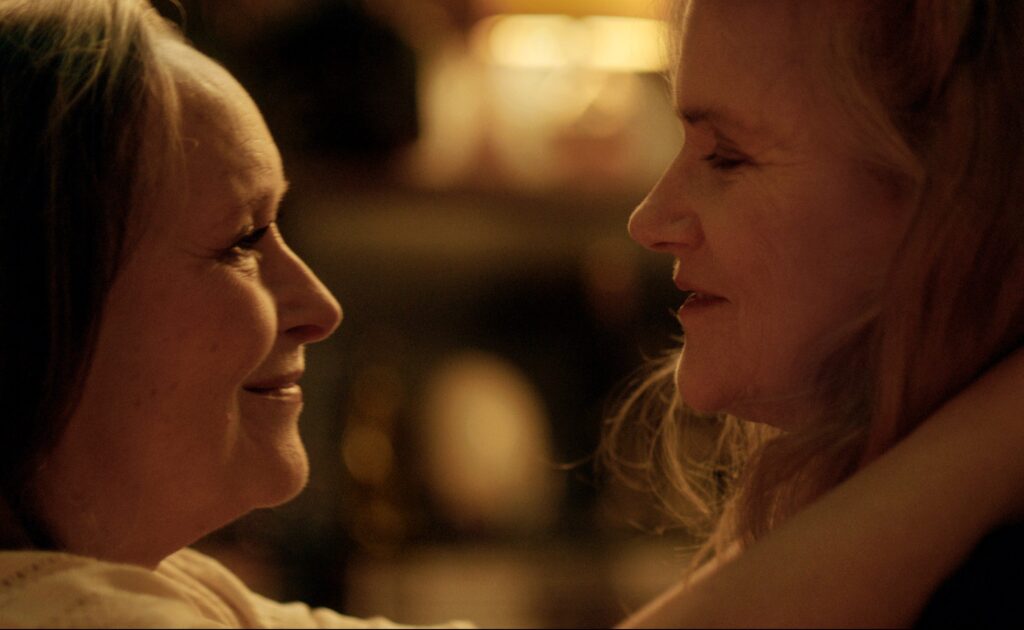
#37 – Two Of Us, directed by Filippo Meneghetti (France/Luxembourg/Belgium) – I saw this film over two years ago, an the fact that it has stayed with me for so long is a testament to the skill and power it has to tell it story. Two older, retired women who have been romantically involved for the past twenty years live in neighboring apartments. They plan to move to Italy to live out the remainder of their lives together now that Madeleine has become a widow. The problem is, she hasn’t told her adult son and daughter yet, and she’s having trouble with it. When a change in circumstance threatens to tear them apart, both defy incredible odds to be together. Powerful script, great direction and wonderful acting. Much praise has been lauded justifiably upon Barbara Sukowa, but I was particularly impressed by Martine Chevallier, in a very challenging role, who had to convey so much without speaking. Like Twilight’s Kiss, it’s nice to see a film about gay older adults.
#36 – The Outside Story, directed by Casimir Nozkowski (USA) – Charles is a Brooklyn video editor who creates memorial videos about people who have the potential to die soon, for TMC. He’s also stuck. He just found out his girlfriend, Isha, cheated on him with a woman, he’s asked her to move out, and he hasn’t really left the house in a while. When he accidentally locks himself out of his 2nd story apartment in his socks, he realizes that he has to interact with the people in his neighborhood to navigate the rest of the day until he is able to get a key dropped off by the landlord. Naturally the people that make up his community are quirky, but they are also generally good people. Whether it’s the pre-teen girl who lives above him, or the police officer handing out parking tickets up and down his street. He gets reluctant help from his catty, third-floor neighbor for whom Charles interrupts a threesome with a visiting Swedish couple, and he in turn helps out the 70-year-old recent widow who lives next door to sign up on a dating app. Ultimately, he learns form his community and moves onto a hopefully better life.
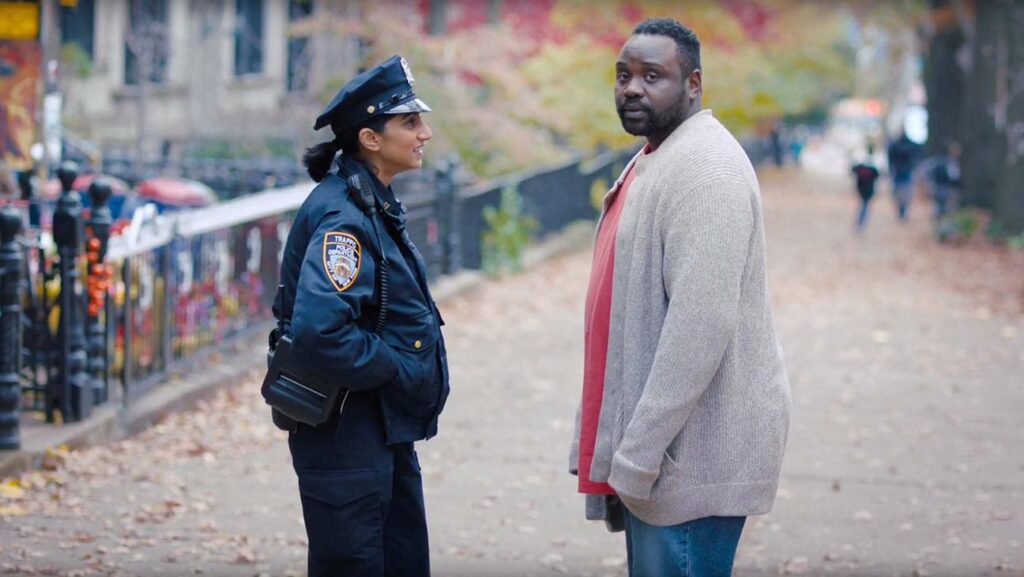
It’s a simple story, and honestly, sometimes the simplest stories are the best stories. This is a film that I really wanted to be higher on my list, but it’s just that good a year for films. Bryan Tyree Henry is a lovely Charles. Known for his comedic work, which he excels at here as well, he’s also a great dramatic actor, and able to shed a tear when needed. He’s slightly irritating, but in an amusing way that makes him fun to spend time with. His beautiful, soon-to-be-ex, Isha, is played calmly, and beautifully by Star Trek: Discovery’s Shonequa Martin-Green, who builds on her great television work to great effect. Other strong performers include Sunita Mani’s Officer Slater, Olivia Edwards’ upstairs neighbor Elena, and Michael Cyril Creighton. First time feature director Casimir Nozkowski has written an effective character study that is funny and rings true He really hits all the right notes. And Brooklyn looks gorgeous… warm and inviting like any good community should.

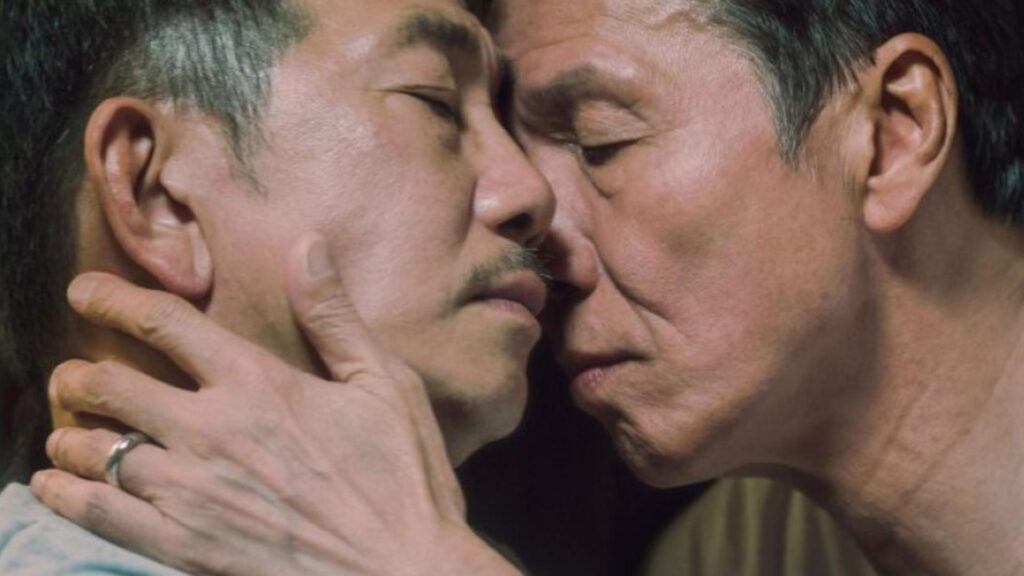



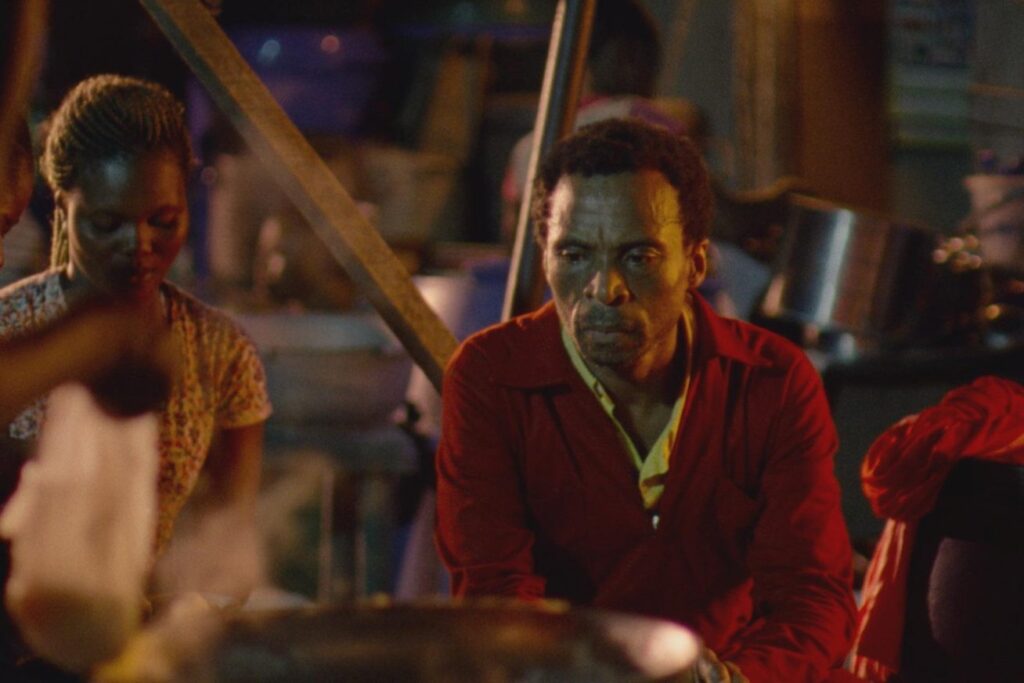
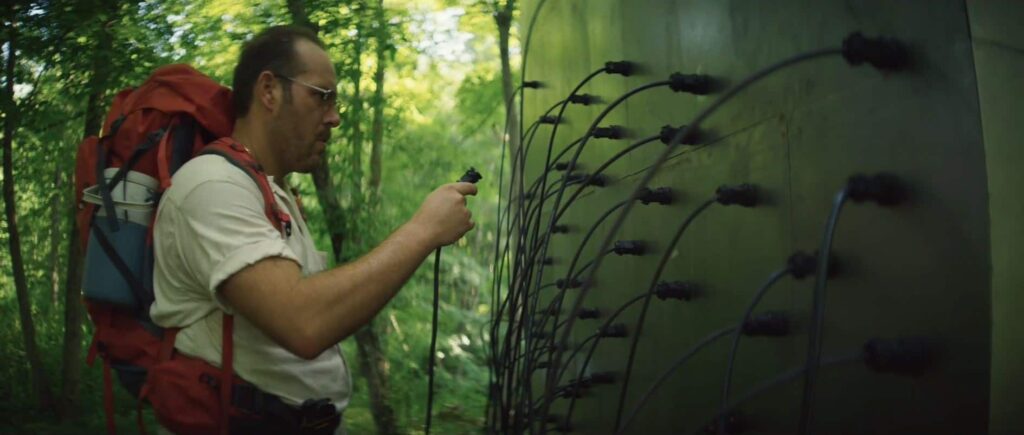
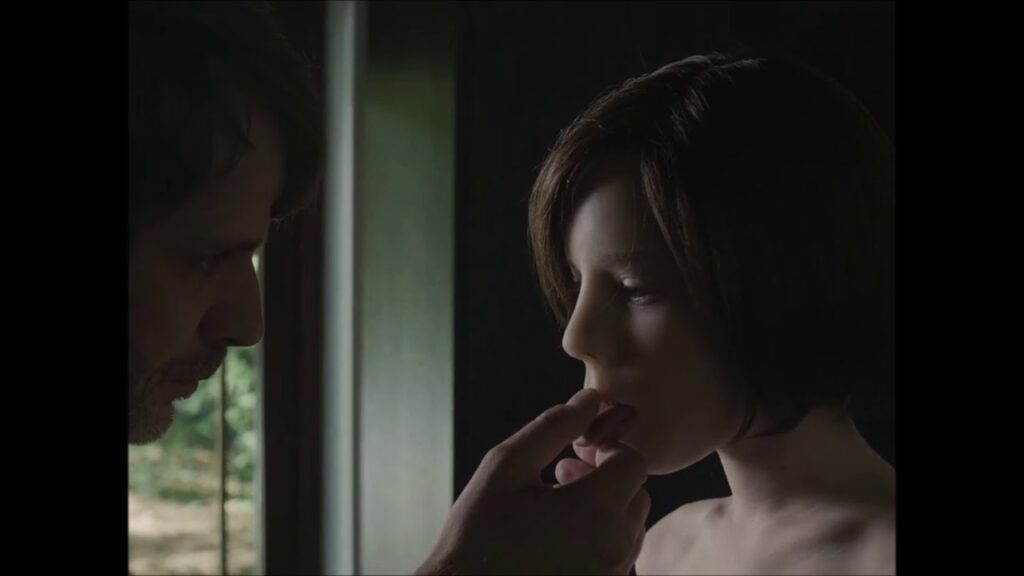
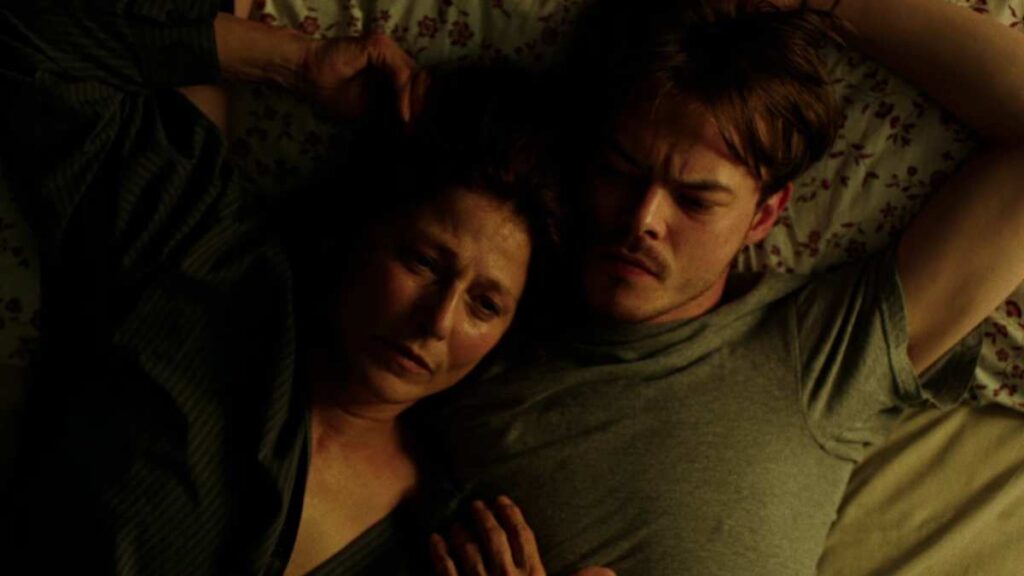
 #61 – Beans, directed by Tracey Deer – Quebecois coming-of-age film set during the Oka Crisis, the turbulent Indigenous uprising that tore Quebec and Canada apart for 78 tense days in the summer of 1990. It was certainly a dark moment in Canadian history, and the archival footage director Deer weaves into the narrative film is incredibly effective to tell this horrifically fraught tale. The coming-of-age story, centering on a 12-year-old girl whose Mohawk name is difficult to pronounce, so everyone calls her Beans, is slightly less successful, although makes for a nice humanistic touchstone while the racial prejudice threatens to smother everything around it.
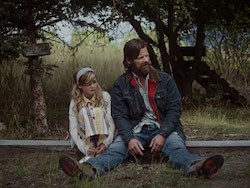 #60 – Cowboys, directed by Anna Kerrigan – There was something about this modern-day western that is also a domestic drama, and a social commentary about gender, that really worked for me. Writer/director Anna Kerrigan hits all the expected tropes then upends them a bit, making them all that more real, and effective. Recently separated from his wife, Troy (Steve Zahn), who is treated for an unspecified mental illness after spending a couple of years in prison, runs off with his trans son, Joe, heading through the Montana wilderness in hopes of crossing the border into Canada. His ex-wife (Jillian Bell) refused to acknowledge their son’s gender, which was causing Joe great amounts of confusion and discomfort. The local law, in the form of a Detective named Faith (Ann Dowd), leads the effort to track them down. When Troy’s medication is lost in the woods, everything grows more complicated.
 #59 – Red Moon Tide, directed by Lois Patiño – The Galacian coast in Spain featured in RED MOON TIDE is wild and beautiful, and provides a dark and mythic backdrop for this unique film written and directed by Lois Patiño. This haunting tale is told with an unnerving combination of staged, static shots… on landscapes, groups of people, people alone, mostly still, like mannequins staged for some sort of macabre exhibition, and voiceover, presumably the inner monologues of the frozen townsfolk in tableaux. They are ruminating about a fisherman, Rubio, who is convinced a massive creature is lurking in the depths of the ocean, hunting the shores of the town, as he discovers more and more corpses at sea. He retrieves the corpses to bring the villagers back home, but now his ship has run aground and he himself is among the missing. Along with Rubio, it seems the spirits of the villagers have fled as well, leaving only their bodies… immobile, waiting… for what, we are not sure.
 #58 – Perfumes, directed by Grégory Magne – There’s nothing all that unique about this French comedy, but it’s quite noteworthy, and enjoyable, because it really does everything right. Guillaume (Grégory Montel) is a chauffeur, whose recent traffic violations are making his boss reluctant to use him on jobs. Going through a divorce, Guillaume needs a steady income in order to get a larger home so he can share custody of his daughter, who he adores, so his boss lets him take a client who is known to be difficult. Anne Wallberg (Emmanuelle Devos) is a former celebrity in the perfume world. but she has fallen out of favor and now takes jobs set up by her agent that take advantage of her ‘nose,’ a discerning sense of scents, to mask the smell of a odor-belching factory, or replicate the smell of a fine leather handbag for atmosphere. Anne is soft-spoken, but arrogant and with high expectations, treating Guillaume more as a personal valet than a driver. Their evolving relationship forms the core of the film.
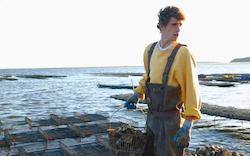 #57 – Fish & Men, directed by Adam Jones and Darby Duffin – Filmmakers do a great job weaving multiple narratives into a cohesive story about the fishing industry from ocean to plate. From Gloucester, MA to Norway, Japan, Montauk NY, Washington DC, Wellfleet, and Los Angeles, this documentary manages to cover a lot of ground and a lot of fascinating, related subjects.
 #56 – I Was A Simple Man, directed by Christopher Makoto Yogi – One of the many great films exploring grief that I enjoyed last year, this film follows Masao on his gradual journey from life to death. Much of that journey takes place in the form of memory, but like UNCLE BOONMEE WHO CAN RECALL HIS PAST LIVES, Masao is also visited by his beloved wife who died years before and sits with him as he loses touch with his life. Masao led a life of isolation, so it’s also difficult for the family he is leaving behind who now find themselves called upon to help out as his body starts to shut down. While Masao and much of his family live on the Hawaiian island of Oahu, they live on opposite sides, and one son lives on the mainland. It falls upon one of his grandsons, Gavin, to take care of him during his final days. Gavin is perplexed by this situation as he never really knew Masao very well when he was alive, and his rural way of life differs greatly from big city life in Honolulu. Masao barely registers Gavin’s presence, lost as he is in his memories, and preparing for his journey.
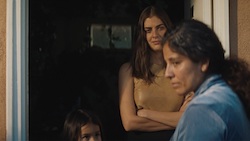 #55 – Ayar, directed by Floyd Russ – This experimental film blends the real life stories of the actors involved, with a fictional narrative about three generations of immigrant women exploring complex mother/daughter relationships and the difficult choices that they face. Ayar wants to attend her daughter’s fifth birthday party. She gets a cake, a balloon, and heads over to her mother’s home where the party is underway. When she arrives, Ayar’s mother, Renata tells her family to take the girl inside, while she confronts her daughter, telling her to leave. It turns out that Ayar left her daughter in Renata’s care five years ago when she headed to Vegas with a man who wanted to make her a singing star. It’s a tense, emotional confrontation, made all the more charged because of the COVID-19 pandemic the characters are dealing with. Most interestingly, the film features brief sequences when the two lead actresses are interviewed about their own life experiences and how some version of their lives ended up becoming the basis for the film’s narrative. This melange of family drama, pandemic horror story, and behind-the-scenes making of a film documentary come together to create something unique and compelling.
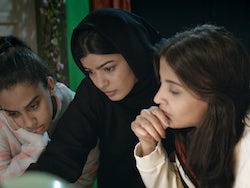 #54 – The Perfect Candidate, directed by Haifaa Al-Mansour – Maryam recently bought a sporty, blue car (almost all of the other cars seen on the roads are white or silver) and she is seen driving it in mammy scenes. Yet she still faces many of the limitations of her gender in modern day Saudi Arabia. Although she is a doctor, she must endure the disgust of many older, male patients who refuse to have her touch them, or even look them in the eye, and would rather a man, even an unqualified man, treat them when injured. In the catalyst situation for the film, Maryam seeks to travel to a medical conference in Dubai to interview for a position at a more progressive hospital, only to be denied when her travel papers are not in order, and her father is unavailable to help renew them. In an attempt to get help from a relative in an administrative government position, Maryam signs up to run for Municipal Council in her town, an action that changes her life and opens her up to possibilities she never thought possible.
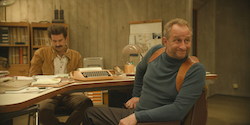 #53 – Keep An Eye Out, directed by Quentin Dupieux – Dupieux has such an offbeat way of telling a story, and this film doesn’t really reveal itself fully until the end, so I won’t give anything away. What starts as a police interrogation, with maybe one or two hints that it’s a little quirky, end up as a bizarre examination of story-telling, or exposition. I really don’t know what else to say about it, but it’s fun and well worth a look at just over an hour.
 #52 – Summer of 85, directed by Francois Ozon – I wasn’t really expecting a lot from this coming-of-age, cum summer romance between two beautiful young men (barely) in a seaside resort town in France. It seemed fairly straight-forward, except we are immediately dropped into a flashback where we know something terrible has happened. It quickly became apparent that this film had a bit of a melodramatic, nearly camp undertone that underlay the over-the-top romanticism of one young man’s first love, and another’s capriciously tormenting actions that lead to devastating consequences. The passion swirling around the boats on the sea, or in the fishing shop where the two boys work with one of their mothers is sweeping, and something that hopefully we have all been caught up in at least once in our lives. It certainly seemed authentic from a teen point of view, and somehow it all worked for me. Not in a serious way, but in a fun, over-the-top way.
  #51 – Sweet Thing, directed by Alexandre Rockwell – A 14-year-old girl goes on the run with her younger brother and a new friend in this nicely balanced fantasy and hard-hitting slice of reality from Alexandre Rockwell, SWEET THING. Billie, named after the famous singer, takes care of her younger brother Nico, and her alcoholic father, who is caring a fairly functional sometimes, and horribly out of control at other times. Mom has taken off to spend time with a boorish boyfriend. Despite this, Billie is filled with caring, and she is the glue that keeps this family going, but it’s a burden to hard for anyone, much less a 14-year-old girl to bear, and when her dad is arrested and sent to rehab, and Billie and Nico must spend time with Mom and boyfriend at his beach house, that’s when things really take a turn for the even worse. Shot in gorgeous, grainy black & white the streets of New Bedford, MA never looked grimmer. Rockwell uses his family for the leads, with his two kids playing Billie and Nico, and their mother playing their movie Mom. As Billie, Lana Rockwell is a star in the making if she wants to pursue acting as a career. She is captivating on screen, with presence, warmth, and a gorgeous look.