The one or two of you reading this know that I run an independent film society, The Chlotrudis Society for Independent Film. Boston-based, but with national membership our mission is to teach audiences to view films actively. We do this through film discussion, special film events, and most famously, our annual Awards Ceremony, where we spotlight the memberships best in independent film for the year.
Because of my involvement with Chlotrudis, I tend to see a lot of films. In the golden years (late 90’s early to mid 2000’s) I would seen anywhere from 75 – 100 eligible films per year, but that number slipped to the 35 – 50 range for many years. Then a pandemic hit, and I made a conscious effort, since i wasn’t doing as much socializing, to work on my film viewing. It was easy, since most everything was streaming as the public was/is still hesitant to go back to the cinema, which makes me sad, but I understand. Now streaming outlets have made it SO easy to see films from the comfort of your own home, I worry about the future of cinema… again. At any rate, my point is in 2020 and 2021, I have met and surpassed my previous highs for movie viewing. In 2021 specifically, I saw 216 films, 138 of which were Chlotrudis eligible indies, two were Festival films that haven’t been released official;y yet, six were bigger releases that were not eligible for Chlotrudis consideration, and 70 of which were older films that I missed.
That’s a lot of films this year. I doubt I’ll be able to keep it up, but we’ll see. The catch-up viewing of older films really dropped off around September as I dove deeply into the Chlotrudis films to prepare for nominations (which are being announced publicly today — check out the Chlotrudis website tonight or tomorrow if you’re interested.)
For the next set of blog entries I will be talking about the films I saw in 2021, starting today, with just a straight list of older films that caught up on this year. I did this mainly because I finally started to listen to the Brattle Theatre’s podcast and listening to that team’s discussion of films throughout history inspired me to see a lot of films I’ve been meaning to, and just never got around to it. So for today, it’s just a list of those films that I finally watched for whatever reason.
Phoenix (2014) directed by Christian Petzold, ****
Alex of Venice (2014) directed by Chris Messina, *** 1/2
Aviva (2020) directed by Boaz Yakin, ** 1/2
Fireworks Wednesday (2006) directed by Asghar Farhadi, **** 1/2
Four Sheets to the Wind (2007) directed by Sterlin Harjo, *** 1/2
We Have Always Lived in the Castle (2018) dir. by Stacie Passon, *** 1/2
Transit (2018) directed by Christian Petzold, ****
Ikiru (1952) directed by Akira Kurosawa, **** 1/2
My Man Godfrey (1936) directed by Gregory La Cava, ****
Startstruck (1982) directed by Gillian Armstrong, ***
The One I Love (2014) directed by Charlie McDowell, ****
The Man Who Fell to Earth (1976) directed by Nicolas Roeg, *** 1/2
The Fountainhead (1949) directed by King Vidor, ****
Daughters of the Dust (1991) directed by Julie Dash, ***
Spotlight (2015) directed by Tom McCarthy, *****
Can You Ever Forgive Me (2018) directed by Marielle Heller, *** 1/2
You Can Count On Me (2000 directed by Kenneth Lonergan ****
Monsters (2010) directed by Gareth Edwards, ***
The Conversation (1974) directed by Francis Ford Coppola, **** 1/2
Blowup (1966) directed by Michelangelo Antonioni, ****
Labyrinth (1986) directed by Jim Henson, **
Citizen Kane (1941) directed by Orson Welles, ***
Orpheus (1950) directed by Jean Cocteau, ****
The Day the Earth Stood Still (1951) directed by Robert Wise, *** 1/2
The Wild Pear Tree (2018) directed by Nuri Bilge Ceylan, ****
Crazy Rich Asians (2018) directed by Jon M. Chu, ****
Gattaca (1997) directed by Andrew Niccol, **
Birds of Prey (and the Fantabulous Emancipation of One Harley Quinn) (2020) directed by Cathy Yan, *** 1/2
Eighth Grade (2018) dircted by Bo Burnham, ****
The Invitation (2015) directed by Karyn Kusama, ** 1/2
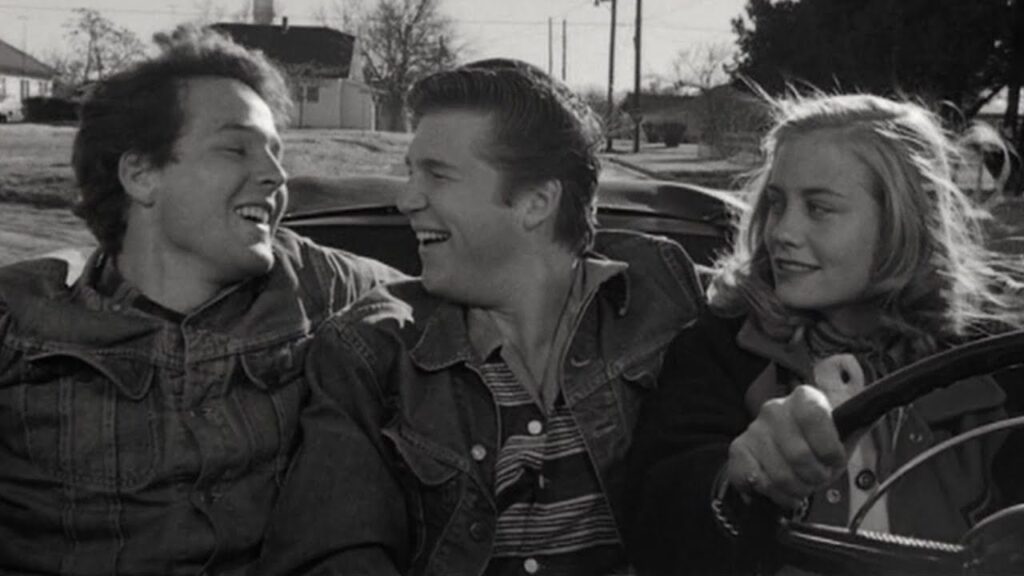
The Last Picture Show (1971) directed by Peter Bogdanovich, *****
Repo Man (1984) directed by Alex Cox, ***
Coma (1978) directed by Michael Crichton, ****
Enemy (2013) directed by Denis Villeneuve, **** 1/2
I, Tonya (2017) directed by Craig Gillespie, ****
A New Leaf (1971) directed by Elaine May, ****
Beauty and the Beast (1946) directed by Jean Cocteau, **** 1/2
Burning Cane (2019) directed by Phillip Michael Youmans, *** 1/2
Altered States (1980) directed by Ken Russell, **
Pikadero (2015) directed by Ben Sharrock, **** 1/2
The Seventh Seal (1957) directed by Ingmar Bergman, **** 1/2
Black Girl (1966) directed by Ousmane Sembène, ****
Blow-Out (1981) directed by Brian De Palma, **
The Out-of-Towners (1970) directed by Arthur Hiller, ****
Emma. (2020) directed by Autumn de Wilde, ****
Hud (1963) directed by Martin Ritt, ****
Love & Friendship (2016) directed by Whit Stillman, *** 1/2
Ishtar (1987) directed by Elaine May, ****
Stage Door (1937) directed by Kogonada, Gregory La Cava, **** 1/2
Yojimbo (1961) directed by Kogonada, Akira Kurosawa, ***
Columbus (2017) directed by Kogonada, *****
Alter Egos (2012) directed by Jordan Galland, *** 1/2
Afternoon (2015) directed by Tsai Ming-liang, **** 1/2
The Big Sleep (1946) directed by Howard Hawks, **** 1/2
Weirdos (2016) directed by Bruce McDonald, *** 1/2
Alphaville (1965) directed by Jean-Luc Godard, **
Key Largo (1948) directed by John Huston, ***
To Have and To Have Not (1944) directed by Howard Hawks, ****
Midsommar (2019) directed by Ari Aster, **
Rebels of the Neon God (1992) directed by Tsai Ming-liang, ****
Animals (2012) directed by Marçal Forés, ****
The Postman Always Rings Twice (1946) directed by Tay Garnett, ***
Barking Water (2009) directed by Sterlin Harjo, *** 1/2
Stray Dogs (2013) directed by Tsai Ming-liang, ****
The Lighthouse (2019) directed by Robert Eggers, * 1/2
Berberian Sound Studio (2012) directed by Peter Strickland, ** 1/2
His House (2020) directed by Remi Weekes, ***
Relic (2020) directed by Natalie Erika James, **** 1/2
La Llorona (2019) directed by Jayro Bustamante, ****
Sleep Dealer (2008) directed by Alex Rivera, *** 1/2
 My #1 book of the year comes from an author whose work I have followed pretty much since his debut short story collection, The Secret Lives of People in Love in 2007. That was actually the second of his works that I read, first discovering him thanks to my friends at HarperCollins with his follow-up collection, Love Begins in Winter published in 2009. I didn’t do a list of favorite books read in that year, but I suspect Love Begins in Winter would have at minimum been in my Top 10, with a good chance it would have ranked considerably higher. After publishing a trio of books of essays, Simon published his first novel in 2011, Everything Beautiful Began After which ranked #8 in my list of
 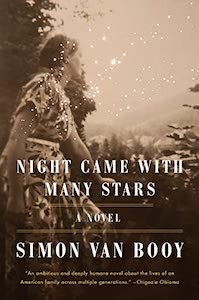 #1 – Night Came With Many Stars by Simon Van Booy (2021) – It’s always exciting when you’re a few chapters in and you start to realize that the book you’re reading is going to be a great one. Night Came With Many Stars the latest novel by Simon Van Booy, is one such book. A gifted writer, Simon’s books are all good, but there are a couple of his that rank among my favorites. His latest, a exquisite telling of four generations of a family living in Kentucky from the early 30’s to 2010, is an unexpected and delightful return to that echelon of beauty. Along with Patricia A. McKillip, Van Booy is one of the few authors whose use of language alone is enough to get me to read their work, regardless of subject. In this novel, the care and warmth in which Simon treats the members of this family is simply breath-taking, even as it is simple.
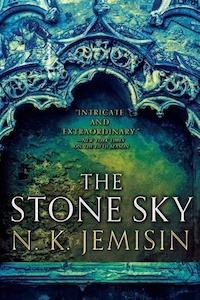 #3 – The Stone Sky by N. K. Jemisin (2017) – Minor SPOILERS below.
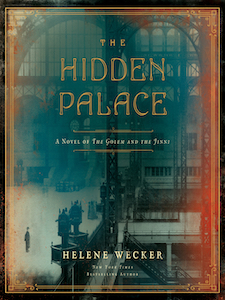 #2 The Hidden Palace by Helene Wacker (2021) – Delighted to discover that Helene Wecker had written a sequel to her NYT best-selling novel, The Golem and the Jinni (my #2 book of 2013). The Hidden Palace picks up where she had left off in her debut, detailing the unusual journey of two singular souls, a golem named Chava Levy, and a Jinni named Ahmad, who inhabit an ever-changing world of early 20th century New York City. Although the pair find solace in each other’s company, their relationship is a tumultuous one, eventually fracturing in a way that ripples outward and affects many around them as they struggle to find their places in a human world.
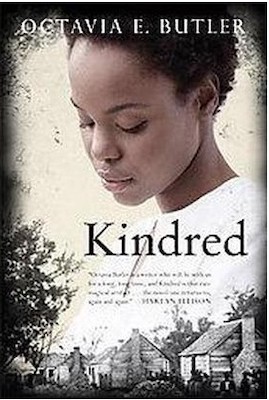 #5 Kindred by Octavia Butler (1979) – I finally went back and read Octavia Butler’s first novel< Kindred and found a writer who was already fully formed, to create such an original and seminal work the first time out of the gate. Published in 1979 by a black woman; the first science fiction novel published by a black woman, and one that tackles the challenging and disturbing topic of slavery, and more, the complex, fraught relationship between master and slave, this novel is a revelation.
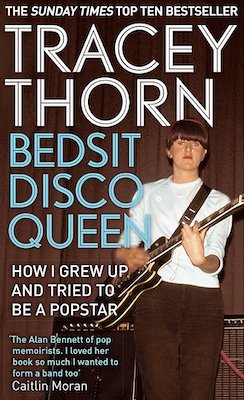 #4 Bedsit Disco Queen: How I Grew Up and Tried to Be a Pop Star by Tracey Thorn (2013) – I’ve always enjoyed the 80’s pop group Everything but the Girl. My interest in them ebbed and flowed depending on their output, but in many ways I think it followed their trajectory with the public — which makes sense the way lead singer, Tracey Thorn explains it in her first memoir, Bedsit Disco Queen. They started fairly strong, and quickly found a steadily climbing trajectory, before dipping sharply into mediocrity after a handful of albums. Their career could have gone a few ways, most easily dissolution, or inexplicably, a sudden sharp spike in quality and popularity, then, rather surprisingly, semi-retirement. It was during this semi-retirement in the 2000’s that Tracey Thorn turned her songwriting voice into a prose writing voice, to great success.
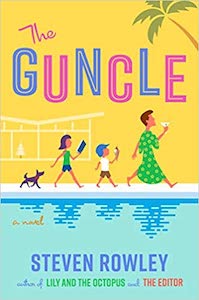 #7 The Guncle by Steven Rowley (2021) – 76ers I find grief to be one of the richest subjects for storytelling, whether that be books, movies, TV, music, etc. Everyone reacts to grief in different, sometimes unexpected ways, and it’s usually a lengthy process to deal with. Steven Rowley knows grief, and handles it well creatively. His first novel, Lily and the Octopus was all about grief… the grief of losing a friend, a beloved pet dog, and how her owner dealt with an impending terminal illness. It was beautiful and fantastic and kicked off his career strongly.
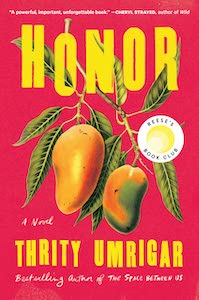 #6 – Honor by Thrity Umrigar (2002) – Accomplished writer, Thrity Umrigar returns with a heart-wrenching, dramatic novel, Honor. Smita, A journalist covering hard-hitting, international, humanitarian stories returns to her home city of Mumbai after years of avoidance, when she she receives a call from a close colleague who needs her. To her surprise, her colleague doesn’t need her for emotional support or assistance after a difficult surgery, but summoned her to finish a story she was covering about Meena, a Hindu village woman, who married a Muslim man to tragic consequences. Meena’s brothers, old-fashioned and conservative are outraged that their sister has married a Muslim, and burn their home down with the two of them inside. Meena is horribly disfigured, nearly dying, and her husband is killed.