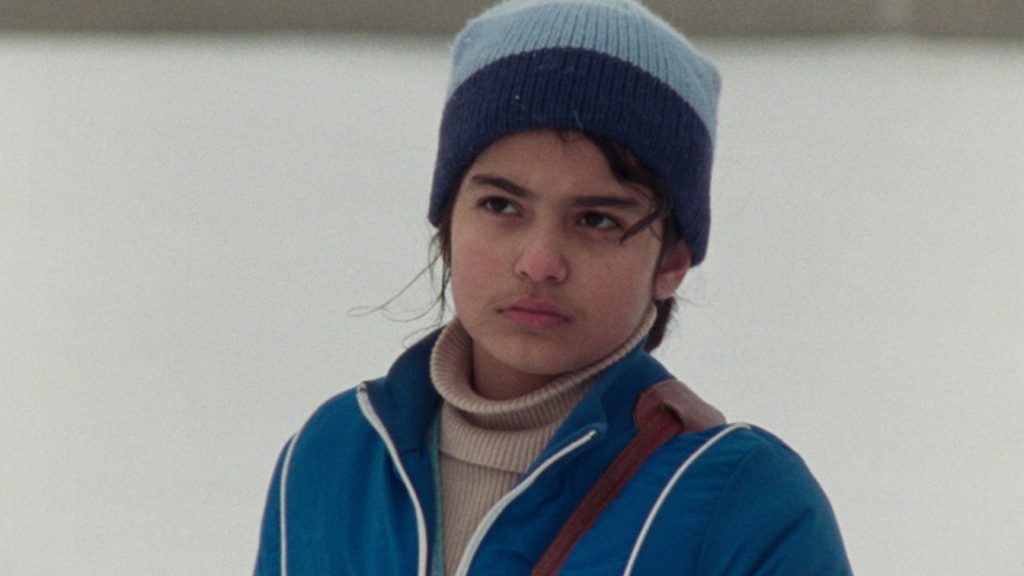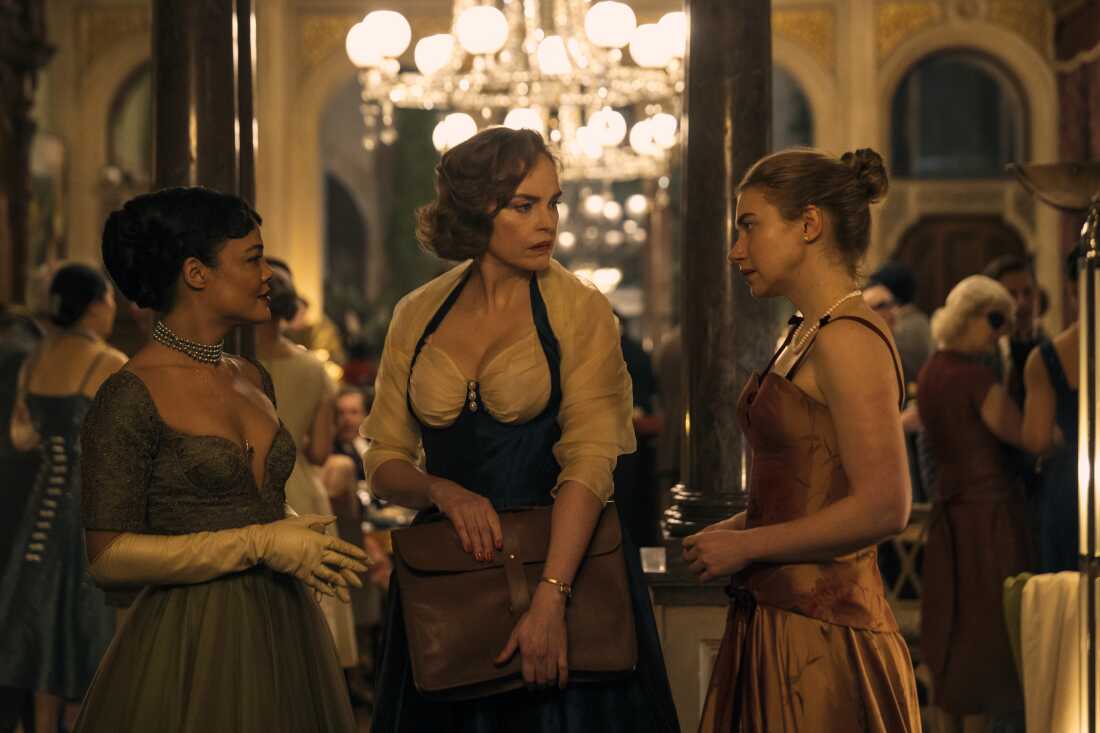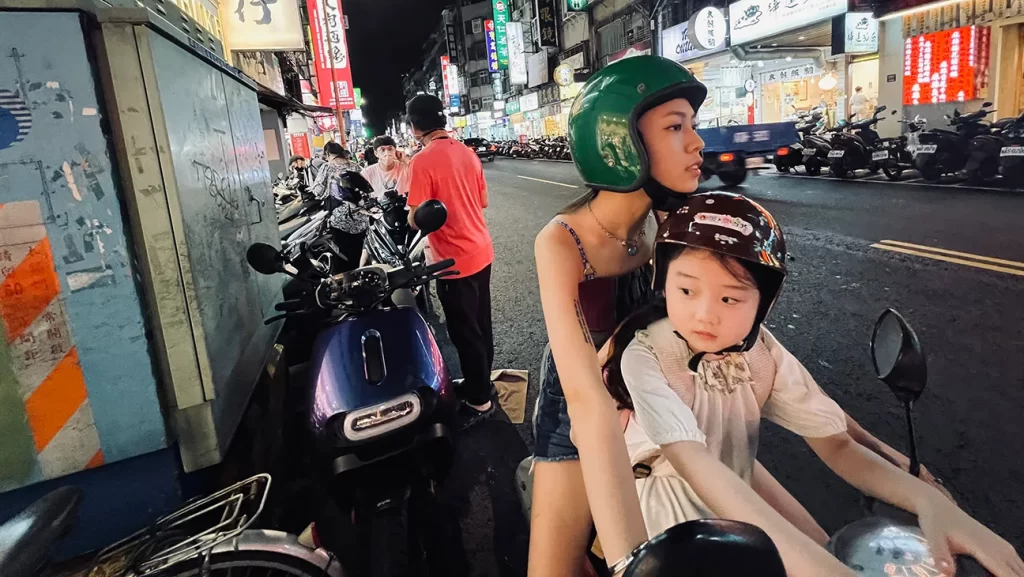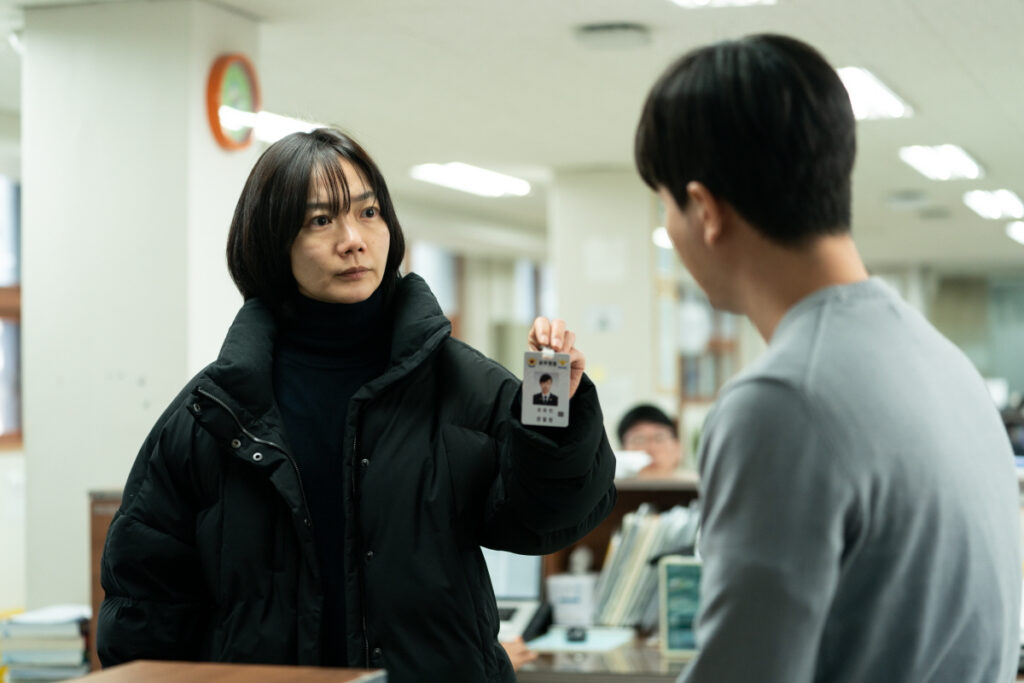
Okay, finally plowing into the Top 10 of my films seen in 2025! There are so many great films that came out last year, and all ten of these films are top-notch films. Nice mix of international productions here, with only one American film in this grouping. Another interesting detail of note is that four out of the five films in this batch are directed by women! And without further ado… here we go into the Top 10 (staring with #10 and moving down to #6)
Left-Handed Girl
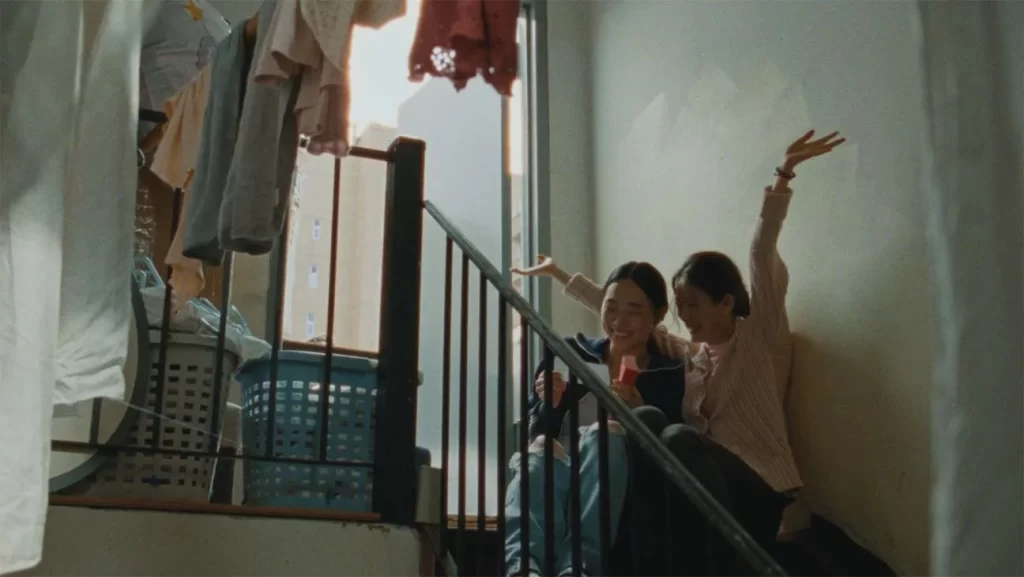
#10) Left-Handed Girl – Maybe slightly too many storylines, but first-time director Shih-Ching Tsou manages to weave them all together nicely. Both a family drama and a look at the general changes in culture in Taiwan — as well as a vivid portrait of busy Taipei, the three lead performances really shine, particularly Nina Ye as I Jing (now 9-years-old) already having appeared in 6 feature films, who shines as the titular left-handed girl. When her grandfather, a traditionalist regarding the Taiwanese ways, instructs her not to use her left hand, because it belongs to the devil, I Jing absolves herself of any activity undertaken by that hand as it’s not her, it’s the devil doing it. The film is largely seen through her eyes, and Tsou manages to balance the lack of full understanding with a larger perspective.
Director Tsou has worked on three of Sean Baker’s features, (TANGERINE, THE FLORIDA PROJECT, RED ROCKET) and he returns the favor by co-writing and editing LEFT HANDED GIRL, and while there are some similarities, I think Tsou’s voice really shines through. The big reveal at the end of the film gets a little melodramatic, but it doesn’t really take away from the freshness and great dynamic between the three women.
Next Sohee
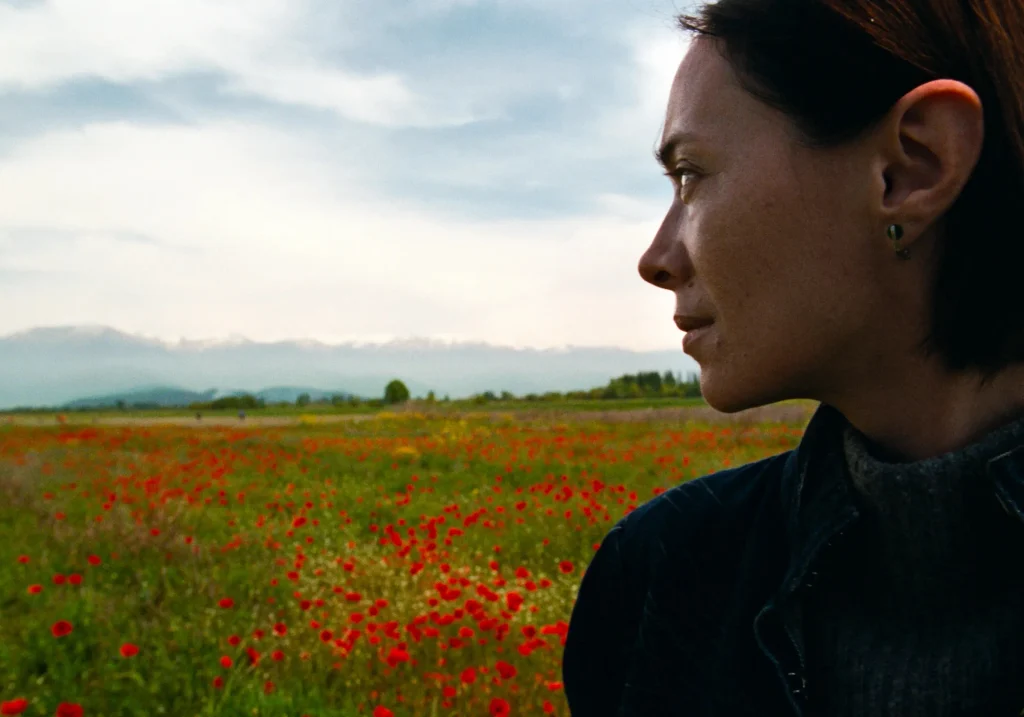
#9) Next Sohee – Very powerful story about injustice and the difficulties that come with standing up to it. Quietly mixing in elements of class and shame into a scenario that leads to a criminal investigation, director July Jung manages to enrage the viewer and break their hearts. Kim Se-eun plays high school student Sohee, who loves to dance, and puts her all into a life that’s not easy coming from her family’s place in society. When she gets a coveted spot at a service call center as an extern through her school, she expects the best, but quickly finds out everything is stacked against her.
About halfway through, the film shifts focus to Chlotrudis-favorite Bae Doona, a criminal investigator who through an initial case involving Sohee, begins to uncover outrageous, if not illegal conduct all the way up the chain to the highest powers. Like Sohee’s story before, Detective Oh faces towering opposition, but she pushes on backed by a moral outrage the she usually keeps in check. We never know the end result of her investigation, but we do get to a point where we uplift the underseen and experience a catharsis that really hits home.
Both actresses are terrific in their respective roles, as are many of the many supporting roles. It’s a tough film, but one that I highly recommend.
Hedda
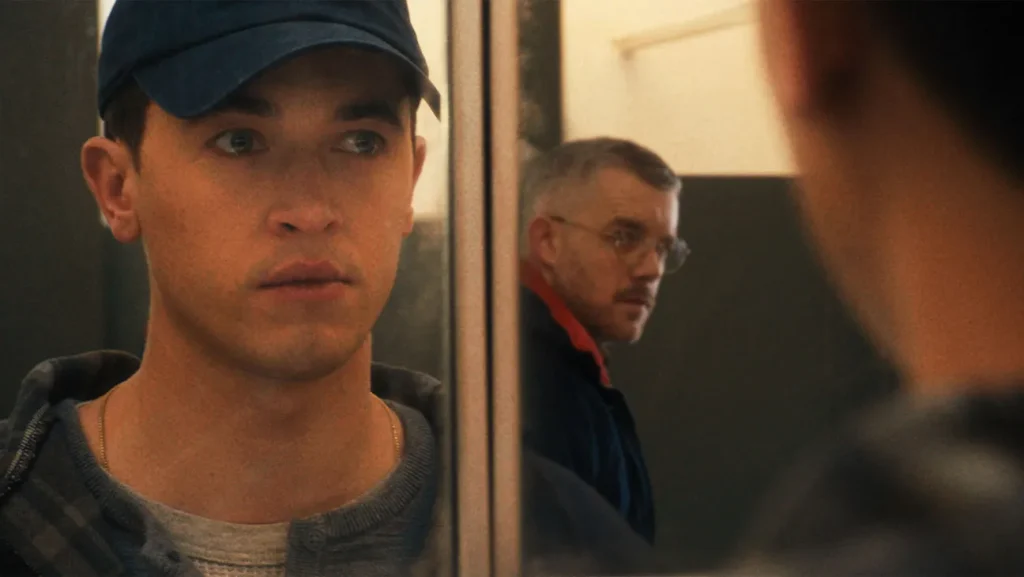
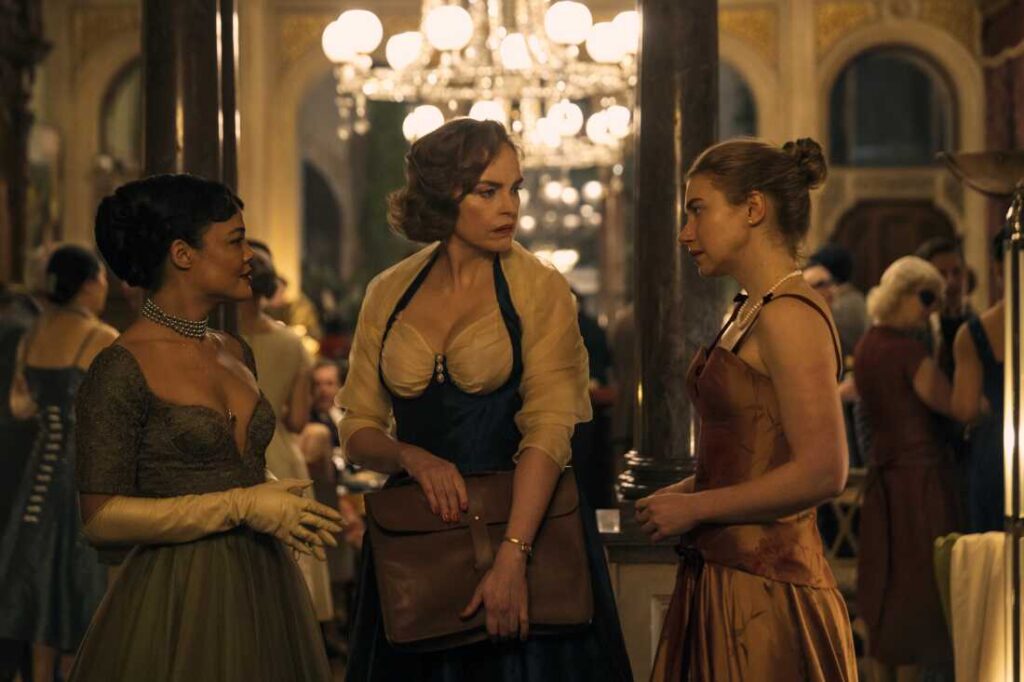
#8) Hedda – Take that SALTBURN — this is the way to make an over-the-top, sloppy melodrama of perversity and decadence. Tessa Thompson tears up the screen, ably assisted by Nina Hoss. Writer/director Nia DaCosta adapts and updates Ibsen’s play “Hedda Gabler” in drastic, but successful ways. She moves the setting from 19th century Norway to 1950’s England. She gender-swaps one of the principal characters to introduce a queer romance. She significantly alters the ending to make things more ambiguous, which serves the characters she has created much better.
The gorgeous, lush production design, taking place entirely on an estate during a wild party is benefitted by the swooping cameras, fantastic costume design (most notably and shockingly in Nina Hoss’ Eileen Lovborg), the use of indoor and outdoor settings, and the grand musical backdrop. Her writing is deft, witty, and cutting, and brought to life magnificently by her two amazing leads. Supporting work by Imogen Poots and Tom Bateman elevate the large cast beautifully. Props to DaCosta for creating something so beautiful, fun, and devious.
On Becoming a Guinea Fowl
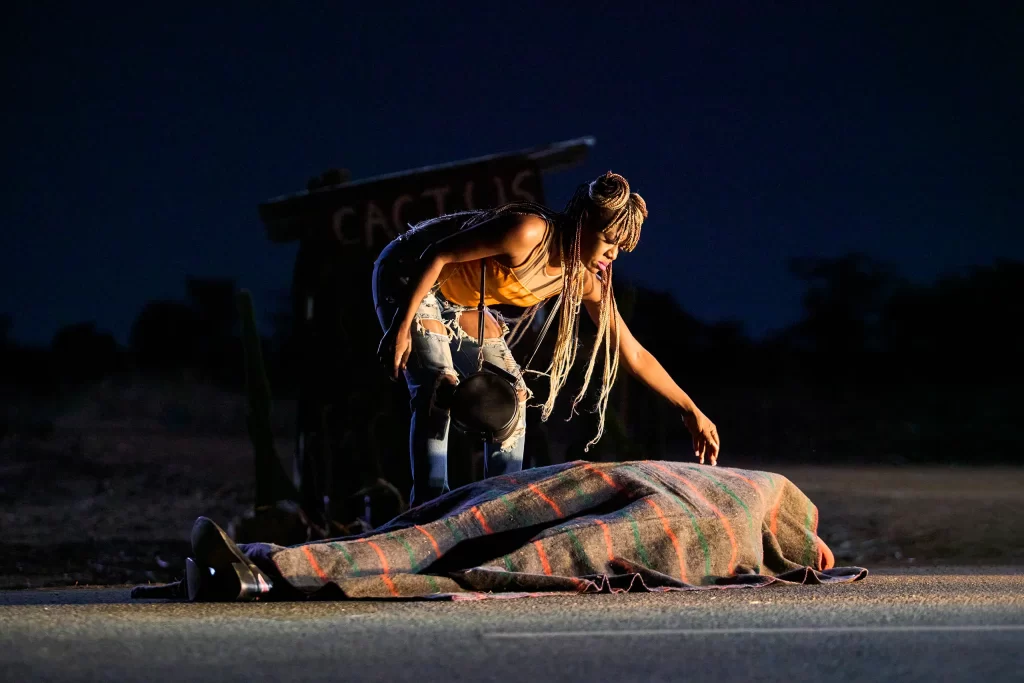
#7) On Becoming a Guinea Fowl – Returning from a party in the middle of the night, Shula finds the body of her uncle on a rural street near her home village. As her family mobilizes around her to plan a traditional Zambian funeral, Shula realizes that her contemporary city-life has moved passed many of the strange, cultural traditions that not only serve to send the dead on their way, conspire to keep from coming to light the buried secrets in her family.
Writer/director Rungano Nynoi’s 2017 feature debut, I AM NOT A WITCH made a big splash among Chlotrudis members, and GUINEA FOWL, does the same, with perhaps a slightly more traditional story, that mine even darker territory. Occasional forays into magical realism enhance a friction between contemporary and traditional life. Susan Chardy makes a bold film debut as Shula, bring her pragmatism and compassion to a complex character. Her drunken cousin, Nsansa, is played by Elizabeth Chisela, her first time on the big screen, bringing both humor and warmth to a dark and sobering story.
Julie Keeps Quiet
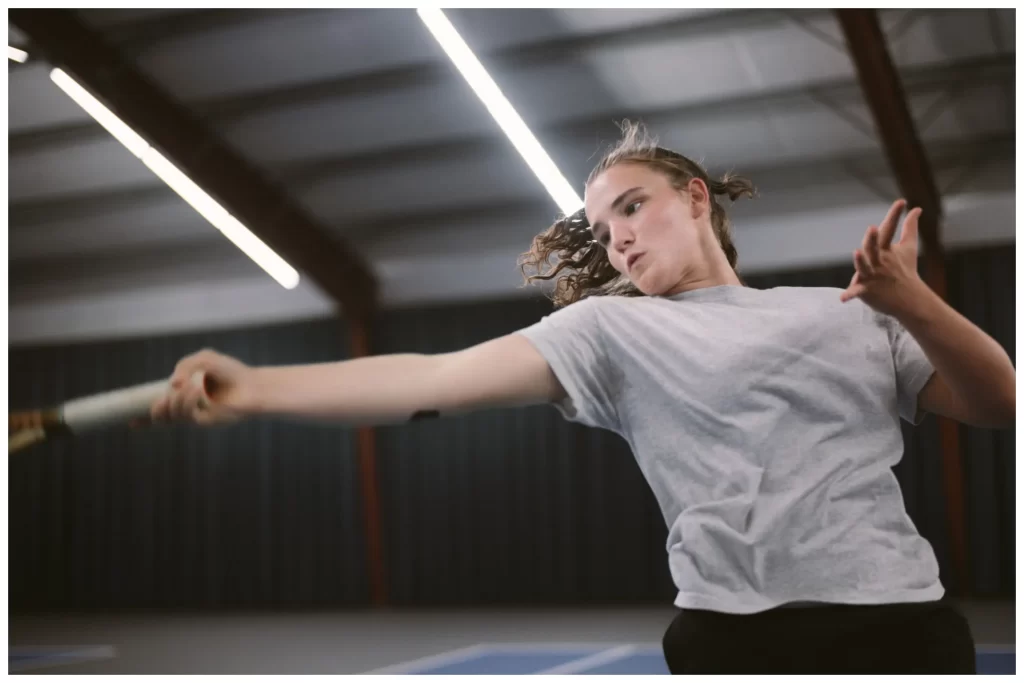
#6) Julie Keeps Quiet – This quiet (pun intended) character study of a high school student on track to become a professional tennis player who finds herself caught between an admired coach and an investigation that gets him suspended form his job is the powerful framework for this Belgian/Swedish co-production directed and co-written (with actor and first-time screenwriter Ruth Becquart) by Leonardo van Dijl. While Julie struggles with her desire to remain separate from the scandal unfolding around her, staying silent when questioned about behaviors, Dijl focuses on the physicality of the tennis playing, and the intrusive sounds of the Julie’s practicing: the loud ‘pock’ of the ball hitting the racquet, the scuffing of sneakers on the court, the powerful exhalations when striking the ball.
Former competitive tennis player, Tessa Van den Broeck, plays the 15-year-old Julie and brings a realistic physicality, and powerful internalization of feeling to the character. I was transfixed by her mesmerizing performance. In any other year, this should have ranked much higher, but the strong films in the Top five kept this one in the lower half.
Now we’re getting into films that I really enjoyed in 2025. So many of these films could have been in my Top 10, but I saw so many films they got pushed into the Top 20. The first half of these films scored 4 cats out of 4, with the top half moving into the 4 1/2 cat range. All of these films also fall firmly into the independent film category, and it’s a nice mix of new directors, and seasoned favorites, including a comeback for a beloved director who hadn’t made a new film for quite a while.
The Assessment
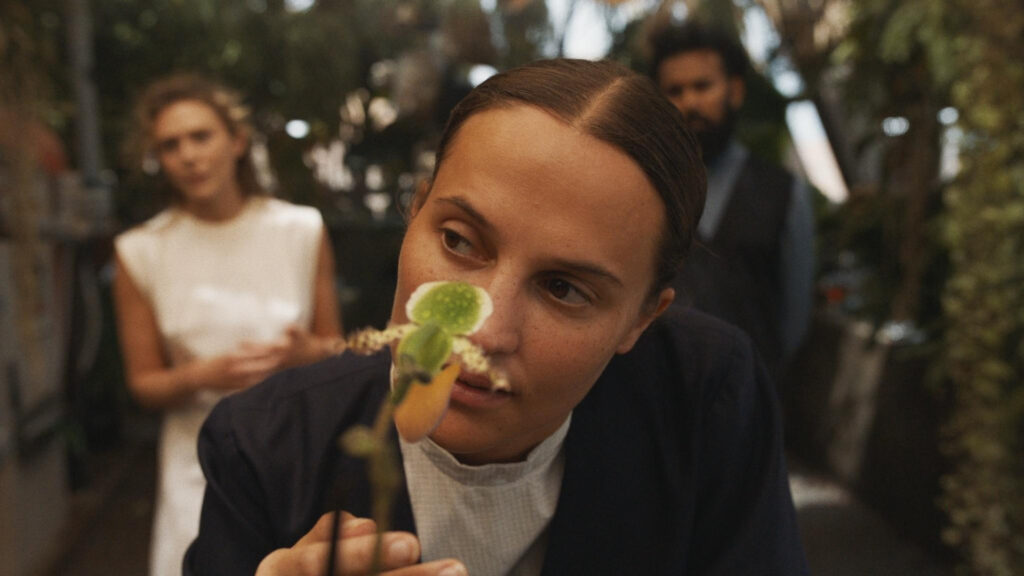
#11) The Assessment – I love a great science fiction film, and they’re hard to make. I tend to enjoy independent sci fi flicks, much more than big budget films, because the stories are usually more imaginative, and human centered. THE ASSESSMENT truly first the bill, with phenomenal direction Fleur Fortune, a great script, exquisite cinematography and really wonderful acting.
At some unspecified time in the future, “civilized” society live a monitored and controlled life under domes to protect itself from a degrading, hostile environment. A young couple decides it’s time to have a child, but to do so, they must pass a rigorous assessment to prove that they would be good parents, a method of contolling the population. This assessment consists of a week-long, in-house visit by a specially trained assessor, that puts the couple through an increasingly difficult and invasively inapproporiate series of tests that strain both credulity, and the couple’s relationship.
While Alicia Vikander, who plays Virginia, the Assessor, has the showier role, handles it beautifully, I was spellbound by Elizabeth Olson’s Mia, who is being assessed along with her husband Aaryan (Himesh Patel). The arc of her character, right through to a major revelation toward the film’s conclusion really runs the gamut of emotions, and Olson is up to the task. Wonderful, both terrifying and amusing small supporting role from Minnie Driver. Production design and cinematography are exquisite, and director Fortune has a strong grasp of her constructed world, and the people who inhabit it.
Where to Land
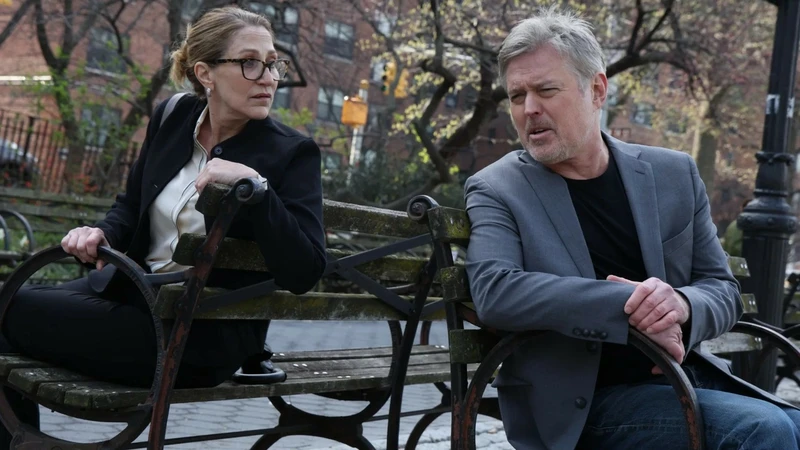
#12) Where to Land – As a major fan of director Hal Hartley’s films, especially his early ones in the late 80’s through the mid-90’s, I was brimming with eager anticipation for his first feature film since 2014’s NED RIFLE. Gathering together a nice ensemble of actors with whome he worked throughout his career, WHERE TO LAND seems drawn from Hartley’s own life, telling the story of a successful director of romantic comedies who is getting older and setting his affairs in order. When he inquires about a job as a groundskeeper at the local cemetery, his friends immediately suspect that something seriously wrong is up with his health.
Hartley’s films are funny, touching, and spend a great deal of time philosophizing about life, and WHERE TO LAND is no exception. While his early films focused on relationships and youth, it only makes sense that now in his mid-sixties, the director is focusing his philosophizing in another direction. The result is still funny and moving, and a beautiful return to form that had me choked up in the opening scenes, as his precise circular dialog washed over me like a long lost friend.
Bill Sage is terrific as the director’s stand-in, and his scenes with Robert John Burke – his co-star in Hartley’s SIMPLE MEN (1992) invoked a beautiful nostalgic feeling. Another great appearance was from Edie Falco, who was featured in several of Hartley’s earliest films. But WHERE TO LAND is way more than a nostalgia piece, as its witty and thoughtful ruminations on life, aging, and relevance are sagely discussed wrapped in the absurdity of many of Hartley’s best dialog. I hope we don’t have to wait another 11 years for another film.
Caught by the Tides
#13 ) Caught by the Tides -Jia Zhangke’s remarkable film was created using footage shot over a 22-year period. In the lat nineties, Zhangke got his first digital video recorder, and was shooting things left and right. Footage and outtakes from his next three films, UNKNOWN PLEASURES, STILL LIFE, and ASH IS THE PUREST WHITE, were all incorporated into CAUGHT BY THE TIDES to tell the story of two lovers, Qiao Qiao (played by the director’s real-life wife, and former Chlotrudis nominee, Zhao Tao) and Guao Bin (Li Zhubin) over the years as they become separated and eventually find one another in present day — with the actors returning to film new footage.
As expected, the editing used in TIDES is phenomenal (and one this year’s Chlotrudis Award in that category). Zhangke creates a compelling story out of his outtakes that doesn’t feel at all forced, and ends up in such a life-affirming conclusion, just after the pandemic has kept the world so isolated. The film fill have much more resonance if you’ve seen the earlier works, but it’s not necessary. CAUGHT BY THE TIDES is a wonderful and innovative new entry in the director’s filmography.
Souleymane’s Story
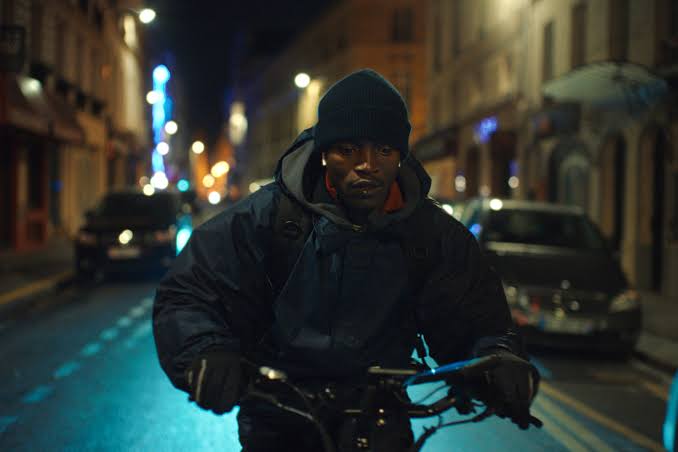
#14) Souleymane’s Story – Souleymane races through the streets of Paris on his bicycle at night, delivering meals to make money. Souleymane works tirelessly during the day to learn a story that he can convincingly tell that will move an immigration officer to grant him asylum from his home country of Ghana, and allow him to remain in Paris. We meet his sponsor, helping him prep, and his fellow refugees, all at different stages of their process, many racing from one job to another trying to get by.
Director Boris Lojkine, working from a script he wrote with Delphine Agut, keeps the intensity high, while exploring the path of a hard-working, good man must take to succeed in his quest for asylum. The script is loosely based on lead actor Souleymane Sangaré’s own story, which lends an air to authenticity. Cinematographer Tristan Galand, and the film’s incredible sound design team, immerse the viewer in the high-speed, world of busy Paris nights as Souleymane’s races from destination to destination, rushing on his bike to make appointment times, or catch buses. The first three quarters of the film uses that relentless pace to capture the desperation of Souleyman’s plight, until the final quarter focuses in on the much-anticipated interview, which turns up the intensity even higher. Sangaré’s performance ably assists in capturing our attentions and sympathies, and has us rooting for Souleymane every step of the way
The Mastermind
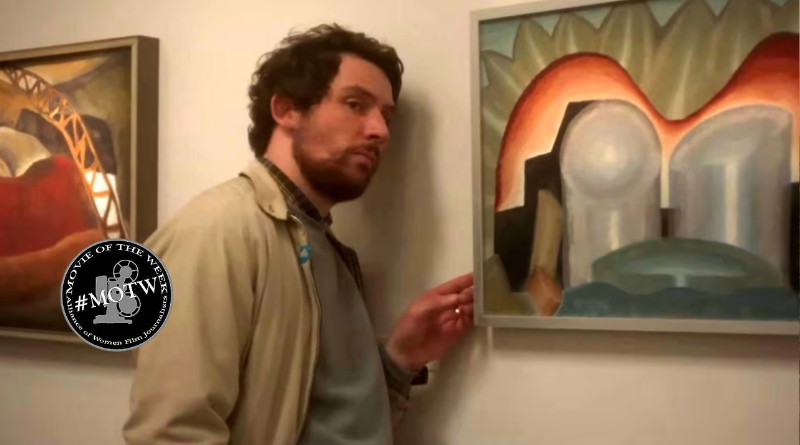
#15) The Mastermind – You know it’s a strong year if a new Kelly Reichardt film can’t crack the Top 10. It’s not that The Mastermind isn ‘t a great film, capturing a time in America in the early 1970’s with subtle beauty and an understated performance by the ubiquitous Josh O’Connor. Obstensibly, The Matermind is an art-heist film, but in typical Reichardt fashion the expected thriller aspect of the genre is subverted to examine the sheer bravura and incompetence possessed by the mastermind who planned it. What the film truly explores is a character study of a handsome, white man rolling through life with the privilege of a supportive wife, wealthy parents, bored enough to see if he can pull a crime unscathed. His male privilege highlighted by the way he ignores the transformation of the country around him.
Reichardt sets the film in a fictional museum in Framingham, MA, although sadly chose to shoot the film in Ohio. In addition to a strong performance by O’Connor, there are some terrific small supporting roles from the likes of Hope Davis, Gabby Hoffman, John Angaro, Eli Gelb, Alana Heim, and Amanda Plummer. It’s a great addition to a filmography of a filmmaker whose films I anticipate with each release.
Resurrection
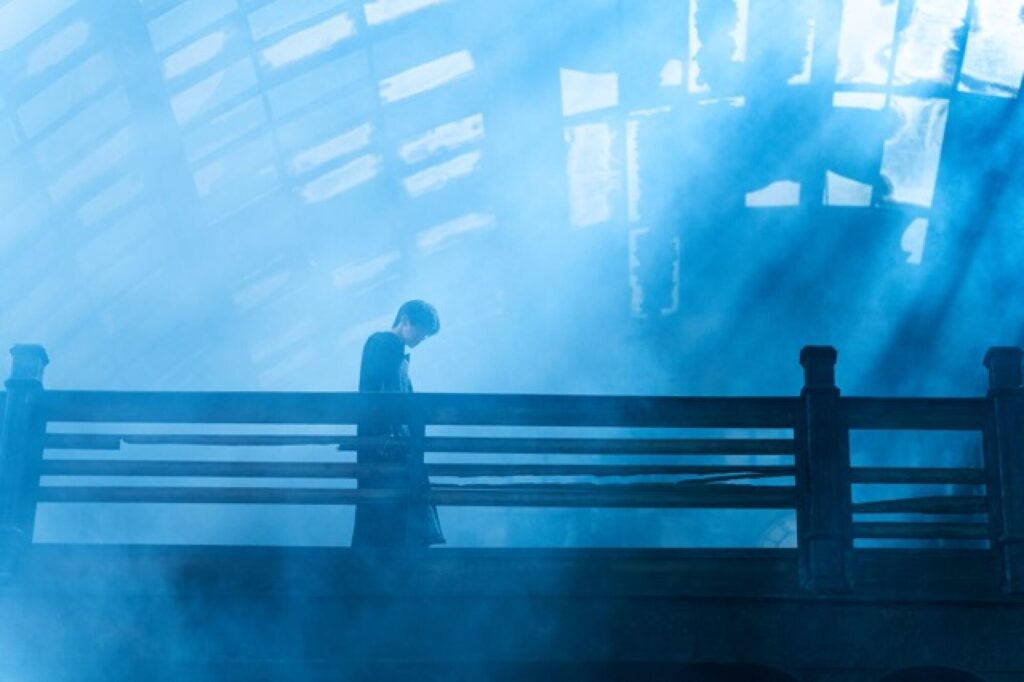
#16) Resurrection – I wish I had written a more fleshed-out review of Bi Gan’s Resurrection closer to my having seen it, as it’s the type of films, dense and somewhat opaque, that require reflection after viewing, but lends itself to losing some details months later, even after seeing it twice. I will say that after both viewings, I was blown away by the scope, visuals, and beauty of the film, as Bi Gan captures such expansive themes as cinema and the 20th century with such wonder. Needless to say, he’s one talented filmmaker.
The film is structured in a series of vignettes about a Deliriant, a being who continues to dream despite the collective decision by society to abandon that activity. The framing device, whereby the Deliriant is captured and examined before its escape is bizarre and wonderful. We follow this Deliriant as it is pursued through its dreams using a film projector, exploring the century in a series of cinematic stories highlighting the wonders of cinematography, production design, an the artistry of imagination. It’s no coincidence that Resurrection emerged during a time when the world faces a stark lack of dreaming, wonder and empathy.
East of Wall
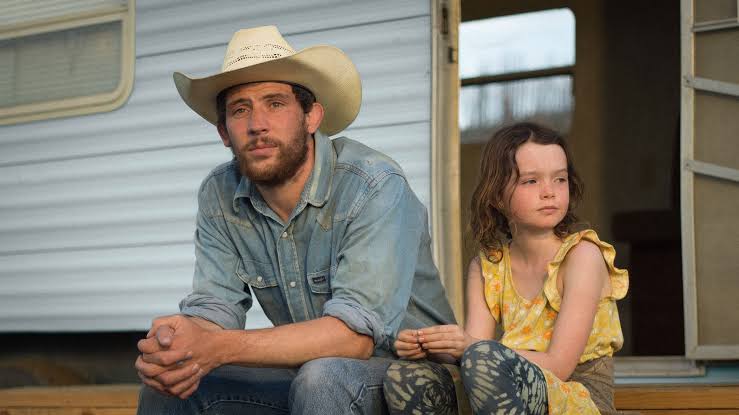
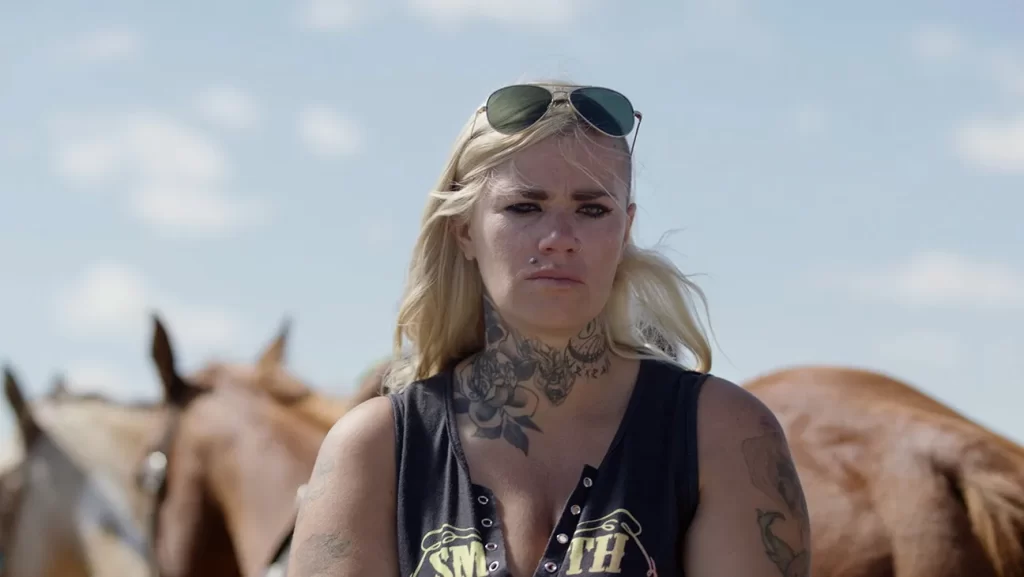
#17) East of Wall – Kate Beecroft’s debut feature, EAST OF WALL is one of those films where you can’t really tell if it’s a fictional narrative based on reality, or a documentary re-enactment with a couple of professional actors and a screenplay thrown in to give it some shape. It tackles a bunch of themes, grief, trauma life on the socioeconomic margins, being a woman in a man’s world (still) and family dynamics, tosses in some beautifully shot and integrated metaphors between the characters (mostly women) and the wild horses they work with, to create something truly beautiful.
The South Dakota ranch run by Tabatha Zimiga (playing a version of herself) provides a haven for kids whose families have failed them as has the government. Tabatha is still reeling from the sudden death of her husband a year ago, and three kids, one, the teenaged Porsha (played by Tabatha’s real daughter with the same name), just as traumatized as she is. One of the film’s professional actors, Scoot McNairy, plays a wealth Texas rancher who comes in with an offer to buy the 30,000 acre ranch from Tabatha, but let them continue to live and work it just the same. The other is Tabatha’s mom, played by Jennifer Ehle, in one of the standout performances in the film. The other, and makes the whole thing work, is Tabatha herself. Like the badlands where the story is set, there is beauty, harshness, and the threat of it all crumbling away, and Tabatha brings that to her debut on the big screen.
Cinematographer Austin Shelton, shooting his first feature capturtes some visual poetry, both from the landscape, the photography of the horses, or the long gorgeous shots of Tabatha lost in thought. Reminiscent of NATIONAL ANTHEM, but without the undercurrent of sex and sexual relationships, which this film avoided.
A Little Prayer
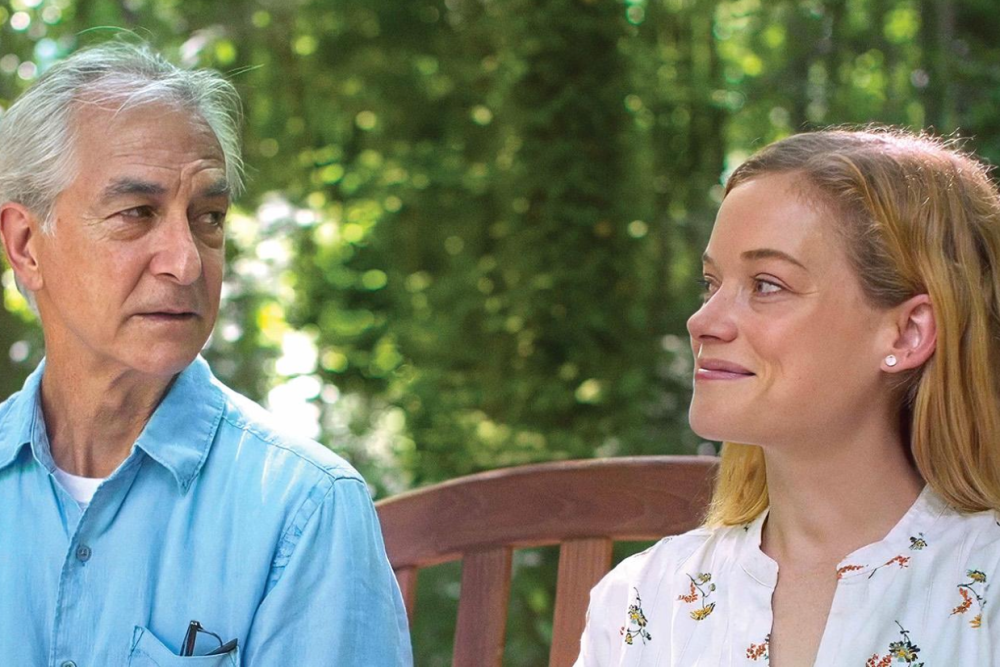
#18) A Little Prayer – I love finding these powerful, intimate films that just don’t get the same attention as the splashy blockbusters. And, of course, family dramas as my go to genre. This lovely, gentle film packs quite an emotional wallop. Quiet and understated, with some exquisite acting, and beautiful direction. David Straithairn is superb, as a father dealing with the fact that his children are in trouble. The relationship between him and his daughter-in-law, played beautifully by Jane Levy is something unique and tender. Celia Weston is also terrific as his wife and partner-in-crime.
From Angus, McLachlan, the writer/director of JUNEBUG. Makes we want to go back and look at that film again. Both share the North Carolina suburbs as a backdrop, where religion and quirky characters are important, but not overused, and not made fun of. This was a special, overlooked gem that deserves another look.
Blue Sun Palace
#19) Blue Sun Palace – Low-key and understated, but writer/director Constance Tsang’s debut feature, packs a strong emotional punch. The film features a lengthy prologue that leads you to believe that one character is the lead, then switches after a surprising turn of events, taking the viewer down a long unexpected path.
Tsang explores the alienation of being an immigrant in NYC, as well as the sudden grief that can totally alter the trajectory of a life. Tsang uses a less gentrified area of Manhattan as the backdrop for much of this film, and it’s instantly recognizable even if you’ve never been there. Great to see Tsai Ming-liang regular, Kang-sheng Lee in a starring role, playing his usual taciturn self. Gorgeous cinematography as the action of the film changes starkly after the first third, then morphs again toward the end.
The Voice of Hind Rajab
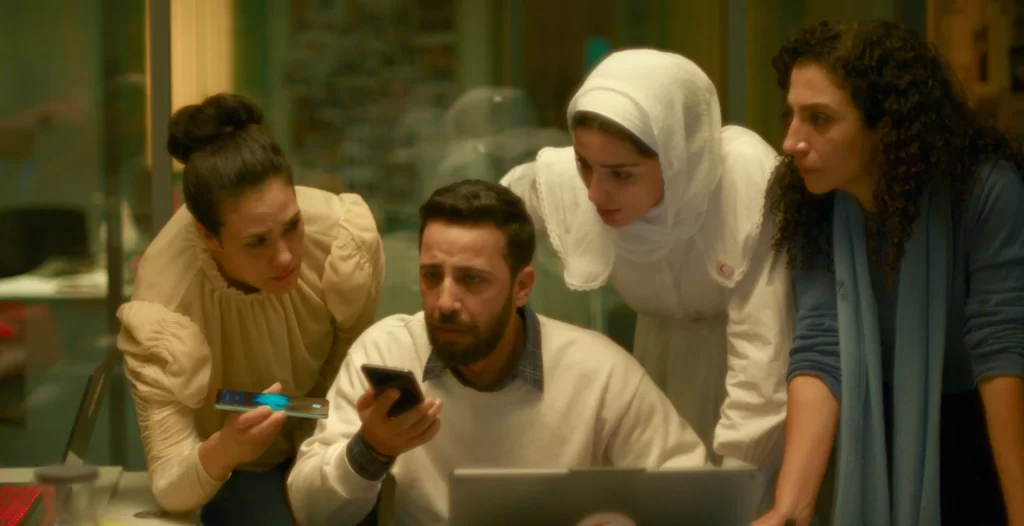
#20) The Voice of Hind Rajab – The workers of a call center struggle to help people stranded in war-torn Gaza, by negotiating with the military and the emergency responders who must all coordinate to allow movement in the area. Based on the somewhat controversial choice to use the actual voice of a 6-year-old girl who is trapped in a car with her dead family while she talks to the call center where they are desperately trying to send someone out to rescue her.
This was a tough film. About halfway through the film I started to see what this film was really about, and it’s a difficult film for sure. Great job maintaining the tension when all you’ve got is a call center and a little girl’s voice. Some really strong performances among the call center workers too.
In the second installment of a semi-regular piece inspired by my friend’s blog, Haunted Jukebox, I will continue to share my favorite films of each year starting with the year of my birth (which I posted about in August.) Okay, it took me three months to get around to 1963, that seems about right. Perhaps after retirement these posts will come more frequently, but I wouldn’t count on it.
After the stellar cinematic year that 1962 was, 1963 was pretty lackluster. It was as if all the great film work had been used up in the previous year and there needed to be a recovery period. Or else 1962 was just an exceptional year? We will soon see. To start, I had only seen nine films from 1963 as far as I can tell, and as four of them ended up in my top 5, there weren’t a lot of undiscovered gems in my follow-up film viewing to prepare for this post. I total, I only watched about 15 films from 1963, before my inspiration ran out. I still managed to get a Top 10 out of them, but the quality is just a few steps below 1962, except for the first few.
The Haunting (dir. Robert Wise)
Hud (dir. Martin Ritt)
Charade (dir. Stanley Donen)
High and Low (dir. Akira Kurosawa)
Bye Bye Birdie (dir. George Sidney)
The Day of the Triffids (dir. Steve Sekely/Freddie Francis [uncredited])
Five Miles to Midnight (dir. Anatole Litvak)
Ladybug Ladybug (dir. Frank Perry)
8 1/2 (dir. Federico Fellini)
The Incredible Journey (dir. Fletcher Markle)
Honorable mentions: Contempt, Winter Light, The Birds
Watchlist: The Servant, An Affair of the Skin, Lilies of the Field, Bay of Angels, The Big City, The Running Man, When the Cat Comes
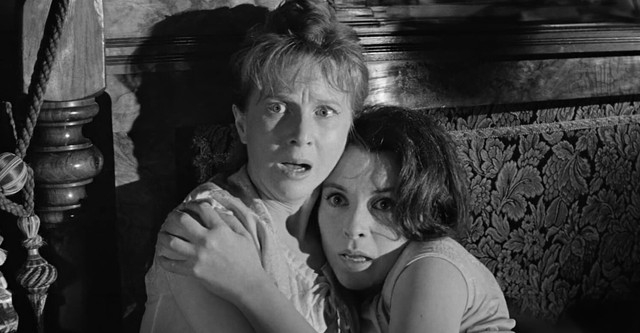
My top film of 1963, Robert Wise’s The Haunting, benefitted from a re-watch which really helped solidify it’s position over Hud, which I had seen a year or so ago. The Haunting is truly an elegant film ahead of its time. Based on Shirley Jackson’s novel, it tells the tale of four individuals who spend a weekend in a haunted house to prove or disprove its supernatural nature. Wise had already directed nearly 30 films by the time he tackled The Haunting, and strangely enough that film was bookended by West Side Story and The Sound of Music. He continued to direct until 1989, including memorable films such as Audrey Rose and Star Trek: the Motion Picture. It’s amazing how creepy he can make this film using basically just sound effects, swooping cameras and great acting. And the four principles were all terrific. Julie Harris, Claire Bloom, Richard Johnson and Russ Tamblyn really inhabited their characters. It was quite bold to have the Claire Bloom character coded as a lesbian. I’m so curious if the original novel did the same?
Hud
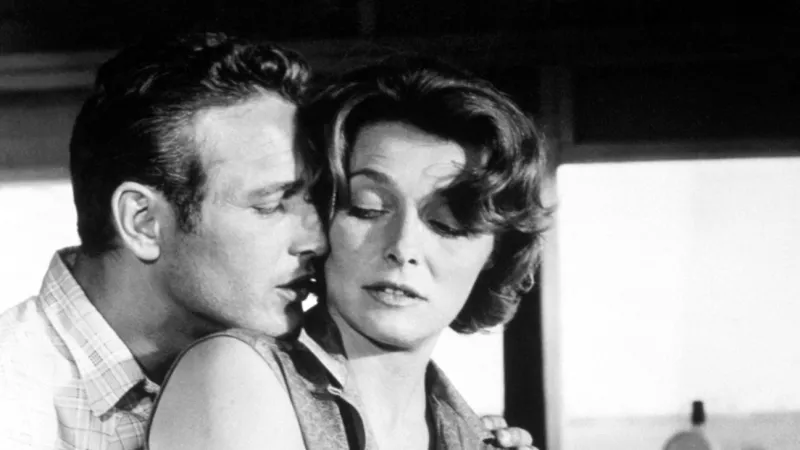
I watched Hud when I was on a Patricia Neal kick (she was so good in The Fountainhead, a dark western starring Paul Newman as quite the dick. Director Martin Ritt went on to direct such 70’s and 80’s films as Norma Rae and Nuts, so he’s clearly interested in serious and heavy work. Beautifully shot, and emotionally fairly riveting, I really enjoy Hud. Then we have Charade, giving vibes nearly 180 degrees away from Hud. Sure it’s a murder mystery… nearly a caper, actually, but Audrey Hepbrun and Cary Grant are so charming and fun, even when you don’t know whether or not Grant’s character is a good guy or a bad guy! Akira Kurosawa comes in at #4, with his crime film High and Low. The first half of this film is riveting and emotional while taking place almost entirely in a single room, while victims of a kidnapping wait with the police for the kidnapper’s calls. The second half gets a little strange, but the stark, abrupt finale brings it all back home in a powerful way.
There are some nostalgic entries on this list as well. #5 is possibly my favorite movie musical, Bye Bye Birdie, which while superficially a pretty silly film, as a kid, I just loved it. My love for Ann-Margret was born here, as the teen-aged Kim. The dancing in the musical number, Got a Lot of Livin’ to Do still makes me so happy. Other nostalgic entries include the science fiction, Creature Feature thriller, The Day of the Triffids about murderous plants from outer space that spit acid. Fortunately their weakness is salt water. I haven’t see this film since I was a kid, so it’s probably horrible, but I remember it very fondly. Ditto, the children’s, live-action classic, The Incredible Journey, about two dogs and a cat who make their way across the country to reunite with their families. I shudder to think how the actual animal performers were treated back then, but I do remember loving this terrific adaptation of the novel by Sheila Burnford.
And here we are at the top of my list of favorite films of 2022. What ties these films together are the broad themes of love and family… themes that go against my often-cited love of bleak films. These two films moved me, but also thrilled me with the acting, the scripts, the directions, the production design, the use of music, the cinematography and more. These were films that stuck with me long after I saw them. I first saw my #1 film of the year way back in January, and it never got knocked off the top spot. I do hope you will give these films a try!
After Yang
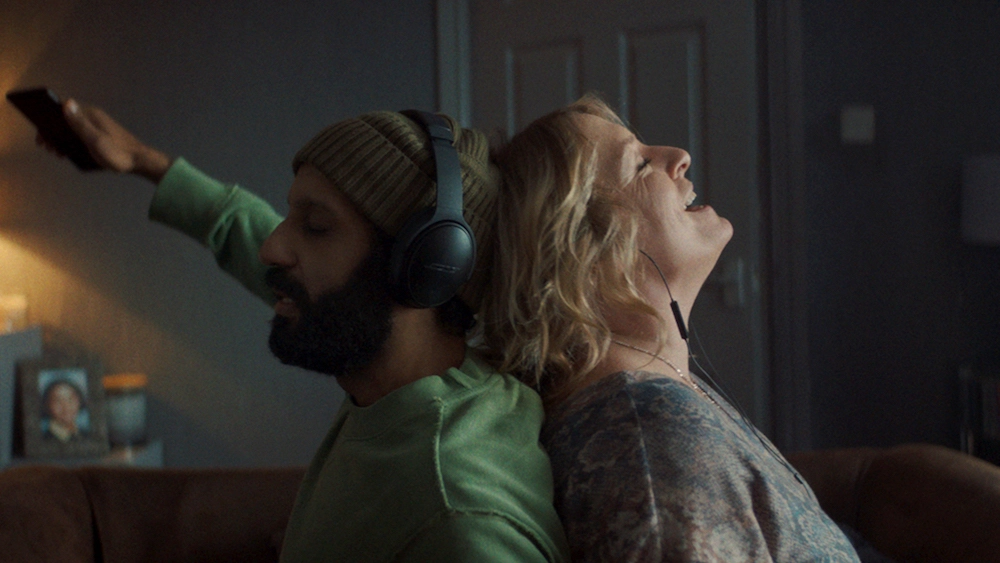
#2) Ali & Ava, directed by Clio Barnard – Clio Barnard, innovative director of the Buried Treasure nominated pseudo-doc THE ARBOR, has created a nearly perfect adult romance with ALI & AVA. the third of her four films to be shot in the city of Bradford in England. Led by a pair of terrific acting performances from Adeel Akhtar (THE BIG SICK, FOUR LIONS) and Claire Rushbrook (SECRETS & LIES; AMMONITE) the film charts the tentative love story of two Bradford natives in their forties both emerging from challenging relationships. Ali is a landlord who lives with his Pakistani family and is a bit of an anomaly, as he is beloved by his tenants. He and his younger wife are recently estranged, but still live in the same flat with the rest of the family, whom they have not told about their separation. Ava works as a teaching assistant, comes from an Irish-Catholic background, has a complicated relationship with her adult children, and an even more complicated relationship with her deceased husband. Once the two meet their slow, quiet attraction develops into something more, all while Barnard subtly weaves in issues around race, religion, abuse, and other grown-up issues in ways that are natural and powerful.
One of the things that makes ALI & AVA so unique is how the story is told so strongly through music. Ali is a fan of techno and hip hop, while Ava adores country and folk. They fall in love and get to know each other through small acts of generosity and kindness, but also through their mutual love of music and the curiosity for each to learn more about the other. The film is hopeful, although not predictable or formulaic in any way. The cinematography by Ole Bratt Birkeland is stunning, both in the way it captures surprising beauty in some of the neighborhoods that exhibit the worst levels of social deprivation, and the extraordinary ways it captures the love story being told with powerful close-ups of the two leads. This one’s a real winner in so many categories, and Clio Barnard is a director to keep an eye on.
After Yang
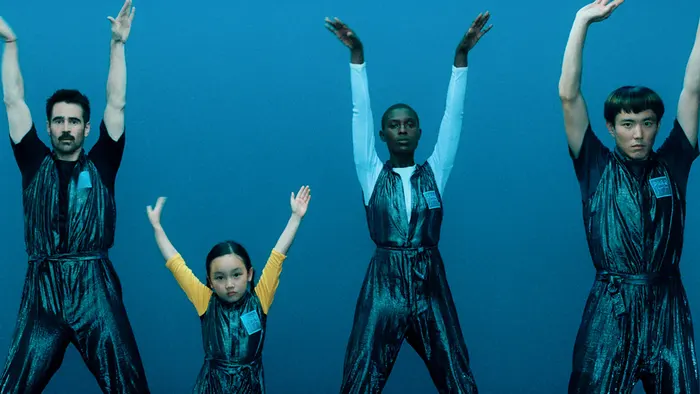
#1) – After Yang, directed by Kogonada – After the gorgeous simplicity of Kogonada’s Chlotrudis Awards-nominated previous film, COLUMBUS, I’m not sure what I was expecting with this follow-up, starring a big name star like Colin Farrell. Of course, Farrell was so powerful in THE LOBSTER, so I know he’s capable of being a great actor as well, which he shows again, in this haunting adaptation of a short story that explore what it means to be alive and sentient. It’s a story we’ve seen explored before; several times in the last couple of years. Yang is an artificial person — an older brother for Jake and Kyra’s adopted Japanese daughter Mika. Someone marketed to give Mika cultural reference given her parents are white and African respectively. When Yang malfunctions, possibly permanently, Jake begins an exploration that will reveal parts of Yang’s life that illuminate heretofore unknown depths.
The futuristic world Kogonada creates is uniquely serene and beautiful. The lovely production design that suggests a future society, yet is familiar and comfortable, with its sleek and graceful beauty augments the immersive experience of the film. As mentioned above, Farrell, who broke on the scene as a brash, bad-boy once again shows how skilled he is at nuanced, mature roles. Kogonada’s direction, so minimalist in COLUMBUS, is more expansive here, but just as simple and effective. Finally, AFTER YANG features one of the best ever opening scenes of any film that touches on one of my favorite film tropes: unexpected dancing. A true triumph.
And here’s the complete list for my Top 30 films of 2022:
Other than the exceptional filmmaking, these two films near the top of my 2022 favorites have little in common. One is from a seasons filmmaker whose films have topped by year-end lists in the past, the other is a director with his first-time narrative feature, One features a large cast of inter-connected characters in a cosmopolitan environment, while the other focuses mainly on three characters in a remote wilderness. Yet both exemplify what makes a film great for me: strong relationships, and unexpected deep emotion told through beautiful writing.
Utama
#4) Utama, directed by Alejandro Loayza Grisi – When I learned that Utama is translated in English to Our Home, it resonated so much more with me. This is a powerful, effective film that, while fairly straightforward, successfully blended several themes, most notably climate change, aging, generational dynamics, and the modernization of indigenous culture, quite well into moving portrait of love and loss. Set in Bolivia, Virginio and Sisi are an aging indigenous Quechua couple who live alone, a long walk from the nearest village, and a much farther distance from the nearest city. They have been without rain for nearly a year, which makes tending their herd of llama, and their sad garden increasingly difficult. When the water Sisi retrieves from the village pump dries up, and Virginio’s health begins to become an issue, they are faced with some difficult choices. A visit from their grandson, Clever, complicates matters as his grandfather thinks he’s a bit of a brat and visiting to do the bidding of his father (Virginio’s son).
The gentle story does it’s work, but it’s the directorial skill, coupled with some remarkable cinematography by Barbara Alvarez, and Art Direction by Valeria Wilde that really elevate this film. The stark landscape marries stunning beauty with desolation. Powerful moments are conveyed with a look, or a gesture that moved me to tears. Every time the absurdly whimsical, hassled herd of llama entered the screen I had to smile. The low-key, but beautiful way that José Calcina and especially, Luisa Quespe portray the two leads, is worthy of consideration for nomination (and reminiscent of another South American favorite of mine, the Uruguayan Buried Treasure nominee, WHISKY) — although as none of the characters are portrayed by professional actors, I feel the director deserves a lot of credit there.
Broker
#3) Broker, directed by Hirokazu Koreeda – Sure, he’s one of my favorite directors, but perhaps because of the good but not great reviews I had seen for BROKER, I was taken by surprise at how much I enjoyed this one! It’s a bit of a flip side of his last Japanese-set feature, the award-winning SHOPLIFTERS, as both combine crime and created families, but both come at those themes from very different directions. BROKER is shot in South Korea, and boosts a couple of actors more well-known to the U.S. audiences: Song Kang-ho, from PARASITE, and Doona Bae, a Koreeda and Bong Hoon-ho alum (she co-starred with Song in THE HOST, and the TV series, “Sense8”. The complex story involves an infant being abandoned by his mother, the illegal selling of children, prostitution, murder, and found-families. It also features some of the most overt humor in a Kore-era film, with lots of laughs throughout. It also got me strongly with a few emotional scenes where I couldn’t stop the tears from flowing while I held back some sobs (that ferris wheel scene). It’s not a very subtle film, but the story unfolds beautifully, taking it’s time (hence the longer running time) so nothing really feels forced. Another scene featuring Doona Bae talking on the phone while Aimee Mann’s Wise Up plays in the background even references MAGNOLIA in a way that really took me by surprise.
Koreeda never disappoints, and BROKER, with its light-hearted caper feel, talented ensemble, and deep emotion has a lot of appeal for a wide audience. His exploration of the concept of family, both natural and found is always well-handled, from his earliest films such as AFTERLIFE, and throughout his career with such work as NOBODY KNOWS; STILL WALKING; LIKE FATHER, LIKE SON; OUR LITTLE SISTER; AFTER THE STORM; and SHOPLITERS. BROKER is a beautiful addition to that list.