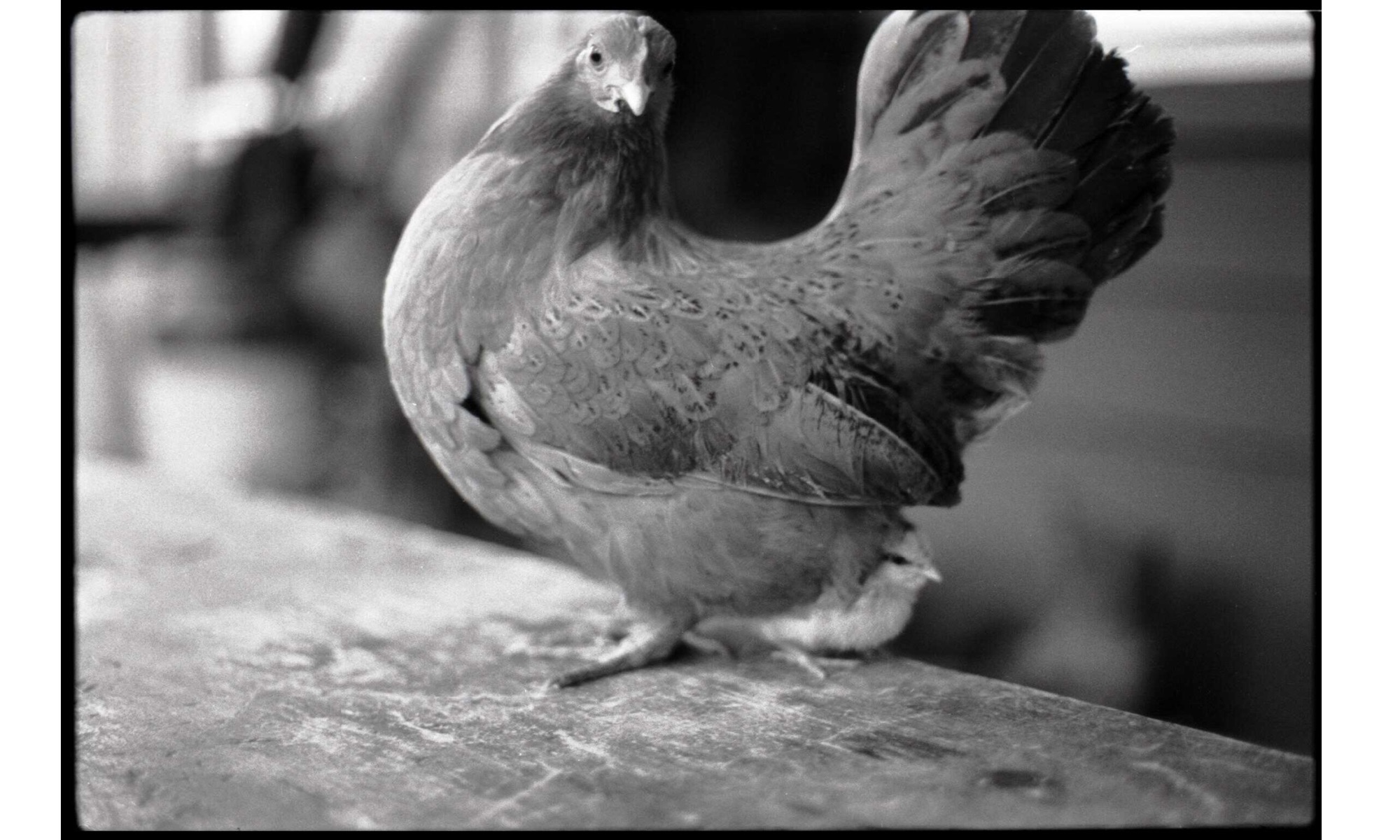
But someone did forward me this muy cool photo…
Now I just need to learn the language…
My Japanese name is Katsumoto Ishinomori.
Take The Original Japanese Name Generator by Shu today!
Created with Rum and Monkey‘s Name Generator Generator.
The World of Science Fiction Mourns a Great Loss
 I was stunned and saddened to hear about the passing of Octavia Butler, my favorite science fiction writer, the other day. The author of 12 novels and 1 published collection of short stories, Butler was a pioneer in the science fiction realm, being a lone African-American woman, and a lesbian, in a field dominated by white males. The author died outside of her home in Seattle, after falling and striking her heard on a walkway.
The first of Octavia’s books that I ever read was entitled Wild Seed, and it was a fantastic story about two immortal super beings; one who could change shape, who was in pursuit of the other who possessed complete control of her body. As a young man it made quite an impression on me, and years later, when I read her Xenogenesis trilogy (Dawn, Adulthood Rites, and Imago) I was hardly surprised by the talent behind them. What I loved about this trilogy was the daring exploration of sexuality and gender that they encompassed. Her collection of short stories, Bloodchild and Other stories, was a daring gathering of stories and essays from throughout her career that spanned genre.
After the throught-provoking Parable of the Sower and its sequel, Parable of the Talents which found a new religion forming around a young woman after an apocalyptic tragedy has decimated the earth, there was a noticeable lack of new work from Octavia as she suffered some personal writer’s block. There are interviews where she discusses working on a third book in this series, Parable of the Trickster, but it is apparently unfinished. She did return with a bold new novel last year called Fledgling. This novel might have taken some of her fans by surprise as it was a vampire novel, but one steeped in science fiction rather than fantasy or gothic horror.
In 1995 Octavia was the recipient of a “genius grant” from the John D. and Catherine T. MacArthur Foundation, the only the only science fiction writer to receive such an honor. This $295,000 windfall followed years of poverty and personal struggles with shyness and self-doubt. In an 2004 interview with the Seattle P-I Octavia commented, “People may call these ‘genius grants, but nobody nobody made me take an IQ test before I got mine. I know I’m no genius.”
Octavia’s first novel, Kindred, published in 1979 after being repeatedly rejected by publishers who could not understand how a science fiction novel could take place on a plantation in the antebellum south, is her most popular novel, selling more than a quarter of a million copies to date. I’ve never actually read Kindred and I am looking forward to the experience.
I was struck by how saddened I was by the news of Octavia’s death. This was the first time one of my “favorite artists” of some sort has died, and I was taken aback by the lack of any future work by this talented woman. I can only hope that Octavia knew some fulfillment and happiness from this career that brought so much to her fans.
On the LimoLiner to New York City
So, it’s really Michael, not Scot, despite what it says below (I’m using his laptop), but the important thing is that I’m writing this post (and actually posting it) while on a bus to New York City. That’s right, wireless internet access on a bus ride to New York. It’s one benefit of the LimoLiner. I first discovered the LimoLiner courtesy of my colleague Kerry, when we traveled to New York City last May for the BookExpo America Conference. The LimoLiner is a bus that makes the journey from the Hilton in the Back Bay neighborhood of Boston to the Hilton at 53rd & 6th in New York. It costs more than the Fung Wah, but it’s less than Amtrak. It boasts luxury leather seats (and they are comfortable), that wireless internet access I mentioned earlier, meal service (unlike say… an airplane!), and a movie. It’s a nice alternative to driving, in my opinion!
So we’re off to New York for the weekend to visit with Bruce and see Scot’s friend Susan in her first off-Broadway musical! It’s called [title of show] and we’re looking forward to it. While we’re in town we also hope to stop in at the New York ComicCon Comic Book Convention. All the Marvel and DC bigwigs will be there, and wouldn’t you know? Librarians can reigster for free!
When you don’t know what to post?
Okay, so it’s a tired meme, but I enjoyed reading it on lymjello’s blog, so I figured, what the heck, I’ll bite. I’ve also followed lymejello’s lead and added my own category.
Four jobs I’ve had:
1. Library Administrator
2. Magazine Reviewer
3. Manager of a Record Store
4. Tax form picker/shipper
Four movies I can watch over and over:
1. The Sweet Hereafter
2. Miss Firecracker
3. Passion Fish
4. Last Night
Four albums I can listen to over and over:
1. Emm Gryner, Girl Versions
2. Martha & the Muffins, Then Again – A Retrospective
3. Kate Bush, The Dreaming
4. Jane Siberry, The Walking
Four places I’ve lived (this one’s pretty boring for me):
1. Boston, MA
2. Melrose, MA
3. Andover, MA
4. Reading, MA
Four TV shows I love:
1. Star Trek: Deep Space 9
2. Twin Peaks
3. Days of Our Lives
4. The Comeback
Four highly regarded and recommended TV shows that I’ve never watched a single minute of:
1. 24
2. Commander-in-Chief
3. Alias
4. American Idol
Four places I’ve vacationed:
1. Australia
2. Canadian Rockies
3. Toronto, ON
4. Phoenix, AZ
Four boys I find adorable:
1. Scottie
2. Don
3. Jonno
4. Phil
Four of my favorite dishes:
1. Fancy Pants
2. Pasta Bolognese
3. Danish Pastries
4. Iced “Corn” Cookies
Four sites I visit daily:
1. Chlotrudis Society for Independent Film
2. Internet Movie Database
3. All These Wonderful Things
4. Dudes Nude
Four places I would rather be right now:
1. A Tropical Nude Beach
2. Watching a movie in a theatre
3. Visiting my friend in Buddina, Queensland, Australia!
4. Visiting Jennifer in Rutland, VT